The Reserve Bank of India recently hiked its benchmark repo rate by 25 basis points to 5.50% during its Monetary Policy Committee meeting on 7 October 2026, marking the first rise in nearly 4 years during inflation and strong economic growth. According to reports from Mint, this rate increase has prompted several major banks to revise their repo-linked lending rates, making home loans potentially more expensive for borrowers. The rate hike comes as India joins major central banks in increasing rates due to higher oil prices caused by the Iran war fueling inflation and weak monsoon rains due to El Niño contributing to price pressures in Asia's third-largest economy.
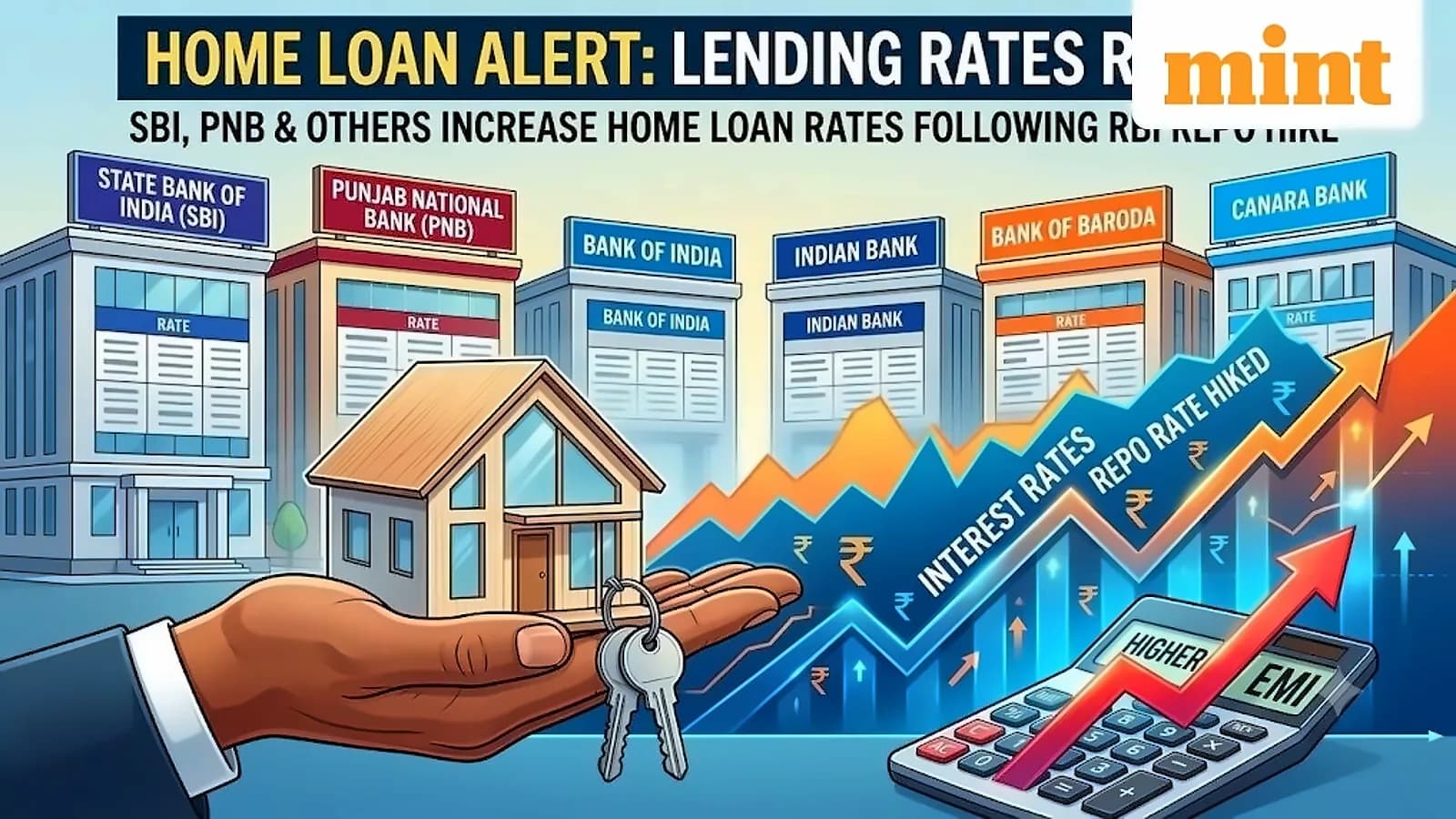
Six prominent lending institutions have announced revised repo-linked lending rates in October 2026. State Bank of India (SBI) increased its External Benchmark Linked Lending Rate (EBLR) from 7.90% to 8.15%, plus credit risk premium and benchmark spread, effective 15 October 2026. Punjab National Bank (PNB) raised its RLLR from 8.10% to 8.35%, effective 8 October 2026. Bank of India and Bank of Baroda both increased their rates from 8.10% to 8.35%, effective 7 October 2026 and 8 October 2026 respectively. Indian Bank raised its Repo-Based Lending Rate (RBLR) from 7.95% to 8.20%, while Canara Bank increased its RLLR to 8.25%, both effective 9 October 2026.
The repo rate hike will lead to higher EMIs and increased interest costs for borrowers with ongoing loans or planning new ones. For instance, if you are paying 8.50% per annum interest rate on a 20-year tenure ₹50 lakh home loan, the interest rate can increase to 8.75% p.a., resulting in EMI increase from ₹43,392 to ₹44,186, representing an increase of ₹794 per month. If borrowers want to retain the current EMI unchanged at ₹43,392 after the 25 basis points rate hike, the loan repayment tenure could increase by a few months. The impact extends to personal loans and car loans as lenders pass on their increased borrowing costs to borrowers, with the same principles applying to these floating interest rate loans.
Existing borrowers should contact their lending institution immediately to confirm when the revised rate will apply and how it will affect their existing loan. According to MyMoneyMantra, it takes a couple of months to switch to the new interest rate, making prompt action essential. Borrowers are advised to carefully review and compare effective interest rates, processing charges, and repayment terms across lending institutions before taking a loan or planning to refinance an existing loan. The changes in lending benchmarks can significantly impact borrowing costs and monthly instalments, making it crucial for both existing and prospective home loan borrowers to stay informed about these developments.