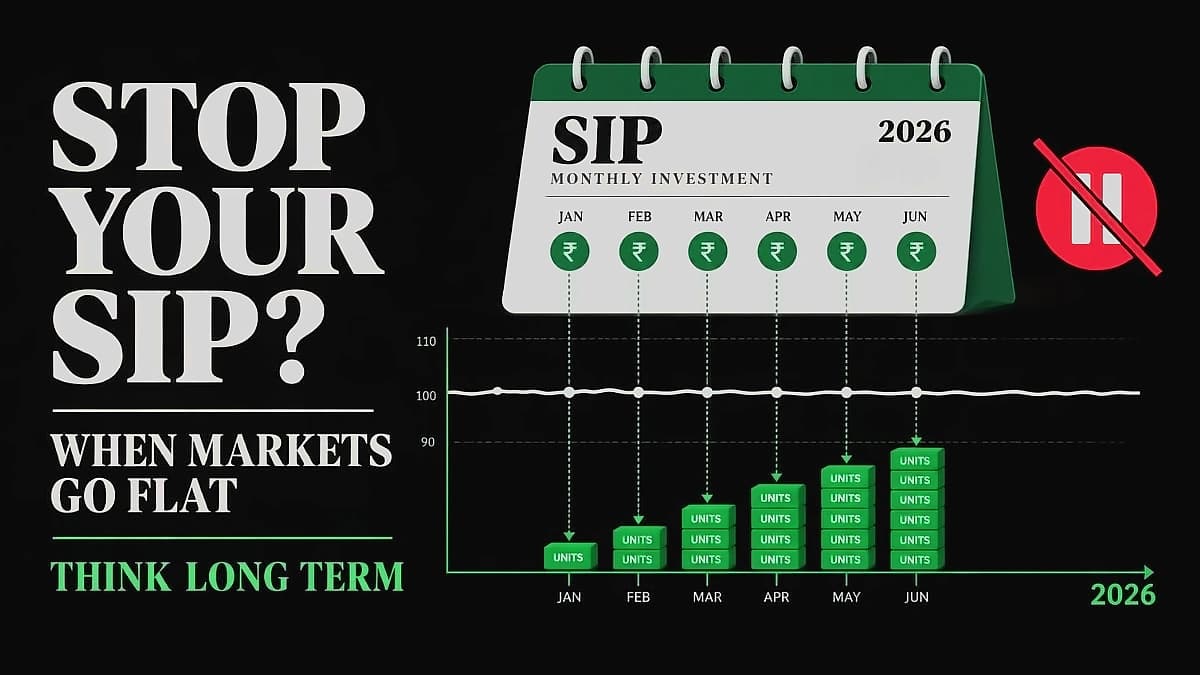
Averaging is the practice of buying additional units of a stock or mutual fund over time instead of investing the entire amount at one price. According to reports from Business Standard, the objective is to spread purchases across different market levels so that the final buying cost shows multiple entry points rather than a single one. This strategy is often recommended during market corrections when stock prices fall, with the assumption that if a company was attractive at ₹1,000, it must be even more attractive at ₹800. The fundamental difference between trading and investing lies in their approach to market participation and time horizons.
Trading involves short-term holding periods ranging from minutes to months, focusing on capitalizing on short-term price movements through frequent buying and selling. As per the latest analysis, traders use technical analysis to find profitable trades and focus on finding the next profitable opportunity. Investing represents a long-term approach with holding periods of years to decades, emphasizing buy-and-hold strategies and fundamental analysis. The key distinction lies in risk level, with trading carrying high volatility risk while investing offers lower risk compared to trading strategies.
As reported by Business Standard, averaging up involves buying more shares after a stock's price rises because investors feel positively about a company's prospects. Averaging down is the practice of buying more shares after a stock's price falls, with the aim of reducing the average purchase cost. In mutual funds, averaging happens automatically through SIPs, where a fixed amount is invested at regular intervals, allowing investors to accumulate more units when markets are low and fewer units when markets are high. According to recent analysis, dollar-cost averaging involves investing a fixed dollar amount at regular intervals, such as weekly or monthly, with each contribution purchasing more shares when prices decline and fewer when prices rise.

According to Business Standard, averaging tends to work best in mutual funds because investors are buying a diversified portfolio rather than a single company. When markets fall, a SIP buys more units at lower prices. When markets rise, it buys fewer units, naturally lowering the average cost of acquisition over time without requiring investors to predict market movements. The diversification across dozens of stocks across sectors and industries means that even if some companies underperform, others may do well, reducing the risk of continuously investing in a single underperforming business.
The taxation structure significantly favors long-term investing over short-term trading strategies. As reported in recent analysis, traders typically generate Short-Term Capital Gains (STCG) taxed at 20% due to their frequent buying and selling patterns. Investors, on the other hand, benefit from the power of compounding over extended holding periods, which can grow wealth exponentially. Historical data shows that lump-sum investing has historically outperformed dollar-cost averaging about two-thirds of the time, with Vanguard research finding that investing all at once beat a 12-month DCA schedule in 68% of global market periods studied between 1976 and 2022. However, dollar-cost averaging offers benefits that return figures alone do not show, including reduced timing risk and protection against regret risk when market corrections occur.