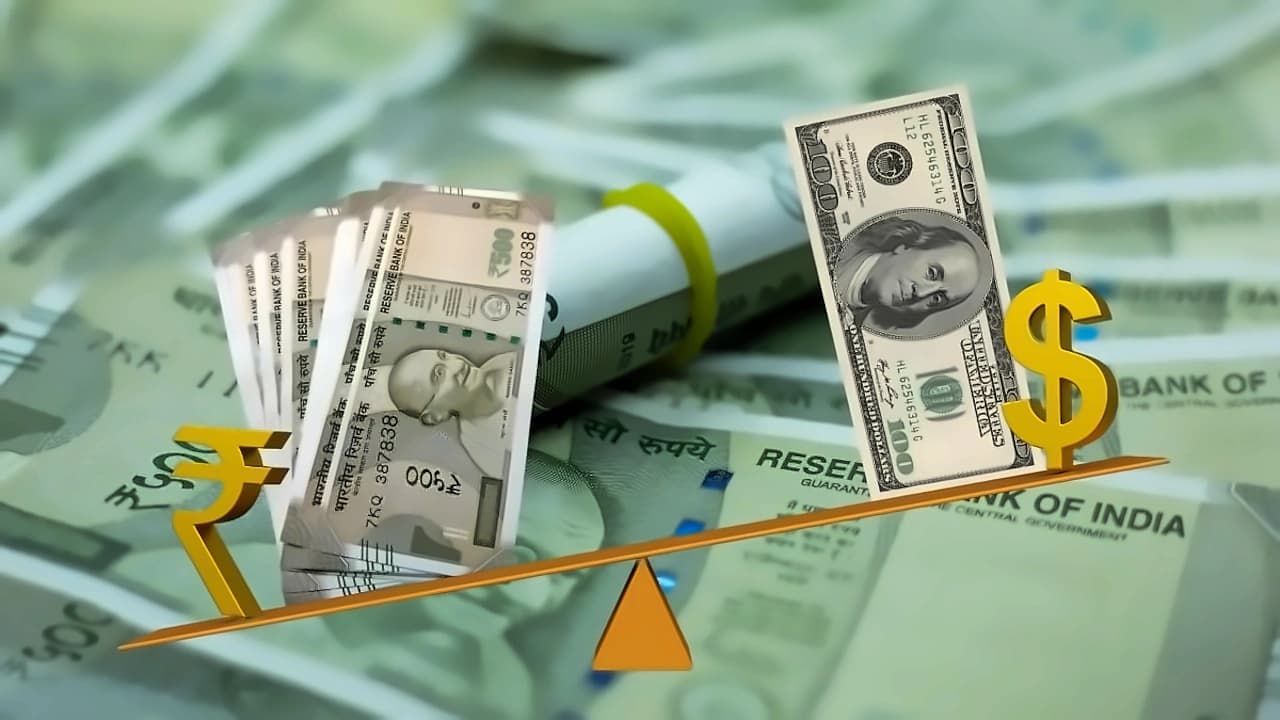
Members of Parliament expressed significant concerns about the falling rupee value during a parliamentary standing committee meeting on Thursday. Economic Affairs Secretary Anuradha Thakur and Chief Economic Advisor V Anantha Nageswaran made presentations about India's economic situation, with committee chairman BJP leader Bhartruhari Mahtab stating that 'Falling rupee is also a matter of concern. The RBI is taking steps to control it.' As per NDTV, the committee discussed various economic challenges including rising prices, inflation, the conflict in West Asia, and China's recent stringent laws aimed at protecting its industries. Mahtab noted that despite these serious challenges, India's economy is emerging in a stronger position with encouraging indicators including increased household savings and rising investment.
According to Wise's Passport & Paisa: India Travel Money Report 2026, nearly 78% of Indian travellers plan to increase their international travel spending following the Budget 2026 decision to reduce Tax Collected at Source (TCS) on overseas travel to 2%. However, as reported by ETBrandEquity, managing travel budgets continues to be the number one anxiety for Indian international travellers, ranking significantly higher than navigating visa queues, flight delays, language barriers and mobile connectivity. The survey, based on more than 1,050 Indian international travellers across age groups from all regions of India, reveals that hidden foreign exchange charges, confusing conversion rates and uncertainty over actual spending costs are causing more anxiety than traditional travel challenges. A significant share of travellers revealed they do not have a clear understanding of what they actually pay when spending abroad, with 'Travellers know they are paying for foreign exchange, but they simply do not know how much of that cost is buried within the rate itself,' according to Taneia Bhardwaj, south asia expansion lead at Wise.
According to the Wise report, Indian travellers spend significant time comparing airfares, hotel prices and holiday packages but pay less attention to exchange rates and fees when spending overseas. As reported by ETBrandEquity, hidden exchange-rate mark-ups and non-transparent pricing are the biggest foreign exchange frustrations among travellers. The survey found that almost half of respondents spend less than ₹1 lakh per person on international trips, making even small mark-ups embedded in exchange rates significant for budget-conscious travellers. Exchange rate fluctuations, currency conversion markups, ATM withdrawal charges, foreign transaction fees and dynamic currency conversion often remain hidden expenses that can significantly increase the overall travel budget, according to the report. 'Zero forex markup' emerged as one of the few cost-related features valued consistently across generations, highlighting growing demand for greater transparency in overseas spending.
The survey reveals that global card acceptance emerged as the most important factor when selecting forex or credit cards for overseas travel, ranking ahead of lounge access, reward programmes, eSIM benefits, and low ATM fees. As reported by ETBrandEquity, this finding suggests that travellers prioritise certainty over premium benefits, with reliability being more valuable than rewards. Around 38% of respondents exchange foreign currency before departure, making cash the most commonly used method for managing travel money abroad, followed by international debit and credit cards. Digital multi-currency accounts account for only 9% of usage, highlighting India's continued reliance on traditional payment methods despite domestic digital payment adoption. Behaviour shifts with experience, as Gen Z remains the most cash-dependent cohort, while Gen X are the only generation where card usage has overtaken cash (31% versus 25%).
According to the Wise report, Southeast Asia remains the most popular overseas destination for Indian travellers, attracting 34% of respondents, followed by Europe at 15% and the Middle East at 14%. As reported by ETBrandEquity, the destinations where India's travel money blind spot will play out this season are already set. Gen Z's pull toward Japan and South Korea (13%) is likely driven entirely by K-pop and anime, while Gen X is heading to Europe (18%) and Australia and New Zealand (17%). Millennials show the strongest preference for Middle Eastern destinations (16%). More experienced international travellers tend to rely on a mix of payment methods rather than a single option, with Gen X being the only generation where card usage has overtaken cash.
At the parliamentary meeting, MPs expressed concern over sluggish private investment despite government efforts to attract foreign direct investment. As per NDTV, committee chairman Mahtab noted that 'While the government investment and capital expenditure are increasing, private investment has not been picking up at the same pace. This is an issue that we need to address.' He emphasized that certain policy changes are required to address this challenge and discussed support for companies moving out of China to set up industries in India. The committee decided to meet again in the third week of the month and will prepare a report providing recommendations on addressing economic challenges. Mahtab acknowledged that when India is attracting FDI in large numbers, there is also flight of FDI from the country, with the Chief Economic Advisor describing this as 'cyclical in nature'.