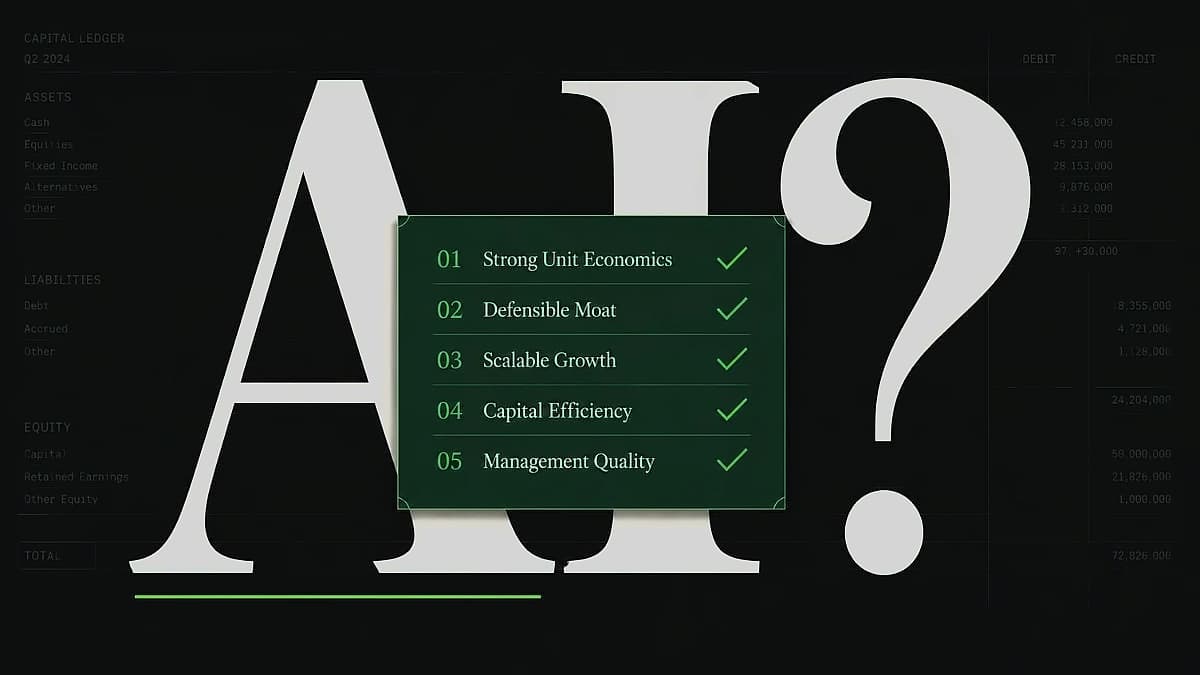
AI FIRE (Financial Independence Retirement Engine) applications are gaining popularity for their promise of precise retirement date calculations. However, according to recent reports, the accuracy of these tools depends heavily on the underlying assumptions and methodologies used in their development.
Financial experts recommend five key criteria for evaluating AI-driven financial planning tools before trusting their output. These criteria focus on the tool's transparency, accuracy, and alignment with individual financial goals.
The evaluation process should prioritize transparency in methodology and assumptions. As reported by financial experts, users should demand clear explanations of how the AI tool arrives at its retirement date projections, including the specific factors and variables considered in the calculation. This transparency becomes even more critical as AI tools increasingly handle complex financial scenarios and real-time forecasting.
Financial planning tools must demonstrate robust accuracy standards in their calculations. According to the evaluation criteria, users should verify that the tool's retirement date projections align with established financial planning principles and industry standards. Recent developments show that AI tools can reduce forecasting errors by up to 50% compared to manual spreadsheet-based approaches, with accuracy improving over time as models train on historical data.
Modern AI financial planning tools are moving beyond traditional quarterly forecasting to continuous, automatic updates as new data comes in. These tools can model multiple futures simultaneously and identify subtle correlations across hundreds of transactions that may never appear in spreadsheet-based systems. The most effective implementations treat AI as an analytical engine, with human expertise providing strategic oversight while the technology handles data-intensive aspects of cash management and forecasting. AI models don't carry forward assumptions or adjust projections to align with what leaders want to hear, everything stays rooted in your data rather than gut feeling judgment.