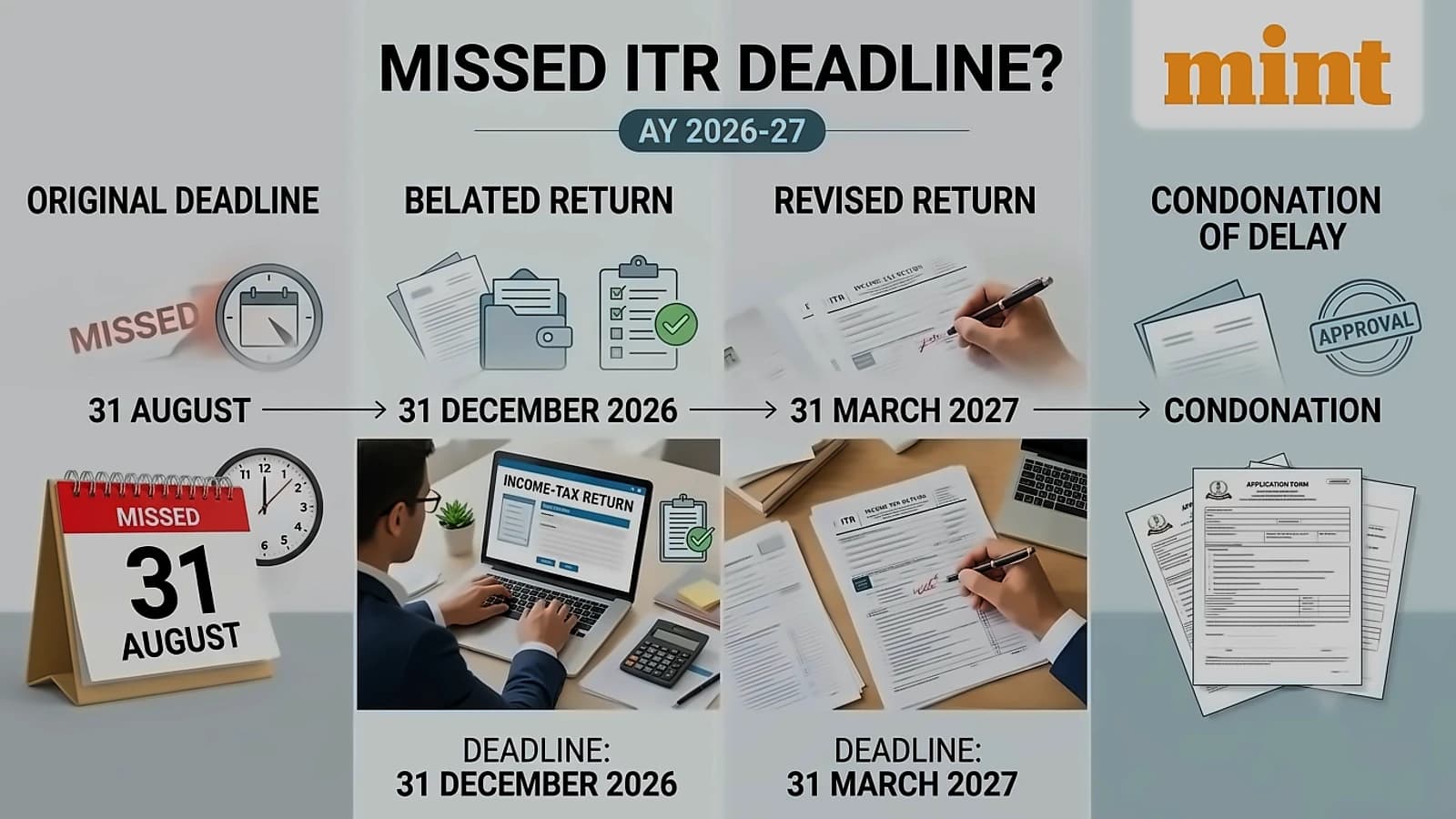
The income-tax department announced that more than 5.9 crore income-tax returns were filed for AY 2026–27 (FY 2025-26) by 31 July 2026. According to reports from Mint, PTI, and The Times of India, the official Income-Tax India account on social media platform X stated, "Thank you, taxpayers! Over 5.9 crore ITRs filed for AY 2026–27 by July 31st! Your trust and timely compliance provide the energy that fuels India's growth." The filing deadline was midnight on 31 July for taxpayers using ITR-1 (Sahaj) and ITR-2 forms without delayed charges and penalties. As per the department, more than 40 lakh returns were submitted on the final day, reflecting a sharp surge in filings as taxpayers met the due date.
A closer analysis of the filing data reveals a marginal shortfall in ITR-1 filings compared to the previous year. ITR-1 filings stand at 3.15 crore as of July 31, 2026, compared with 3.3 crore in the same period last year. This moderation could partly reflect the higher income tax exemption threshold of up to ₹12 lakh under the new tax regime, which reduces the need for some taxpayers to file returns. ITR-1, also known as Sahaj, is a simplified return form used by a large number of small and medium taxpayers. It can be filed by resident individuals with annual income of up to ₹50 lakh from salary, one house property and agricultural income of up to ₹5,000. The department noted that ITR-2 filings are broadly in line with last year's figures.
Taxpayers with specific income categories have extended filing deadlines. As reported by Mint, ITR-3 forms for business or professional income without audit requirements have a due date of 31 August 2026, while ITR-4 (Sugam) forms for business or professional income requiring audit have a deadline of 31 October 2026. The government has highlighted improvements in the portal's infrastructure, including its ability to process up to 1 crore returns per day ahead of the filing deadline. With ITR-3 and ITR-4 due by August 31, the overall filing numbers are expected to move higher in the coming weeks.
Despite no tax liability, certain income thresholds mandate ITR filing. According to Mint, taxpayers must file ITR if their total income exceeds the basic exemption limit, with the old tax regime exemption at ₹2.5 lakh for individuals below 60 years, ₹3 lakh for senior citizens, and ₹5 lakh for super senior citizens. Under the new tax regime, the basic exemption limit is ₹4 lakh for all age groups. Additional mandatory filing triggers include savings bank deposits exceeding ₹50 lakh, current account deposits crossing ₹1 crore, foreign travel expenses above ₹2 lakh, electricity bills above ₹1 lakh, and foreign assets or signing authority abroad.

Crossing 5.9 crore ITR filings by the July 31 deadline demonstrates increasing taxpayer compliance and growing adoption of the digital filing ecosystem. In comparison, more than 7.3 crore returns were filed for AY 2025-26 by September 16, 2025, the extended deadline for that assessment year. The revised ITR forms and continued expansion of e-filing infrastructure are expected to further strengthen transparency and efficiency in India's direct tax administration. The department repeatedly advised taxpayers to avoid last-minute filing to reduce portal congestion and minimize the risk of technical issues.