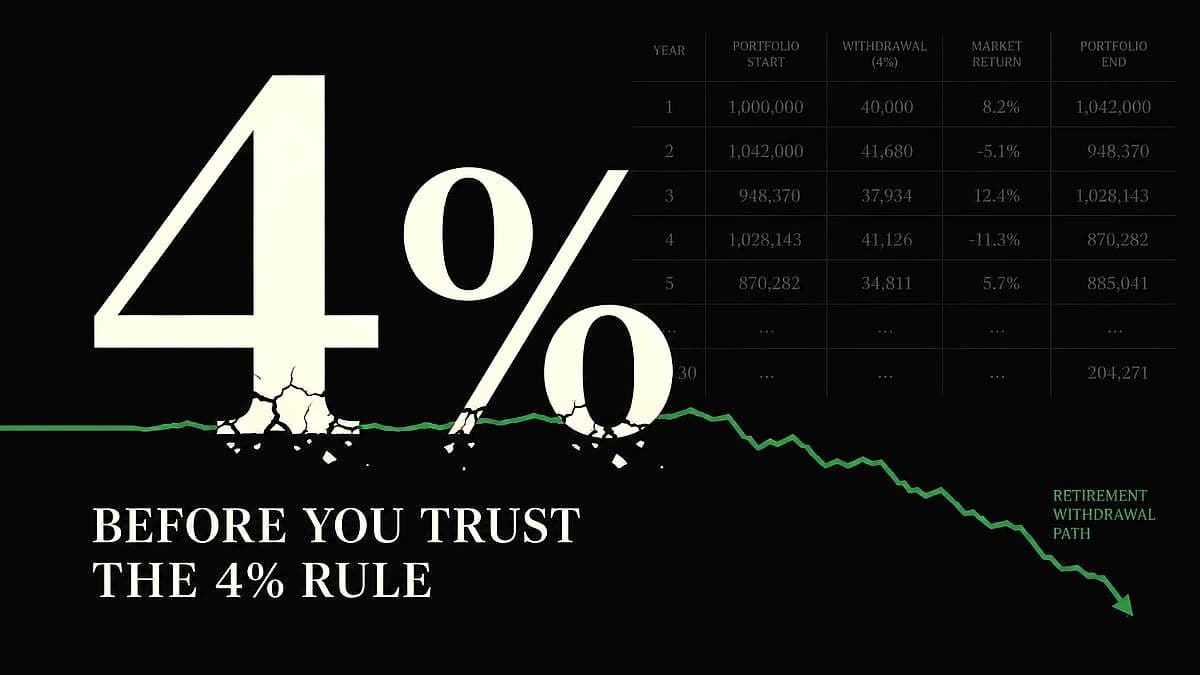
The traditional 4% withdrawal rule remains a solid starting point for retirement planning, but financial experts emphasize the importance of flexibility over rigidity. According to recent analysis, the rule's strength lies in its simplicity - 4% of portfolio value in the first year, with annual inflation adjustments - but it requires adaptability to market conditions. The most critical aspect is that it sends an important message: retirees need a comprehensive plan for tapping their nest egg to ensure it lasts through retirement. This flexibility allows for spending adjustments when markets are down and increased spending during early retirement years when health may still be good.
Financial experts identify sequence-of-returns risk as a more dangerous threat to retirement savings than market crashes. This risk occurs when market downturns force retirees to sell investments at losses during the critical early years of retirement. The damage cannot be undone - once equity investments are sold during a downturn, the base available for recovery when markets bounce back is permanently reduced. This phenomenon, known as rupee-cost ravaging, is the opposite of rupee-cost averaging that occurs during working years when market dips allow investors to buy more units at lower prices. The 4% rule's rigid structure can exacerbate this risk, particularly when retirees stick to the withdrawal rate regardless of market conditions.
Longevity risk, the risk of outliving retirement savings, is becoming increasingly significant as Indians live longer due to improved healthcare. As reported by The Economic Times, many retirees hope not to die with unused funds, especially when children are financially independent. However, experts advise planning for a lifespan beyond realistic expectations to avoid dependence in later years. The extra buffer can be the difference between maintaining dignity and requiring assistance during retirement. This planning becomes even more critical when considering potential market downturns that could reduce portfolio values significantly.
Inflation, particularly medical cost inflation, poses a significant threat to retirement savings over time. According to The Economic Times, at 5% annual inflation, the purchasing power of money halves in roughly 14 years. This erosion is particularly dangerous because inflation rarely feels alarming in any single year, making it difficult to recognize as a threat. Medical costs, a major retirement expense, tend to rise even faster than general prices, with a pension that feels comfortable at 60 potentially becoming inadequate at 75. The 4% rule's inflation adjustment mechanism helps address this, but retirees must be prepared for unexpected inflation spikes that could force withdrawal rate increases.

Financial experts recommend a layered approach to retirement portfolio construction with built-in flexibility for changing market conditions. As reported by The Economic Times, near-term expenses should be allocated to low-volatility options like liquid funds or short-term debt funds. Longer-term money can remain in equity to serve as an inflation hedge. The common assumption of drawing 6-7% of the corpus annually is considered too aggressive, with experts suggesting a withdrawal rate of 3.5-4.5% provides a better chance of portfolio longevity across a long retirement period. This approach allows for increased spending during early retirement years when health is good, then scaling back as needed during market downturns.