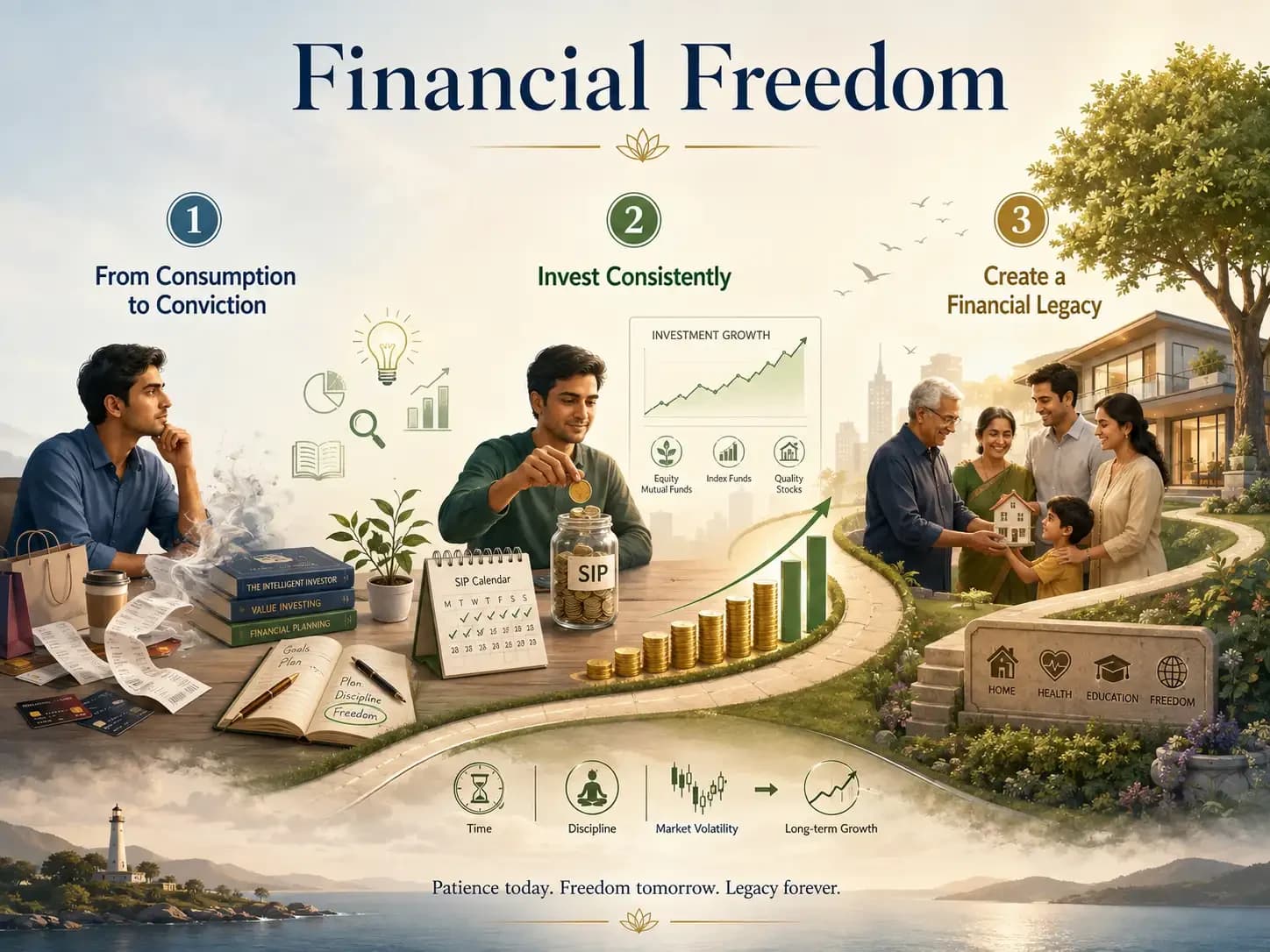
Financial freedom is built gradually through understanding, systematic investing and patience, according to investment guidance from The Economic Times. Unlike national freedom, this personal financial freedom emerges gradually through consistent mindset shifts rather than a single event. The journey involves three essential milestones that mark the path to wealth creation: moving from consumption to conviction, investing consistently, and creating a financial legacy. These milestones don't require extraordinary intelligence or perfect market timing but necessitate fundamental changes in how investors approach money management and market participation.
The most important transition involves moving from asking 'What can I buy?' to asking 'What should I own, and why?' as reported by The Economic Times. An investor who initially follows a stock because a friend recommended it or because it is making headlines eventually begins asking more fundamental questions: What does this company do? How does it make money? What gives it an advantage? Can its business sustain growth? This change from following tips to building conviction requires patience and research, with understanding the businesses you choose to own being more important than becoming an expert in every company. The transition from sporadic investing to systematic conviction is what enables investors to move from personal wealth to financial legacy.
Investing consistently requires understanding before investing, discipline in execution and patience over time, according to The Economic Times. The most valuable investment decisions are often those investors make by doing nothing — staying invested, continuing their contributions and giving compounding the time it needs. This approach doesn't require extraordinary intelligence or perfect market timing but requires three fundamental elements: understanding before investing, discipline in execution and patience over time. The common factor among investors who build substantial portfolios is often not how much they started with, but how consistently they invested and stayed aligned with their goals. Whether through SIPs, regular investments or periodic portfolio reviews, systematic investing takes emotion out of the process and reduces the temptation to wait for the 'right' time.
Financial freedom extends beyond funding personal aspirations to creating security for family and enabling future generations, as noted by The Economic Times. Building a financial legacy involves ensuring proper documentation and succession planning, maintaining a diversified portfolio, and helping the next generation develop financial awareness and good money habits. A financial legacy is not created at the end of the journey but is built through the choices made along the way. The right mix of equities, debt and other investments should reflect your goals, time horizon and risk capacity — and evolve as your life changes. After 25 years of market observation, this remains one of the simplest lessons: wealth creation does not work at the same speed as instant information and real-time prices, requiring patience to allow time to do the heavy lifting.