A recent Reddit user case study highlights the practical challenges of managing credit card debt after job loss. The user, who lost their high-paying job due to market shifts, used a credit card to cover everyday expenses including food and accumulated ₹1.2 lakh in debt with a card limit of ₹1.5 lakh. Currently earning only ₹25,000 monthly but expecting to increase to ₹80,000-₹85,000 by year-end, the user faces monthly interest payments of ₹4,000-₹5,000 and is considering a personal loan to clear the outstanding balance over 12 months. The user maintains a CRED credit score of 789 and has made all payments on time, though their score dropped from above 830 due to high card usage.
When managing ₹2 lakh in credit card dues and a ₹5 lakh personal loan, experts recommend prioritizing credit card debt repayment despite the smaller outstanding amount. According to Mint reports, credit card debt accrues at 36% to 42% per year compared to 11% to 16% on personal loans, making the smaller credit card debt more expensive overall. The Reddit case study reinforces this principle, with users noting that credit card charges 36-48% interest while personal loans offer 18-24% interest rates. The key mistake borrowers make is paying only minimum dues while believing they've completed their obligation, allowing the balance to compound at 40% annually. Recent calculations show how credit card interest can be calculated on average daily reducing balance, making it crucial to make payments as soon as funds are available to avoid compounding interest on already paid amounts.
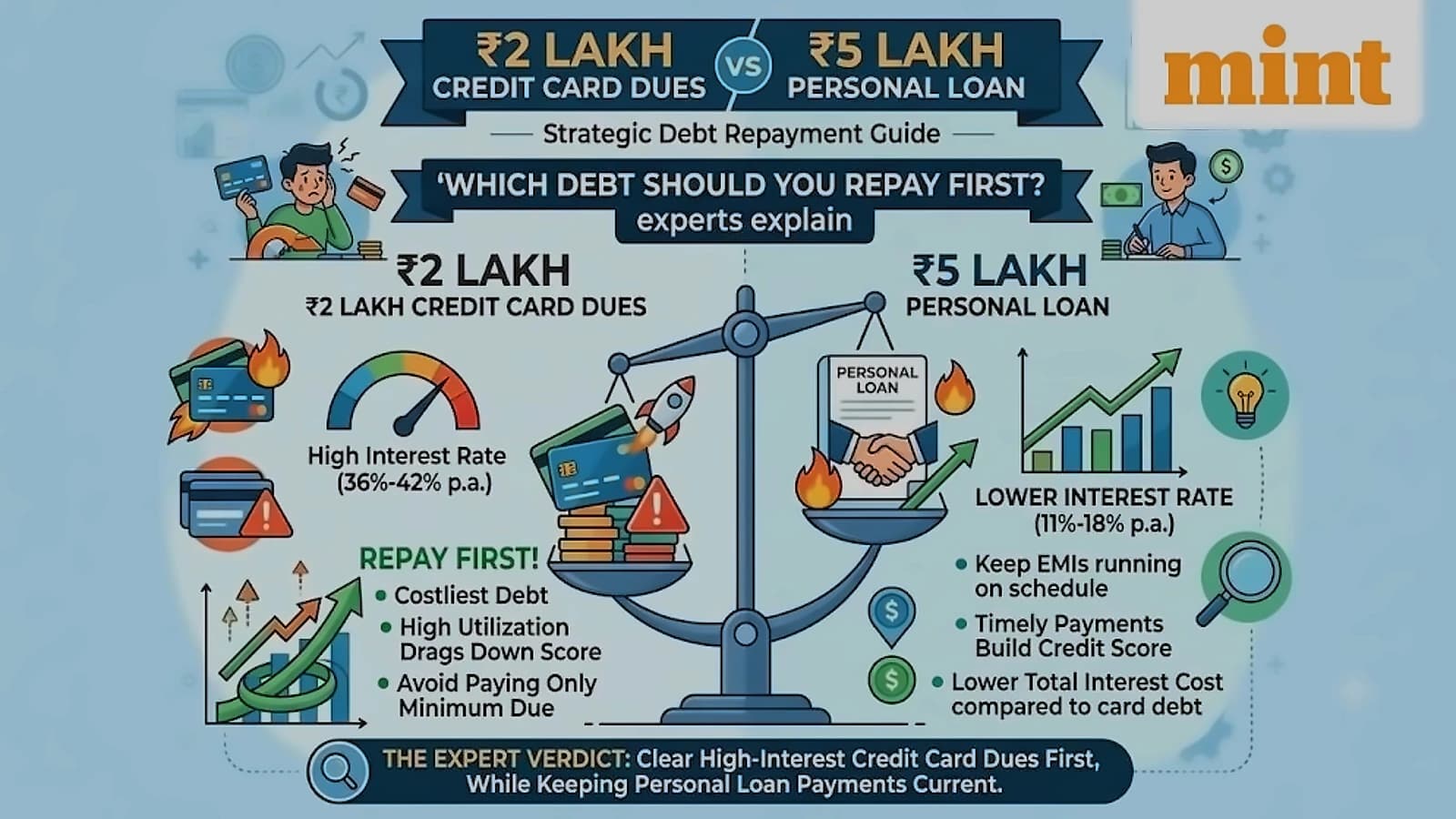
As reported by Mint, personal loans typically carry 12-18% annual interest while credit card debt from other issuers can attract higher charges when balances are carried forward. Raj P Narayanam, Founder & Executive Chairman of Zaggle, emphasizes that the answer lies in interest rates rather than outstanding amounts. He notes that credit cards designed responsibly should reward spending rather than penalize it, provided they're paid in full. The Reddit case study demonstrates this clearly, with users recommending switching from high interest debt to low interest as the logical approach. The focus should be on the most expensive form of debt, which in this case is the ₹2 lakh credit card debt that can compound quickly. Recent calculations demonstrate how credit card interest is calculated based on average daily reducing balance, making it essential to understand the complex interest formulas and avoid additional purchases that could increase the average daily balance.
According to Mint reports, a maxed credit card drags down your credit score through high utilization every month, while a personal loan paid on time actually builds credit. Kapil Makhija, Founder and COO at MinEMI.ai, recommends keeping the loan EMI running as scheduled while putting every spare rupee into the card debt. The Reddit case study suggests selling assets like gold, car, bike, or laptop to generate funds for debt repayment, noting that someone with a high-paying job would likely have assets worth selling. Borrowers should avoid relying solely on minimum payments and compare lower-cost repayment options. Recent calculations highlight how credit card interest calculations can be tricky, with companies charging interest from purchase dates and calculating based on average daily reducing balance, making it essential to understand these complex formulas.
As reported by Mint, experts emphasize that clearing high-interest credit card-related dues first can significantly reduce overall borrowing burden, provided borrowers also continue clearing pending personal loan EMIs on time. The Reddit case study reinforces this strategy, with users recommending taking a personal loan to clear credit card debt as it offers lower interest rates. Paying from an overdraft account is suggested as the best option in the scenario, offering flexible payments with no penalty and much lower interest rates of 1% per month. The focus should be on avoiding delays or defaults to prevent financial complications, psychological stress, and legal ramifications. Borrowers should direct any additional funds, bonuses, or savings towards reducing the costliest outstanding balance while maintaining timely payments on both debts. Recent guidance emphasizes that if running late on credit card payments, borrowers should make payments as soon as funds are available, even without receiving the next month's statement, to avoid compounding interest on already paid amounts.