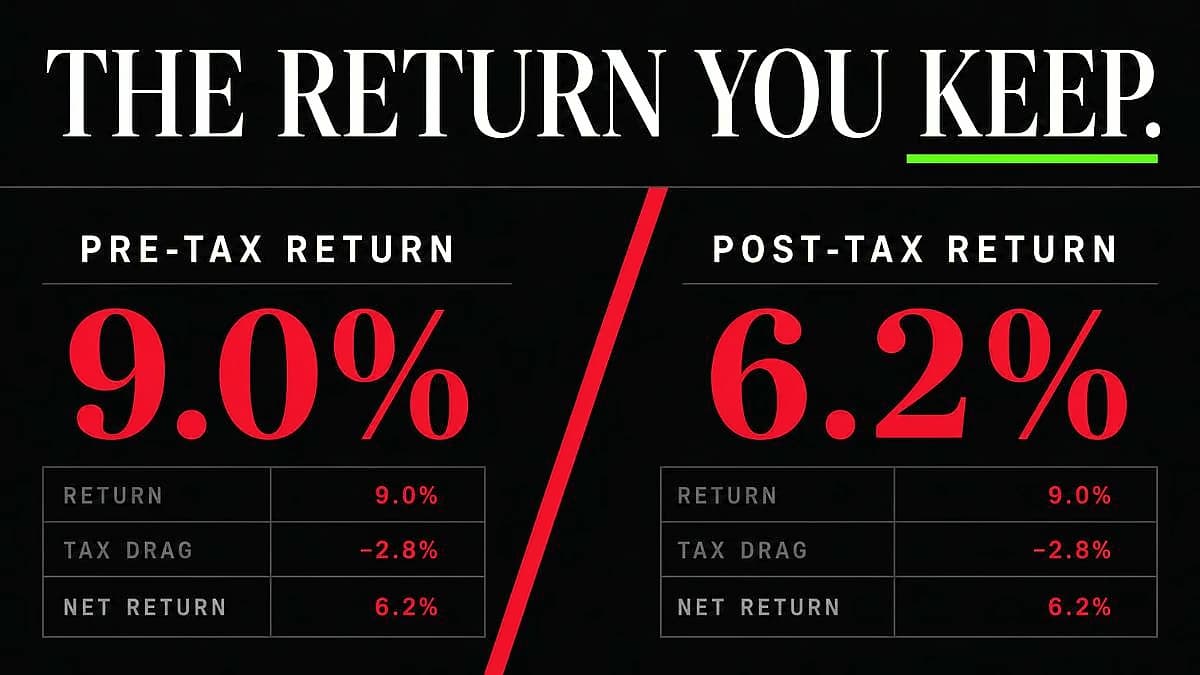
A ₹2 crore fixed deposit earning 8% annual interest may generate approximately ₹16 lakh in interest income every year, but investors in the highest tax bracket face significant tax implications. According to reports from Business Standard, for someone in the highest 30% income-tax bracket, the tax liability on that interest could be around ₹4.8 lakh annually, excluding surcharge and cess. This means only about ₹11.2 lakh effectively remains with the investor after tax, with the tax paid every year reducing the amount available for future compounding. The tax burden becomes particularly significant when considering that ₹16 lakh in interest income translates to ₹4.8 lakh in tax liability, representing nearly 30% of the total interest earned.
The timing of taxation represents the biggest challenge for fixed deposit investors. As reported by Business Standard, interest earned on fixed deposits is taxed according to the investor's income-tax slab in the year it is earned, regardless of whether the money is withdrawn or reinvested. This means tax is payable every year, with part of the return leaving the portfolio immediately and less money remaining invested for future compounding. Certified financial planner Vijay Maheshwari from Stockstick Capital explained that this can result in significant wealth creation being lost not because investments underperformed, but because taxes compounded against investors over time. The compounding effect becomes more pronounced when considering the ₹4.8 lakh annual tax liability compared to the ₹16 lakh interest income, effectively reducing the investment's growth potential significantly.
Debt mutual funds offer a different tax structure compared to fixed deposits. According to Business Standard, unlike fixed deposits, investors generally do not pay tax every year on unrealised gains in debt funds. Instead, taxation typically arises when units are redeemed or sold, allowing a larger portion of the investment to remain invested and continue compounding until the investor decides to exit. Additionally, investors may be able to use eligible capital losses from other investments to offset capital gains, potentially reducing the overall tax burden. This deferred taxation approach can be particularly beneficial for investors in higher tax brackets, as it allows more money to remain invested for longer periods before tax obligations arise.

Financial experts recommend a balanced approach to fixed-income investments based on individual circumstances. As reported by Business Standard, Value Research suggests using equity funds for long-term growth and a mix of FDs and debt funds for capital protection and income based on time horizon and comfort with variability. For investors in higher tax brackets, the difference between annual taxation and deferred taxation can become meaningful over long periods, with good quality short and medium-duration debt funds potentially outperforming many FDs after tax if interest rates remain stable. The strategic advantage becomes clearer when considering that ₹16 lakh in interest income from a ₹2 crore FD faces ₹4.8 lakh in annual tax liability, while debt funds may offer deferred taxation that allows more capital to remain invested for longer periods.