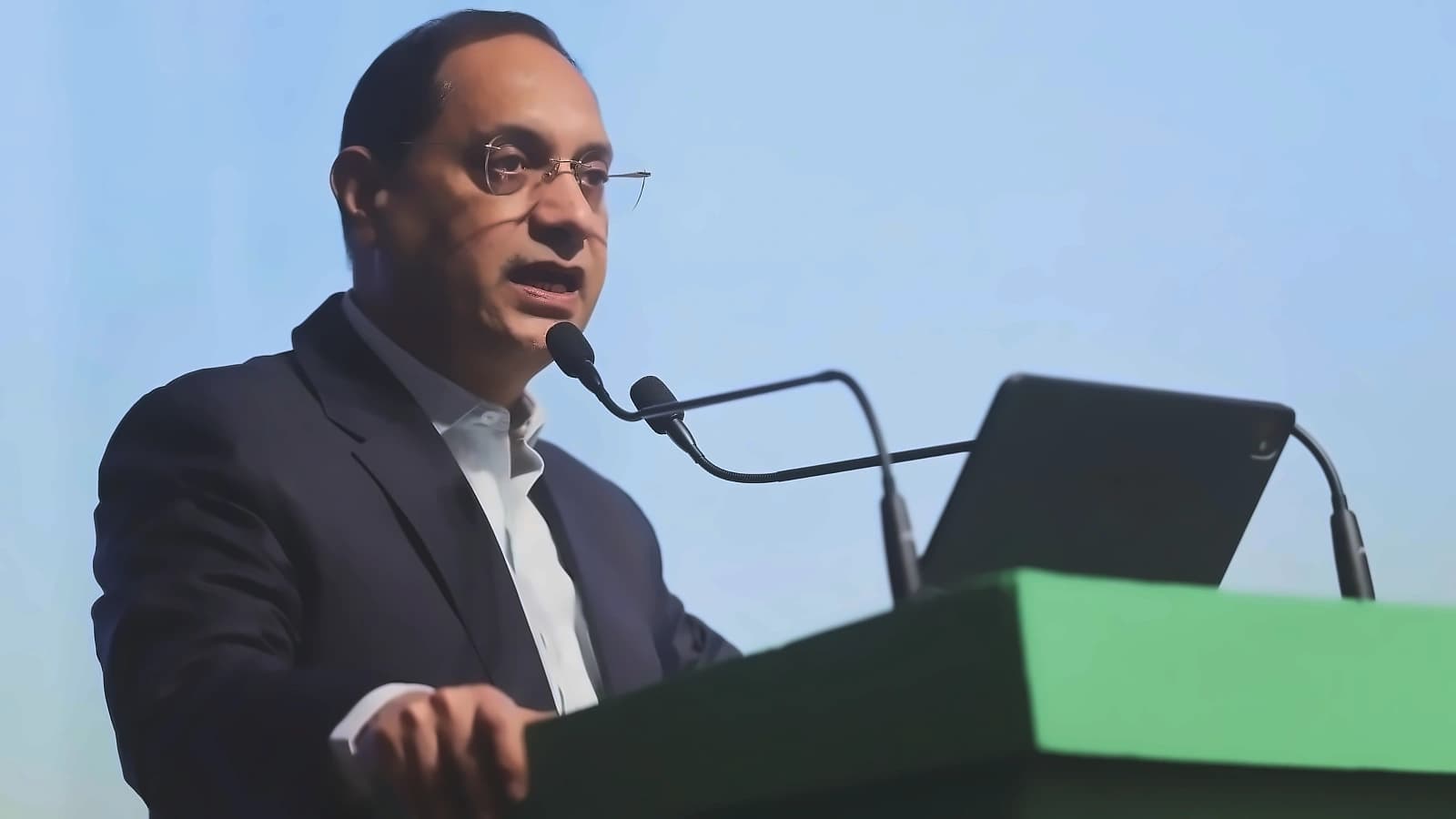
Under newly appointed Managing Director and CEO Vetri Subramaniam, India's oldest asset manager is staging a comeback after a decade of falling behind faster-growing rivals. As reported by Mint, Subramaniam likens the company's situation to having a cement plant with 8 lakh tonnes capacity producing only 4 lakh tonnes - emphasizing that the key question is whether they're fully utilizing their potential. The CEO, who took charge in February 2025 ahead of the annual planning cycle, brings unique credentials as an insider who comes from the core business itself, managing money rather than being brought in to fix structural issues. According to Dhirendra Kumar, founder and CEO at Value Research, this insider perspective gives UTI a real edge in a business where customers ultimately pay for performance.
UTI AMC's largest equity scheme - the flexicap fund - has delivered a 10-year CAGR return of 11.41% versus the benchmark return of 13.89%, while its five-year CAGR returns are 5.82% versus 12.4% for the benchmark. The company's net profit has declined at a compounded annual rate of about 1% over the past five years, even after adjusting for the one-time impact of the voluntary retirement scheme. In contrast, Nippon India Mutual Fund, HDFC Mutual Fund and Aditya Birla Sun Life AMC posted profit CAGRs of about 18%, 18% and 13% respectively. The underperformance was attributed to 47% of mutual fund closing assets being in ETFs and index funds, with equity assets accounting for just 24% of total assets compared to 66% for HDFC, 56% for ICICI, and 46% for SBI.

Distribution was identified as another significant weakness, with the in-house sales team's pace nowhere close to what other mutual funds had, according to a UTI ex-official. A larger section of the 184 employees who took voluntary retirement scheme last year was primarily from sales and quasi functions such as operations and support. The new hires who replaced the senior workforce were younger, with their average age at 31.4 years in FY26. As per the company's annual report, UTI has expanded its network from around 190 branches to 255 over the last 18-24 months. The company has also revised investment manuals that were not updated for two decades and switched many in-house systems to better external technology.
Over the past decade, UTI AMC's mutual fund assets have grown 3.7 times to about ₹3.9 trillion, compared with 11.8 times for SBI Mutual Fund and 10.2 times for Kotak Mahindra Mutual Fund. The company's lower profitability was due to its lower share of equity assets in the mutual fund business, with a higher share of ETFs and index funds weighing on yields as these products charge significantly lower fees than active equity funds. UTI AMC maintains a diversified shareholder base with T. Rowe Price International as the largest shareholder at 22.6%, followed by Punjab National Bank at 15.03%, and State Bank of India, Bank of Baroda and Life Insurance Corporation of India each holding 9.85%.
UTI AMC is now focusing on sharpening its go-to-market strategy after completing the heavy lifting of rebuilding foundations. The company is prioritizing acquiring younger investors through fintech partnerships, partnering with companies that help users such as auto-rickshaw drivers invest their daily surplus in liquid mutual funds instead of leaving idle cash in bank accounts. As per Subramaniam, the idea is to familiarize first-time investors with mutual funds before they move on to other investment products. The company has also expanded its UTI Money Market Fund with a NAV of ₹3,290.65 and AUM of ₹17,556.89 crore, delivering strong returns with 1-month return of 0.63%, 6-month return of 6.13%, and 1-year return of 7.26%.