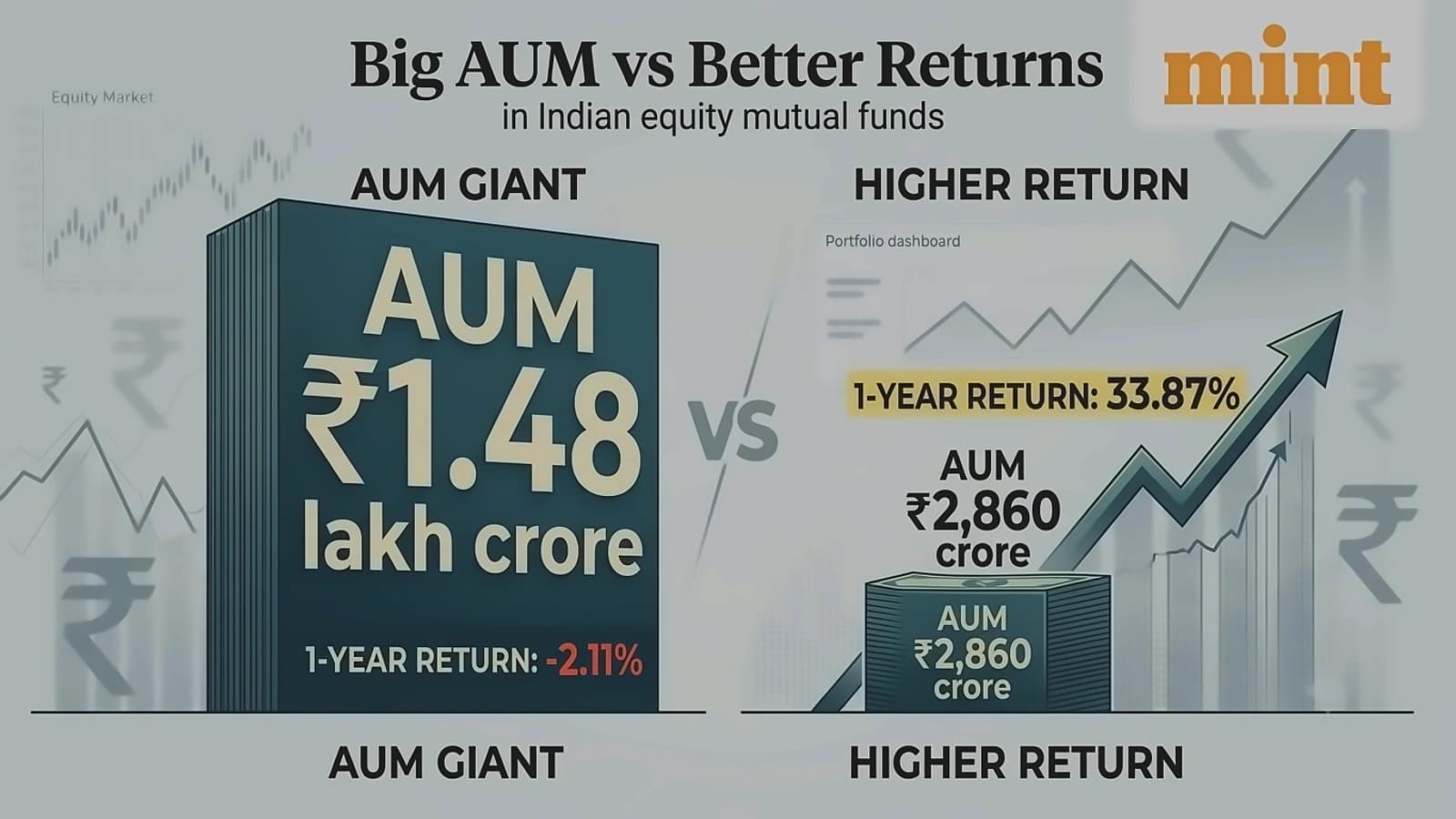
According to reports from Mint, Parag Parikh Flexi Cap Fund leads India's mutual fund landscape with an assets under management (AUM) of ₹1.41 lakh crore, making it the only scheme on this list to cross ₹1.4 lakh crore. HDFC Balanced Advantage Fund follows with ₹1.04 lakh crore AUM, while HDFC Flexi Cap Fund ranks third at ₹1.02 lakh crore. HDFC Mid Cap Fund occupies the fourth spot with ₹97,350 crore assets, and ICICI Prudential Multi Asset Fund completes the top five with ₹84,165 crore AUM as of May 31, 2026. As reported by Value Research, these rankings reflect the popularity and investor participation across different fund categories.
As reported by Mint using Value Research data, Parag Parikh Flexi Cap Fund delivered a -3.30% return over the past year, resulting in an investment of ₹1 lakh falling to approximately ₹96,700. ICICI Prudential Multi Asset Fund emerged as the top performer with 5.84% returns over the last year, growing the same ₹1 lakh investment to ₹1,05,840. Over three years, HDFC Mid Cap Fund posted the highest CAGR of 20.62%, while Parag Parikh Flexi Cap Fund recorded the lowest CAGR at 14.62%. Over five years, HDFC Mid Cap Fund again led with 20.69% CAGR, compared to Parag Parikh Flexi Cap Fund's 14.65% CAGR, which remained the lowest across all time periods.
According to Mint analysis using Value Research data, if you had invested ₹1 lakh in Parag Parikh Flexi Cap Fund three years ago, it would have grown to ₹1,50,594. HDFC Balanced Advantage Fund would have delivered ₹1,50,712 from the same ₹1 lakh investment over three years. Over five years, the same ₹1 lakh investment in Parag Parikh Flexi Cap Fund would have grown to ₹1,98,103, while HDFC Mid Cap Fund would have generated the highest five-year return of ₹2,56,147. ICICI Prudential Multi Asset Fund delivered the highest one-year return of ₹1,05,840 from a ₹1 lakh investment, demonstrating the varying performance across different fund categories and time periods.

As reported by Mint, a higher AUM generally indicates strong investor participation and sustained inflows, but it should not be the sole factor while selecting a mutual fund. Investors can evaluate the fund's long-term performance, investment strategy, risk profile, and expense ratio before making investment decisions. The analysis emphasizes that while AUM size reflects popularity, investors should consider multiple factors including the fund's alignment with their financial goals before making investment decisions. The report includes a disclaimer stating this information is for educational purposes only and should not be construed as investment advice.