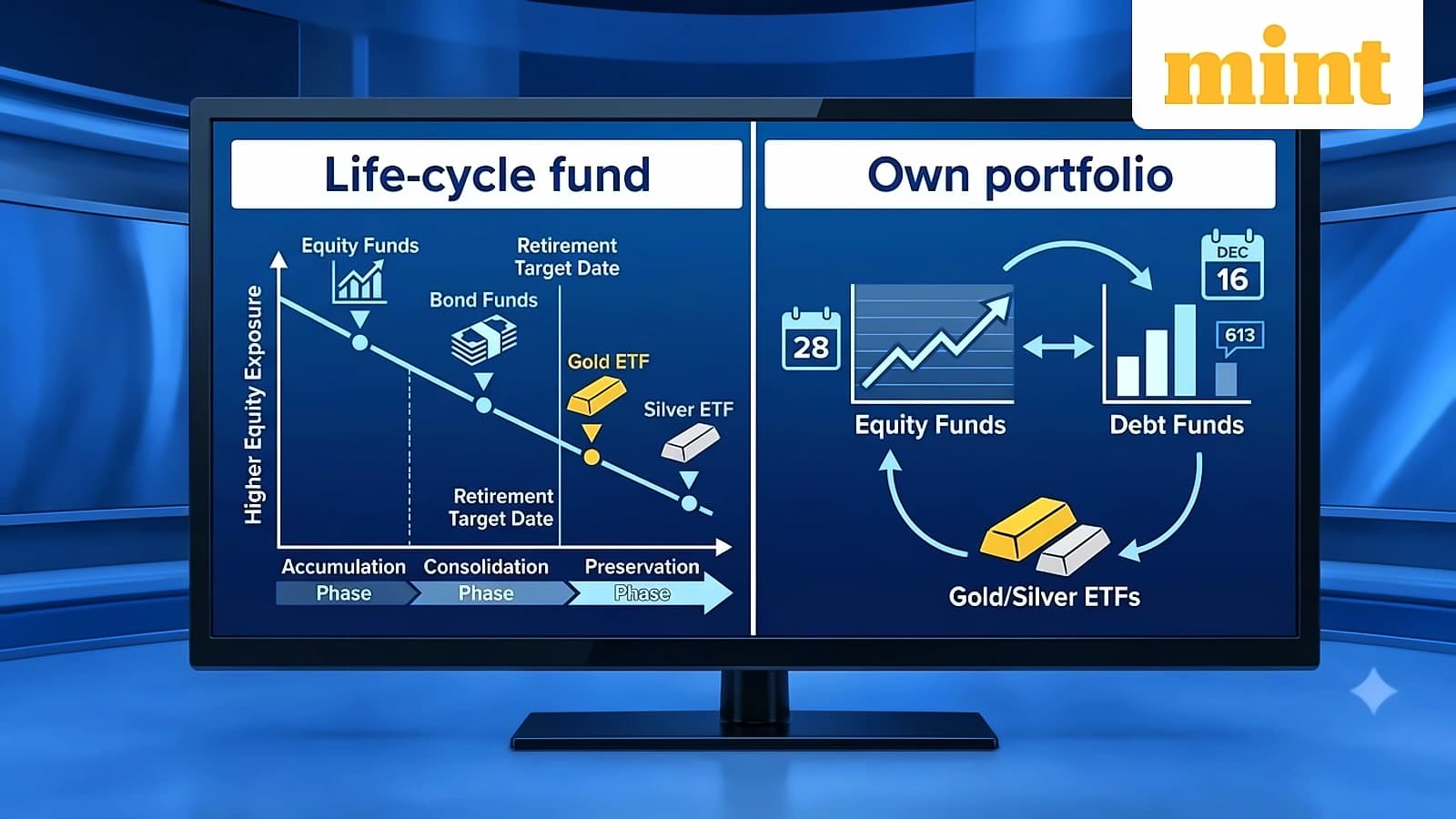
Mirae Asset has launched the Mirae Asset Life Cycle Fund 2056, a 30-year retirement-focused fund designed to address investor behavioral challenges in long-term investing. According to Harshad Borawake, Head of Research & Fund Manager at Mirae Asset Mutual Fund, the fund solves the real problem of investor behavior rather than return generation, as most investors don't have a return problem but struggle with selling during downturns and chasing rallies. The fund operates through an automatic glide path that reduces net equity exposure from 70-90% in early years to 10-25% as 2056 approaches, allowing investors to pursue long-term growth while progressively protecting their retirement corpus.
The fund follows a five-stage glide path with specific asset allocation targets at different maturity points. As reported by The Economic Times, the allocation structure includes Growth (2026-2041): 70-90% equity, Growth Moderation (2041-2046): 65-80%, Balanced (2046-2051): 50-65%, Conservation (2051-2053): 35-50%, and Preservation (2053-2056): 10-25%. The fund maintains at least 65% in equity including arbitrage until maturity to retain its equity-oriented tax status, while arbitrage builds from zero to about 50% by 2056 for tax efficiency. Commodities comprise 10% of the portfolio, with 5% in gold throughout and 5% managed tactically across gold, silver and InvITs.

The fund maintains tax-efficient allocation throughout its 30-year tenure by ensuring equity exposure never falls below 65%. According to The Economic Times, short-term gains (under 12 months) are taxed at 20%, while long-term gains are taxed at 12.5% with a ₹1.25 lakh annual exemption. The fund's structure eliminates tax costs associated with manual rebalancing between separate aggressive, moderate and conservative funds, as tax applies only when investors redeem or at maturity in 2056. The fund also offers an SWP option for regular income and suits investors planning retirement around age 60, targeting those in their early-to-mid forties.
The fund addresses a gap in the mutual fund space by combining a valuation-led framework with a structural glide path that reduces risk as 2056 approaches. As reported by The Economic Times, the fund differs from conventional diversified equity funds that remain fully equity-heavy regardless of goal proximity and balanced advantage funds that change allocation based on valuations rather than goal timing. The fund's hands-off approach includes active management of security selection and risk, while avoiding the tax costs associated with manual rebalancing between separate funds. The debt allocation follows a roll-down strategy in G-Secs/SDLs for the first 20 years, then shifts to actively managed corporate bonds rated AA and above based on the fund manager's interest rate view.