IPO mutual funds operate as a specialized category with different investment approaches. According to Mint, Uttam Agarwal, Chief Business Officer at Bajaj Capital, explained that fund managers study offer documents, meet management teams, and analyze business fundamentals before making investment decisions. The real work begins much before listing, focusing on business performance, financials, promoter track records, and valuation assessments. For newly listed companies, position sizing becomes crucial due to limited market history, with managers starting with measured allocations and increasing exposure as business performance strengthens.
As reported by Mint, Manish P. Hingar, Founder and CEO of Fintoo, outlined that IPO-focused mutual funds can purchase shares at three distinct stages. Pre-listing opportunities include anchor investments where institutional investors receive shares a day before public opening, though these are subject to lock-in periods. During IPO subscription, mutual funds apply alongside other institutional investors when public offerings are open. Post-listing purchases allow fund managers to buy shares from stock markets once companies are listed, with the option to wait for initial excitement to settle or until companies report quarterly results.
According to Mint, Piyush Jhunjhunwala, Founder and CEO of Stockify, explained that exit decisions are not typically driven solely by financial results. Fund managers continue tracking valuations, earnings prospects, cash flows, operational performance, competition, and corporate developments. A stock may be sold after strong returns if valuation exceeds expected earnings growth, or due to weakening business prospects, poor earnings visibility, governance concerns, or changes in investment thesis. Portfolio turnover depends on investment philosophy and market environment, with high turnover not necessarily positive.
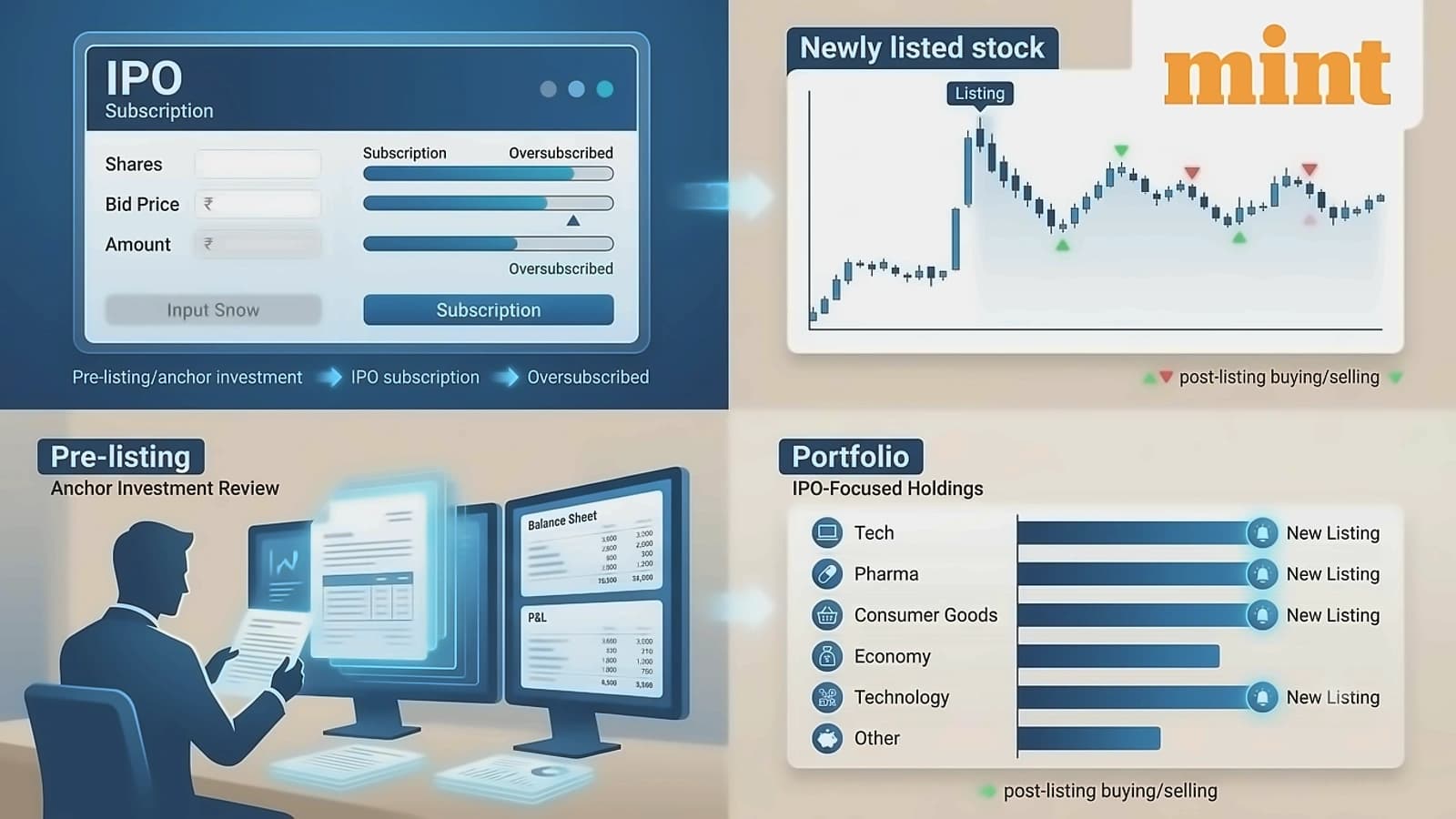
As reported by Mint, Uttam Agarwal noted that mainboard IPOs remain the larger opportunity set due to greater scale, disclosure, and liquidity. Whether funds can invest in SME IPOs depends on their specific mandates. Manish Hingar emphasized that these funds should be viewed as small additions to equity portfolios rather than core holdings. Investors should assess portfolio sector exposure, number of holdings, allocation to newly listed stocks, valuations, and concentration levels.
According to Mint, investors should evaluate IPO funds beyond returns and popular IPOs by checking portfolio sector exposure, number of holdings, allocation to newly listed stocks, valuations, and concentration. Expense ratio, portfolio turnover ratio, downside risk, and consistency of returns serve as useful indicators. Investors should also assess whether portfolios reflect stated strategies, including market-cap and recent-listing exposure, and avoid judging portfolios based on listing day gains. The analysis should focus on how much of the fund is actually invested in newly listed and IPO companies.