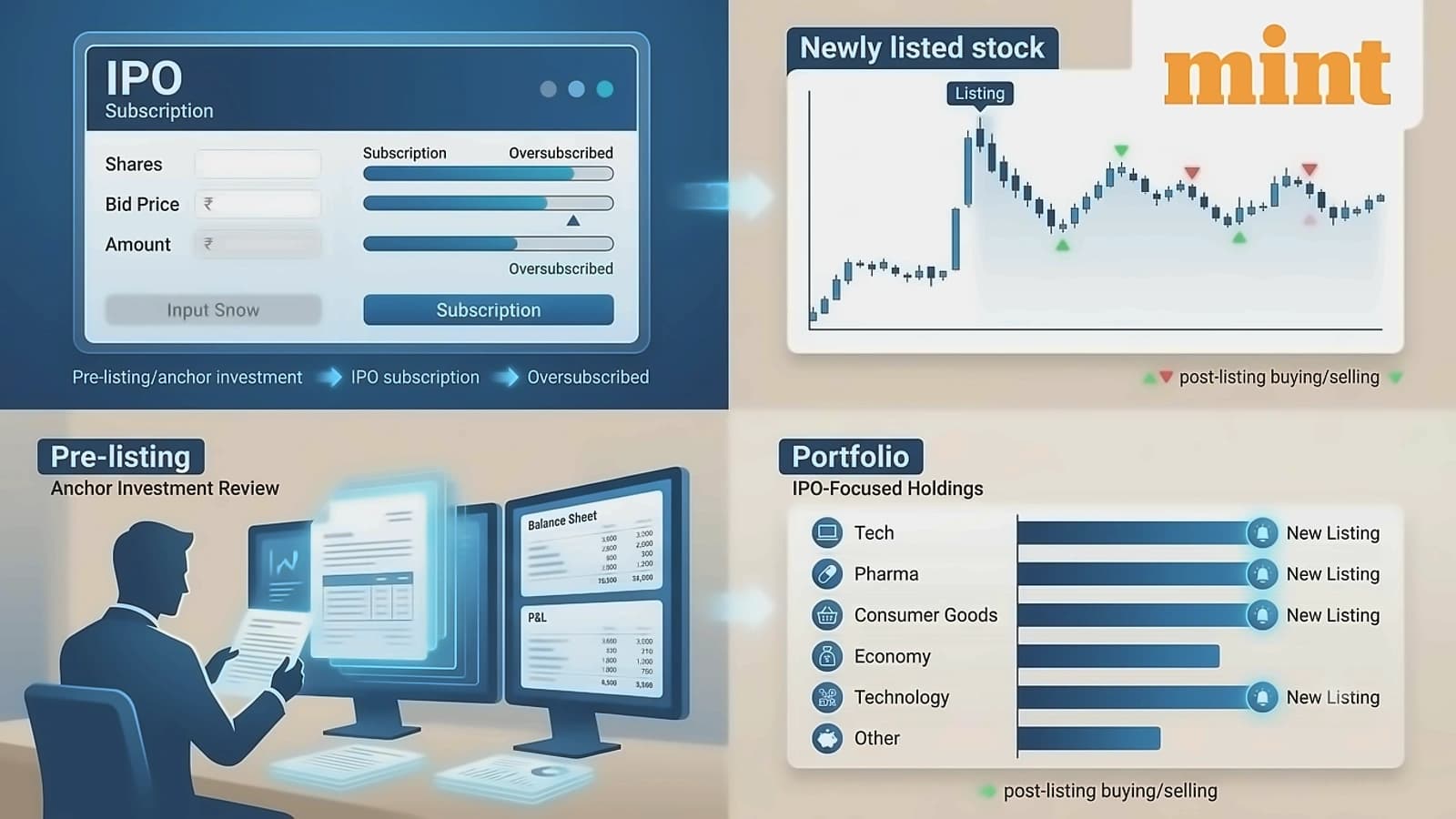
Initial public offering activity in Indian markets is experiencing significant momentum, with companies raising approximately ₹22,400 crore this month through August 26. According to reports from Mint, more IPOs are expected before September 30, when the one-year validity of approvals from the Securities and Exchange Board of India (Sebi) for several companies is due to lapse. This timeline creates urgency for companies to complete their listing processes before regulatory approvals expire. Since IPO-bound companies do not have a listed-market track record or exchange trading history, investors largely have to depend on information provided before the listing, making the red herring prospectus (RHP) among the most important documents for assessment.
Investors evaluating IPOs must focus on several critical areas beyond the initial hype. As reported by Mint, the red herring prospectus (RHP) serves as the primary disclosure document, revealing how IPO proceeds will be utilized and providing insights into existing investor exits. Aditya Kondawar, partner and vice-president at Complete Circle Capital, emphasizes examining share prices from months before the IPO to determine if the current pricing is justified by material changes. The RHP also contains information about fundraising activities, valuations, and related-party transactions that can signal potential concerns. Investors should begin by assessing three key parameters—growth, profitability and valuation, as a company showing rapid growth may still be an unattractive investment if its profitability is weak or its IPO valuation is excessive. Kondawar warns that if existing investors are simply using the IPO to exit, that may not augur well, because the basic premise is that the company should make productive use of the capital.
Financial statement evaluation reveals critical warning signs that investors must identify. According to Mint reports, Pankaj Pandey, head of retail research at ICICI Direct, warns that companies showing profits on paper but negative cash flows year after year represent significant red flags. Narendra Solanki, head of fundamental research at Anand Rathi Shares and Stock Brokers, recommends examining employee and marketing costs over several years rather than focusing solely on the latest period, as businesses sometimes manipulate these expenses to improve financial appearances around IPO timelines. The financial statements can provide important clues, with experts cautioning that companies reporting accounting profits while consistently generating negative cash flow should be examined carefully, as persistent negative cash flows could indicate that reported profits are not translating into actual cash generation. Kondawar advises investors to study the prices at which shares changed hands in the months leading to the IPO, asking whether an investor received shares at a particular price six months before the IPO and the issue is priced at twice that level, implying examination of shares is essential to assess the company's financial quality.
Corporate governance disclosures in the RHP provide crucial insights into promoter behavior and potential risks. As reported by Mint, Pandey highlights that promoters with frequent business changes or large related-party dealings should raise investor caution, along with any auditor remarks suggesting weak internal controls. Deepak Jasani, independent market analyst, recommends examining promoter and top-management compensation against industry levels, while the risk factors section discloses contingent liabilities that may not appear as debt on balance sheets. These potential obligations include guarantees, disputed tax demands, and pending legal claims that could weaken the balance sheet if they materialize. Investors should also look beyond the headline debt figures and examine contingent liabilities, including guarantees issued for other parties, disputed tax demands, ongoing legal cases and bills discounted, which may not appear as conventional debt on the balance sheet but could result in significant financial outflows later. Solanki suggests evaluating what fundraising took place shortly before the IPO, at what valuation and under what circumstances, as these details are available in the RHP.
Valuation assessment requires comparing IPO pricing with established market peers and historical performance metrics. According to Mint reports, investors should compare simple metrics such as price-to-earnings and price-to-book ratios with listed peers in the same industry, while examining growth and margin behavior relative to competitors. Pranav Haldea, managing director of Prime Database, suggests monitoring anchor and qualified institutional buyer participation, as their presence indicates institutional due diligence has been conducted. The listing performance data reveals that 37% of IPOs closed below their issue price in 2026 as of August 26, compared to 33% in 2025, highlighting the challenging nature of IPO investing. Nearly two-fifths of companies that have listed since 2022 were trading below their IPO issue prices as of August 26, 2026, demonstrating the persistent underperformance in the IPO market.