SEBI's $7 billion cap on overseas mutual fund investments has been breached, limiting options for Indian investors seeking global diversification amid strong US market gains and rupee depreciation. According to The Financial Express, the industry hit the main limit of $7 billion in foreign securities across the industry plus a separate $1 billion for overseas ETFs in January 2022, with SEBI freezing every fund house at whatever it held abroad on February 1, 2022. The nearly 29.54% depreciation of the Indian Rupee against the USD during the last five years has further enhanced returns for Indian investors in US markets, making a case for diversification into dollar investments. Over the past five years, US stock markets have outperformed Indian markets significantly, with the Nasdaq 100 increasing by 96.5% and the S&P 500 by 73.2%, while the Nifty 50 and Sensex rose by approximately 50%.
HDFC Mutual Fund has launched its first outbound funds from GIFT City, marking a significant breakthrough for Indian investors seeking global market exposure. According to latest reports, these outbound funds collect money from Indian investors and deploy it into international markets, representing a complete reversal of the traditional flow direction. The launch comes at a critical time when traditional international funds remain frozen due to SEBI's overseas investment caps of $7 billion plus $1 billion for overseas ETFs. HDFC's entry adds scale and familiarity to a route that until recently was tested by only a handful of AMCs, signaling this is becoming a mainstream channel rather than a niche experiment.
The GIFT City route operates outside SEBI's overseas investment caps because funds launched there are treated as offshore entities under the International Financial Services Centres Authority (IFSCA) framework. As reported, resident Indians can invest in these funds by remitting dollars under the RBI's Liberalised Remittance Scheme (LRS), which allows up to USD 250,000 per person per financial year. The funds are USD-denominated and typically digital using PAN and Aadhaar, with the structure usually being a fund-of-funds that feeds into low-cost international index funds or ETFs. Two practical considerations include that money sent abroad above ₹10 lakh annually attracts 20% TCS, though this can be adjusted when filing income tax returns, and there's uncertainty about tax disclosure requirements in Schedule FA until clear guidance is issued.
A much easier option left for Indian investors is the route of international brokerage platforms such as Appreciate and Vested Finance. According to The Financial Express, investors can invest through these platforms in buying direct stocks and even ETFs linked to Nasdaq and S&P 500 indices, though they must meet RBI formalities to adhere to the conditions of the Liberalised Remittance Scheme (LRS). The scheme permits all resident individuals, including minors, to remit up to $250,000 per financial year for any permissible current or capital account transaction or a combination of both. This route avoids the RBI formalities that international mutual funds require, though it still faces the same $7 billion industry cap that has been exceeded.
With international funds shut, ETFs have become the primary route for overseas investment, but they come with hidden costs. As reported by Value Research, ETFs hit their own $1 billion cap in April 2024 and can no longer create new units, creating supply constraints while demand remains strong. The market price floats above NAV, with the gap representing the premium. Mirae Asset Hang Seng TECH exemplifies this distortion, trading at ₹22.99 against an NAV of ₹19.54, representing an 18% premium above actual holdings. The fund's holdings actually fell about 2% over the year, yet buyers made about 6% gains entirely from premium widening. According to The Financial Express, small-mid-cap and large-cap funds in India have generated a CAGR of 14-16% over the last 10 years, while international funds managed 12%, though this category includes non-US global equities and non-equity asset classes.
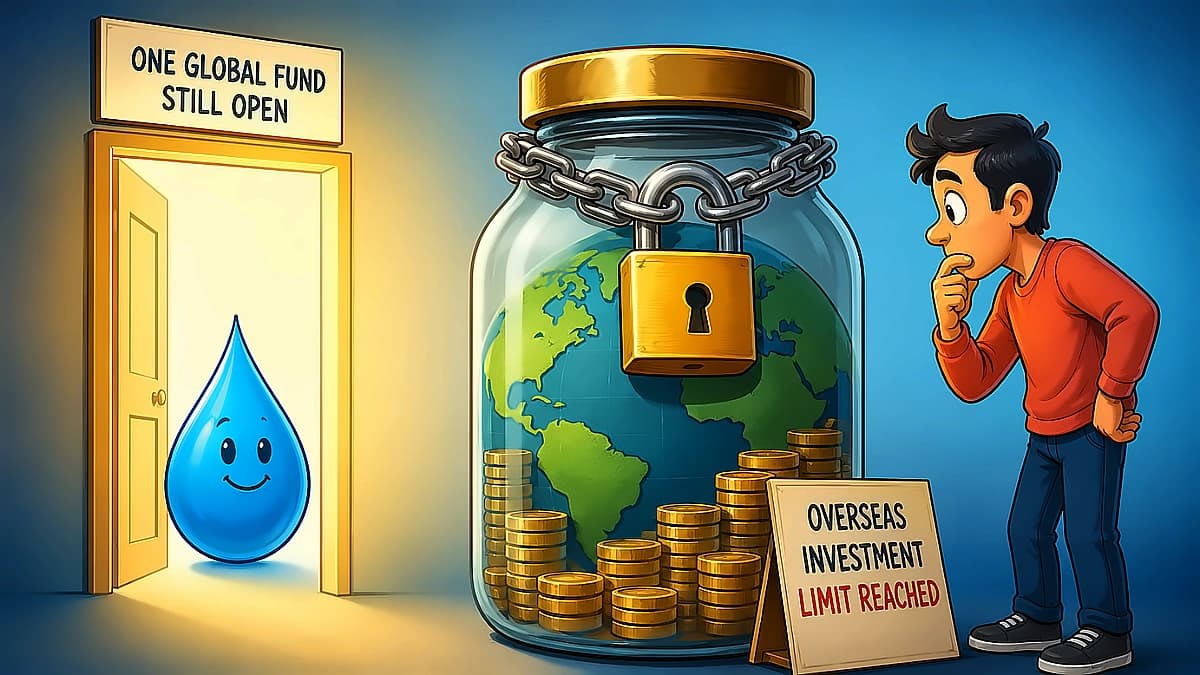
Currently, US markets are at record high levels, thanks to big tech stocks and particularly the rally seen in AI-led companies, creating concentration risk with valuations breaching historical levels. As reported by The Financial Express, the gloomy state of one's own market should not be the basis for investing in US markets, instead focusing on geographic diversification, currency advantage, and owning global companies for long-term investing. Freefincal analysis suggests that if you want international equities to make a difference in your equity portfolio, at least 20-30% exposure is required, while a little amount of exposure (read 5-10%) won't considerably lessen market blows or increase profits due to higher tax rates. Most foreign funds have mostly closed their subscription windows, forcing investors into ad-hoc investing that is not advisable for effective planning.