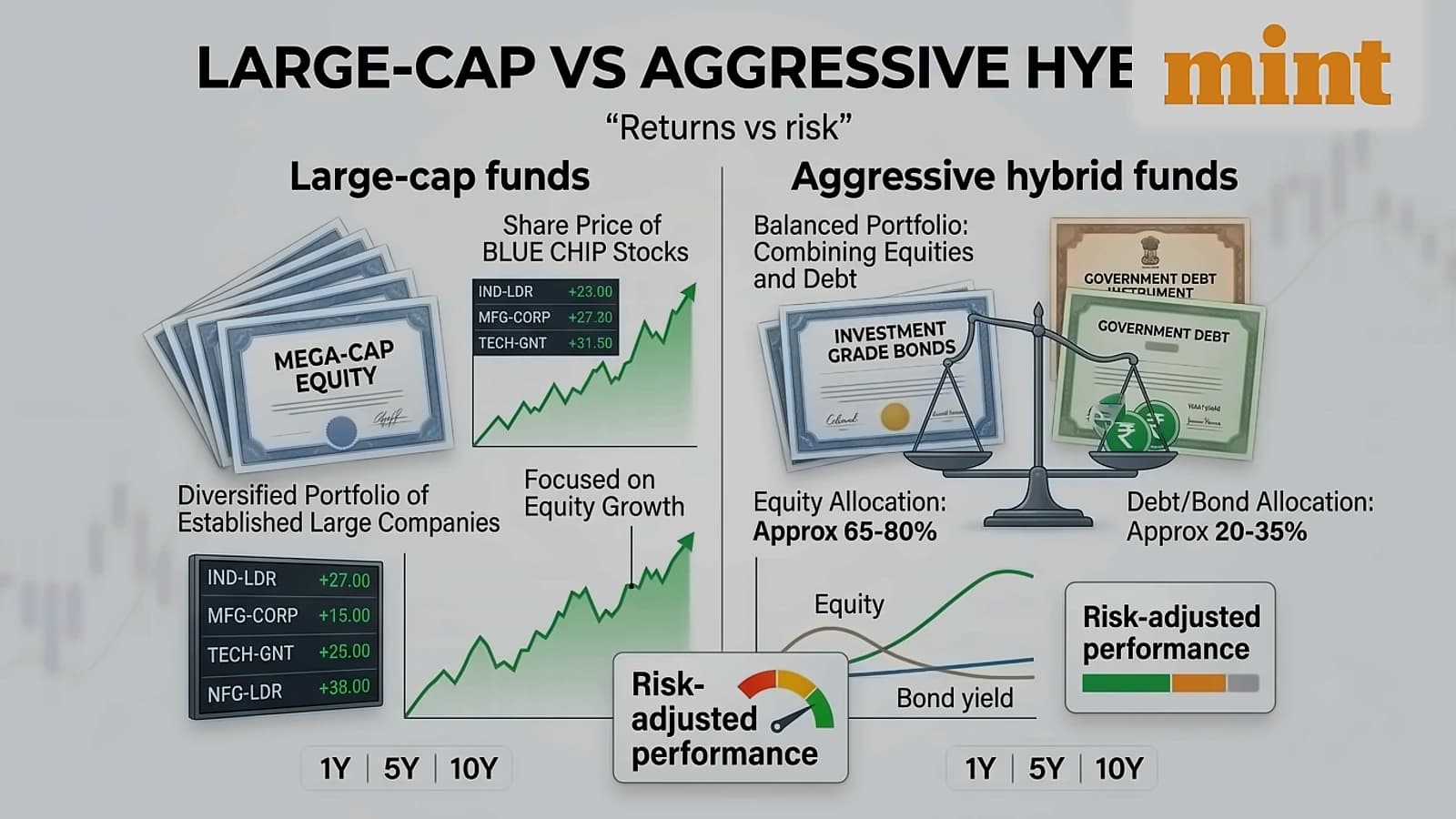
According to reports from Value Research, aggressive hybrid funds have delivered 11.6% per annum over the last 10 years, slightly behind the 12.3% delivered by large-cap funds. However, rolling returns tell a different story - over 10-year monthly rolling periods from June 2016 to May 2026, the average aggressive hybrid fund beat the average large-cap fund 55% of the time. The average 10-year rolling return was nearly identical at 11.5% for aggressive hybrid funds versus 11.4% for large-cap funds, demonstrating that aggressive hybrid funds can deliver almost the same returns while providing better protection during market downturns. As reported by Value Research, these funds solve a difficult investor problem by letting investors stay close to large-cap returns without taking the full hit in bad markets.
As reported by Value Research, aggressive hybrid funds have consistently outperformed large-cap funds during major market corrections since 2006. In the 2020 crash, the hybrid fund fell 29% compared to a 37% decline in large-cap funds. The data shows that in every major market crash since 2006, the average aggressive hybrid fund has fallen less than the average large-cap fund. This protection comes from SEBI's requirement that aggressive hybrid funds maintain 65-80% equity allocation and 20-35% debt instruments, allowing them to participate in equity growth while using debt components to soften sharp market falls. The table below demonstrates this consistent outperformance across major market downturns.
According to Value Research, aggressive hybrid funds demonstrate superior risk management through lower volatility metrics. For one-year rolling returns between June 2023 and May 2026, the average aggressive hybrid fund had a standard deviation of 10.74%, compared with 14.85% for the average large-cap fund. This lower standard deviation indicates that aggressive hybrid funds deliver a less erratic experience through normal market ups and downs, providing investors with a smoother ride while still participating in equity growth opportunities. The lower volatility comes from the fund structure that combines equity participation with debt cushioning during market declines.
As reported by Value Research, aggressive hybrid funds are particularly suitable for conservative investors who want equity exposure but are uncomfortable with the full volatility of all-equity funds. The funds can serve as a good starting point for first-time investors or those entering equity markets, offering equity-like long-term returns while cushioning losses better than pure-equity categories. However, investors should not mistake these funds for risk-free investments, as they maintain meaningful equity allocations and will still fall during market declines. The right fund choice depends on the fund's equity allocation, debt quality, consistency, risk control, and individual investment horizon. These funds are not debt funds or fixed-income substitutes, but offer a middle ground between pure equity and conservative debt investments.