Hybrid funds have emerged as a dominant force in the mutual fund industry, managing ₹11.67 trillion in assets as of July 2026 - representing 13.6% of total mutual fund industry assets. According to data from the Association of Mutual Funds in India (AMFI), this represents a remarkable 108% growth from August 2023. Nearly 17% of individual mutual fund assets now reside in hybrid funds, with five of the top 10 non-debt schemes by assets belonging to this category. The funds have also gained prominence in the specialised investment funds (SIF) segment, establishing themselves as the preferred choice for investors seeking diversified investment options.
Seven aggressive hybrid funds delivered 12% or more in five-year SIP returns, with Bank of India Aggressive Hybrid Fund leading at 16.50%. According to reports from Mint, the top performers also included Bandhan Aggressive Hybrid Fund at 12.81%, JM Aggressive Hybrid Fund and Navi Aggressive Hybrid Fund both at 12.36%, HSBC Aggressive Hybrid Fund at 12.29%, ICICI Prudential Aggressive Hybrid Fund at 12.26%, and Edelweiss Aggressive Hybrid Fund at 12.11%. The data for 29 funds shows that performance varied widely across the category, with the gap between the top and bottom performers being 4.39 percentage points. Recent analysis shows that Quant Multi Asset Allocation Fund has emerged as the top performer with 18.39% 10-year returns, followed by Bank of India Aggressive Hybrid Fund at 16.03% and Quant Aggressive Hybrid Fund at 15.81%.
Among the largest schemes by assets under management, ICICI Prudential Aggressive Hybrid Fund with ₹52,454 crore delivered 12.26% five-year SIP returns, while HDFC Aggressive Hybrid Fund with ₹22,297 crore returned only 5.99% over the same period. As reported by Mint, DSP Aggressive Hybrid Fund with ₹11,759 crore delivered 8.60%, Canara Robeco Aggressive Hybrid Fund with ₹11,396 crore returned 9.21%, Mirae Asset Aggressive Hybrid Fund with ₹9,596 crore delivered 9.99%, and Kotak Aggressive Hybrid Fund with ₹9,335 crore returned 11.52%. The analysis shows considerable variation in historical performance within the aggressive hybrid category, with smaller funds like Bank of India and Bandhan outperforming larger schemes. Recent performance data shows SBI Aggressive Hybrid Fund Direct Plan trading at ₹344.16 with an AUM of ₹88,560.56 crore, representing 30.14% of the investment category, delivering 11.89% five-year returns and ranking 16th within its category.

The data reveals that being the largest fund in the category does not necessarily translate into higher five-year SIP returns. According to Mint, only ICICI Prudential crossed the 12% mark among the seven largest schemes, while the other six delivered returns between 5.99% and 11.52%. The analysis shows considerable variation in historical performance within the aggressive hybrid category, with smaller funds like Bank of India and Bandhan outperforming larger schemes. Investors should note that SIP returns reflect investments made periodically over five years and are influenced by market levels at each investment date, differing from lump-sum returns. Recent studies show that over rolling five-year windows, every category was positive, with small-cap funds' median compounding at over 24% annually, comfortably ahead of hybrid fund outcomes. The performance data also highlights that hybrid funds with higher equity exposure or greater flexibility in asset allocation can have significantly different long-term return outcomes. As per Mint, benchmark performance can vary considerably across periods, with a fund that lags over one year may still outperform over three or five years, making it important to examine multiple time horizons rather than relying on a single-period return.
Recent fund performance data shows SBI Aggressive Hybrid Fund Direct Plan trading at ₹344.16 with an AUM of ₹88,560.56 crore, representing 30.14% of the investment category, delivering 11.89% five-year returns and ranking 16th within its category. Other notable performers include Edelweiss Aggressive Hybrid Fund at ₹75.09 with ₹3,907.28 crore AUM and 12.90% five-year returns, while ICICI Prudential Aggressive Hybrid Fund maintains its position with ₹445.59 NAV and ₹52,432.51 crore assets. In the multi-asset allocation category, Aditya Birla Sun Life Multi Asset Allocation Fund delivered 11.63% returns compared to Samco Mutual Fund's 4.83%, while Nippon India Multi Asset Allocation Fund returned 11.47% and Bajaj Finserv Multi Asset Allocation Fund delivered 9.82%. The data demonstrates that fund performance can vary significantly even among similar aggressive hybrid strategies, with hybrid funds showing positive outcomes in every rolling window analysis.
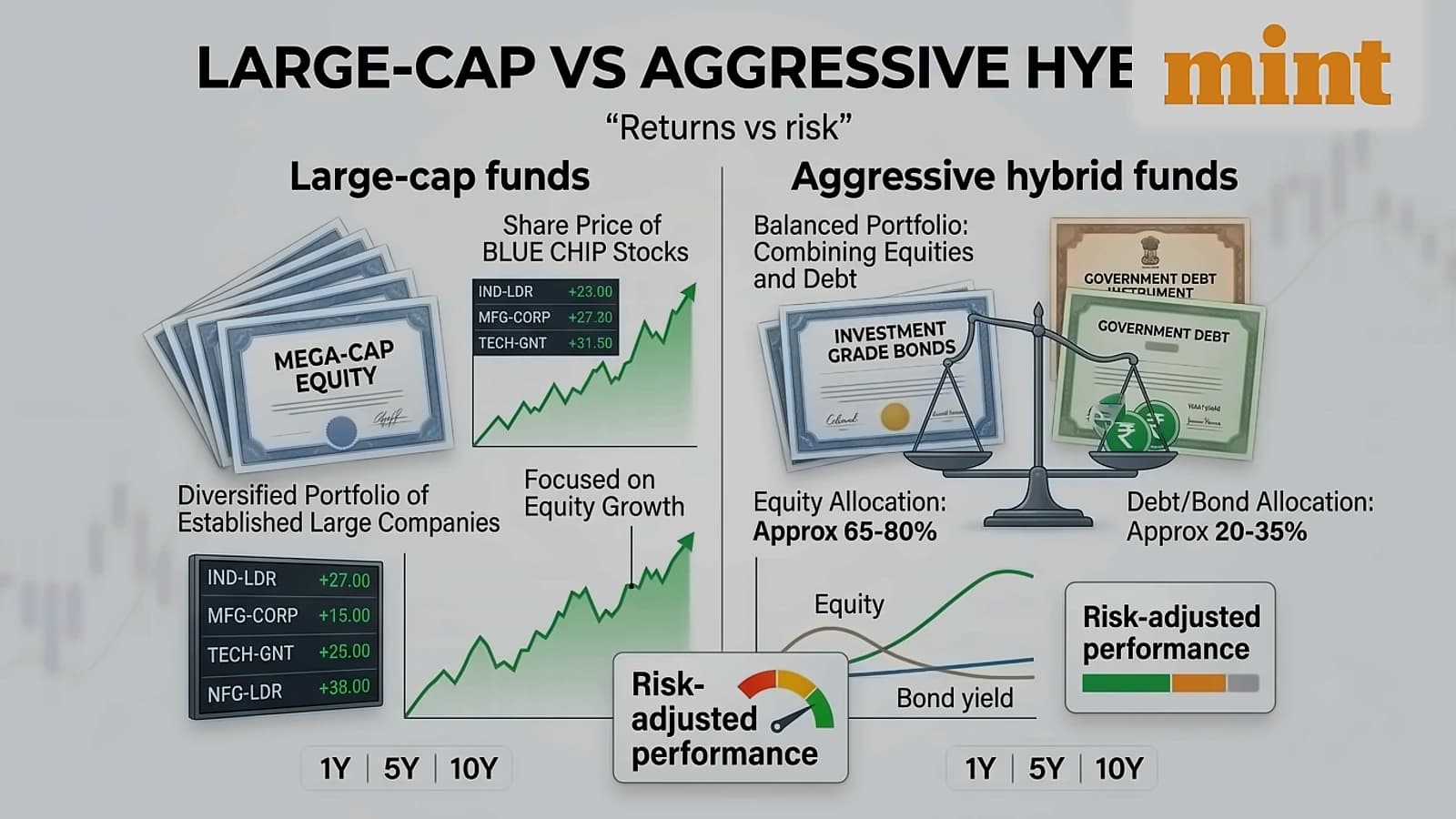
For investors evaluating aggressive hybrid funds, the five-year SIP return should be considered alongside the fund's asset allocation, portfolio composition, costs and performance across different market cycles. As reported by Mint, aggressive hybrid funds are often considered a middle ground for investors seeking equity exposure without taking full equity-only fund risk. Recent expert analysis suggests that hybrid funds are particularly valuable for managing sequence-of-returns risk during market drawdowns and providing tax efficiency benefits. However, some advisers remain divided, with Deepesh Raghaw from PersonalFinancePlan.in using hybrids as a "proxy for debt" rather than integral portfolio construction, while others like Dhawan find them ideal for navigating goal maturity. The data emphasizes that historical performance should not be treated as evidence of guaranteed future returns, and investors should conduct comprehensive research before making investment decisions. According to Dhirendra Kumar, founder and chief executive of Value Research, "Fund selection matters more than AMC age. Most newer funds also lack the history needed to judge consistency."