The MSME Development (Amendment) Bill, 2026 introduces mandatory digital invoicing for payments by Central Public Sector Undertakings (PSUs), marking a significant shift toward digital compliance. According to the proposed legislation, all invoices raised by MSMEs on Central PSUs must be routed through the Trade Receivables Discounting System (TReDS) platform. State governments may notify similar requirements for their own public sector undertakings, with the move aimed at improving liquidity for MSMEs by ensuring quicker access to working capital and reducing payment delays. The Bill establishes statutory timelines for mediation and arbitration, while enabling online mediation and arbitration through digital platforms, signalling a broader shift towards technology-enabled regulatory and dispute-resolution systems. As reported by The Times of India, the move is specifically aimed at improving liquidity and reducing the long waiting period that often leaves small businesses short of working capital despite having completed their supplies or services.
The Bill proposes a free, national digital registration platform for MSMEs to streamline registration and make access to government schemes easier. To strengthen grievance redressal, the proposed law requires states to establish adequate MSME Facilitation Councils with defined membership, legal expertise and supporting infrastructure. The composition of MSME Facilitation Councils has been rationalised, with councils now comprising three to five members, with the inclusion of a legal expert becoming mandatory. The Bill enables States to create their own digital registration platforms while establishing the national platform, providing flexibility for regional requirements while maintaining standardised access to government services. To speed up resolution of payment disputes, states will be required to establish additional micro and small enterprise facilitation councils under the proposed changes. The provisions also include facilitating state governments to establish additional Micro and Small Enterprises Facilitation Council by rationalising their composition, apart from prescribing timelines to ensure faster adjudication of delayed payment disputes of micro and small enterprises.
In another significant change, buyers challenging an award passed in favour of an MSME may be required to release at least 50% of the awarded amount if the legal challenge remains pending for more than six months. Courts will also be empowered to direct payments from the amount deposited during the appeal process, a provision intended to ease cash flow pressures on small businesses. The Bill makes mediated settlements and arbitral awards recoverable as arrears of land revenue, recognising them under the Insolvency and Bankruptcy Code, 2016. According to the Bill, the mediated settlement agreement or arbitral award may be recovered as an arrear of land revenue by the state government through district collector or deputy commissioner or any such authority notified by the state where assets of the buyer are located. The amount determined as the mediated settlement or arbitral award shall constitute a valid and legally enforceable debt and is liable to be recognised under provisions of the Insolvency and Bankruptcy Code, 2016. A major change is in Section 19 of the act, which deals with pleas to set aside arbitral awards or decrees or mediated settlements. It proposes that if a business wants a court to declare the results of arbitration or mediation as unenforceable, it has to first deposit 75% of the value of the award. If it takes more than six months to decide such a challenge, the court may pay at least 50% of the amount deposited to the MSME.
The Bill introduces comprehensive reforms to address delayed payments, one of the most persistent challenges facing MSMEs. It requires Central Public Sector Enterprises (CPSEs) to settle MSME invoices through RBI-authorised TReDS platforms and enables similar arrangements for other public entities. The legislation replaces criminal prosecution for specified procedural violations with warnings and graded civil penalties, reflecting a shift towards proportionate regulation while retaining formal mechanisms for adjudication and appeal. This represents a fundamental change in how MSME compliance is handled, moving from punitive measures to educational and corrective approaches. The Bill also proposes to decriminalise offences regarding contravention of certain provisions, replacing conviction-based fines with graded penalties by including warning at the first instance. The amendment bill stipulates that the mediation service provider (including MSEFCs) must complete the process within 90 days of the date fixed for the first appearance, while a new clause calls for the arbitral award—the decision in arbitration—to be pronounced in under 90 days from the conclusion of pleadings.
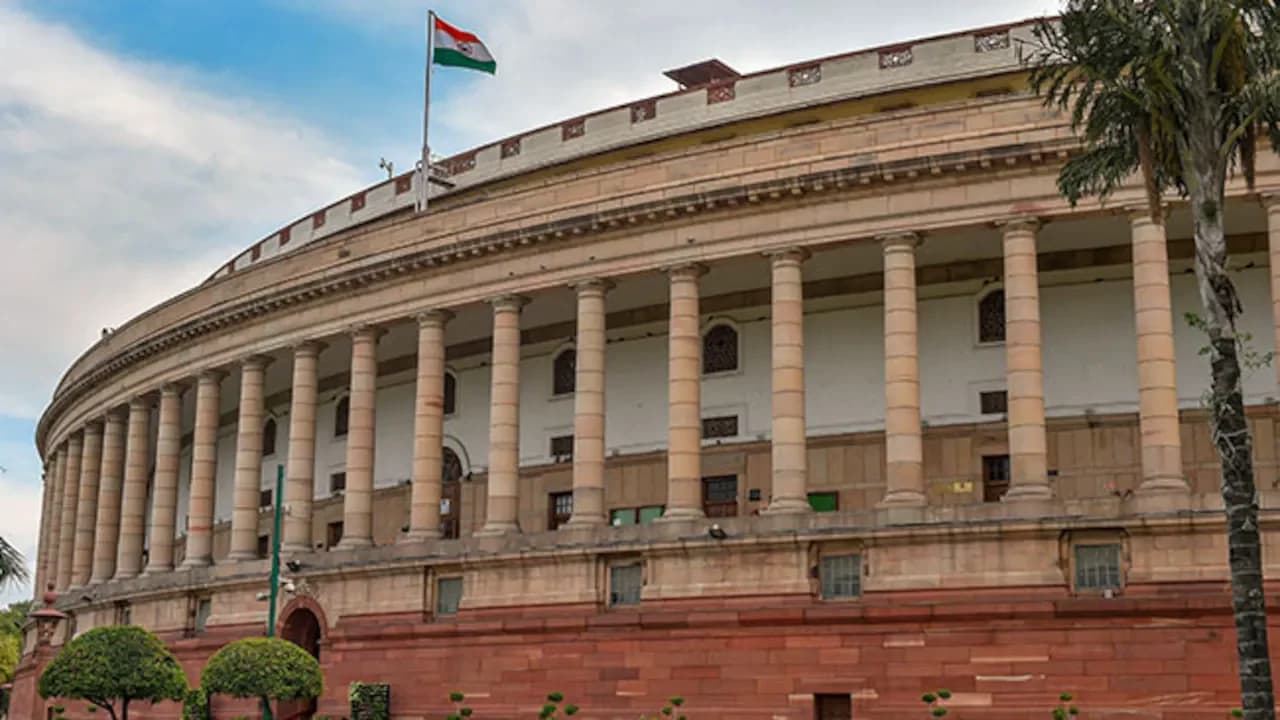
Union Minister for MSMEs Jitan Ram Manjhi introduced the Micro Small and Medium Enterprises Development (Amendment) Bill, 2026 in the Rajya Sabha on Tuesday, seeking to tackle the issue of delayed payments to MSMEs. The minister emphasised that "This legislation was framed in 2006, therefore there is a need for reforming it and making additions." The proposed amendments look to incentivise the growth of MSMEs, enable them to scale up and become champions of growth. According to the Bill, the provisions aim to augment Ease of Doing Business and promote compliance. The Bill seeks to achieve these objectives by addressing the technological advancements, emergence of information technology enabled systems and changing legal landscape that has undergone changes over the years, which requires that the Act be amended to facilitate growth of micro, small and medium enterprises. The amendments are designed to address the evolving needs of the MSME sector and provide a modern framework for supporting their growth and competitiveness. The Bill allows state governments to increase the number of MSEFCs as per the requirements of regions and gives the central and state governments the power to set up a digital platform for MSME registration.