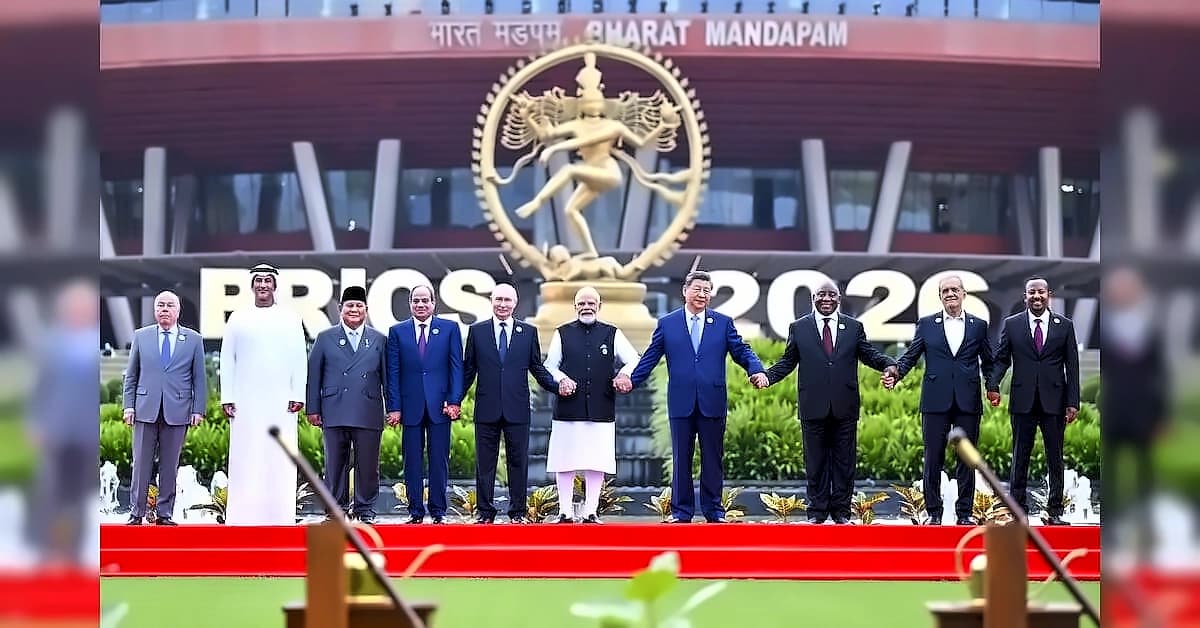
The Federation of Indian Micro, Small and Medium Enterprises (FISME) has called for a practical implementation agenda to translate the New Delhi Declaration adopted at the 18th Brics Summit into easier access to trade finance, technology and overseas markets for micro, small and medium enterprises (MSMEs). According to reports from Business Standard, FISME welcomed the Declaration's strong focus on MSMEs and said the next phase of cooperation among Brics countries should move beyond sharing experiences and create mechanisms that enable smaller enterprises to trade, invest, collaborate and adopt technologies across member countries.
On trade finance, FISME said the recognition that the lack of affordable finance remains a constraint on MSME participation in global trade should be followed by mechanisms that reduce dependence on collateral and conventional balance-sheet-based lending. As reported by Business Standard, the organisation highlighted that India's experience with digital enterprise identification, Goods and Services Tax (GST)-based information systems and electronic trade receivables platforms could be used to develop an interoperable Brics mechanism for financing verified MSME export receivables quickly and at competitive costs. The Guiding Principles for Credit Assessment of Export-Oriented MSMEs, the use of alternative data and the Jaipur Consensus on studying an invoice-discounting mechanism provide opportunities to develop a more practical Brics framework for MSME trade finance.
FISME called for reducing the cost and complexity of small-value cross-border transactions, with initiatives on faster and cheaper cross-border payments, interoperable payment systems, digital trade documentation, customs cooperation and Authorised Economic Operator (AEO) programmes significantly benefiting MSMEs. According to the report, MSME export transactions should be made an explicit pilot use case for these initiatives, allowing smaller enterprises to sell products, receive payment and complete documentation without navigating procedures primarily designed for large corporations. The organisation also proposed that standards cooperation should be treated as a market-access instrument, with Brics national standards bodies focusing on greater transparency of technical regulations, compatible standards where feasible, and eventually mutual recognition arrangements in selected sectors.
FISME called for Brics technology cooperation to move from institutional dialogue to implementation at the factory level, welcoming the focus on Industry 4.0, Artificial Intelligence (AI), advanced manufacturing, the Brics Centre for Industrial Competencies and the India Centre for Brics Industrial Competencies. As reported by Business Standard, these institutions should provide technology demonstrations, AI and digital-readiness assessments, common training programmes, vendor-neutral advisory services, technology matchmaking and access to affordable technology solutions. The organisation also backed greater cooperation to help MSMEs manage the green transition, proposing affordable carbon-accounting tools, accredited verification, green technologies, transition finance and common methodologies along with cooperation on energy efficiency, the circular economy, material productivity, renewable energy and low-carbon manufacturing.
FISME proposed a low-cost, technology-enabled mechanism for resolving cross-border commercial disputes, noting that conventional international arbitration can be expensive for smaller transactions. According to the report, Brics could develop an online mediation and expedited arbitration mechanism supported by recognised institutions in member countries. The organisation also called for the Brics SME Forum to become a continuing annual institution linked to the SME Working Group, with an annual MSME implementation scorecard covering the number of MSMEs receiving cross-border trade finance, reductions in payment and remittance costs, mutual recognition of standards and test reports, technology partnerships and joint ventures, digitalisation and AI adoption, green-transition projects, buyer-seller and supply-chain linkages, and the resolution of cross-border commercial disputes.