India's smartphone retail market is quietly consolidating, and one company from Kolhapur is making a loud case for itself. SS Retail Limited; the operator behind the SS Mobile, Mobile Exchange Wala, and The Mobile Space brands; has opened its IPO on September 16, and is closing on September 18, 2026 with a price band of ₹403–₹424 per share and a total issue size of ₹500 crore. It is divided into 2 parts. The fresh issue is up to ₹360 crore and the offer for sale is up to ₹140 crore; but with QIB subscription at zero on Day 1 and a premium valuation, the question isn't just what this company does; it's whether the price is right.
What does SS Retail actually do?
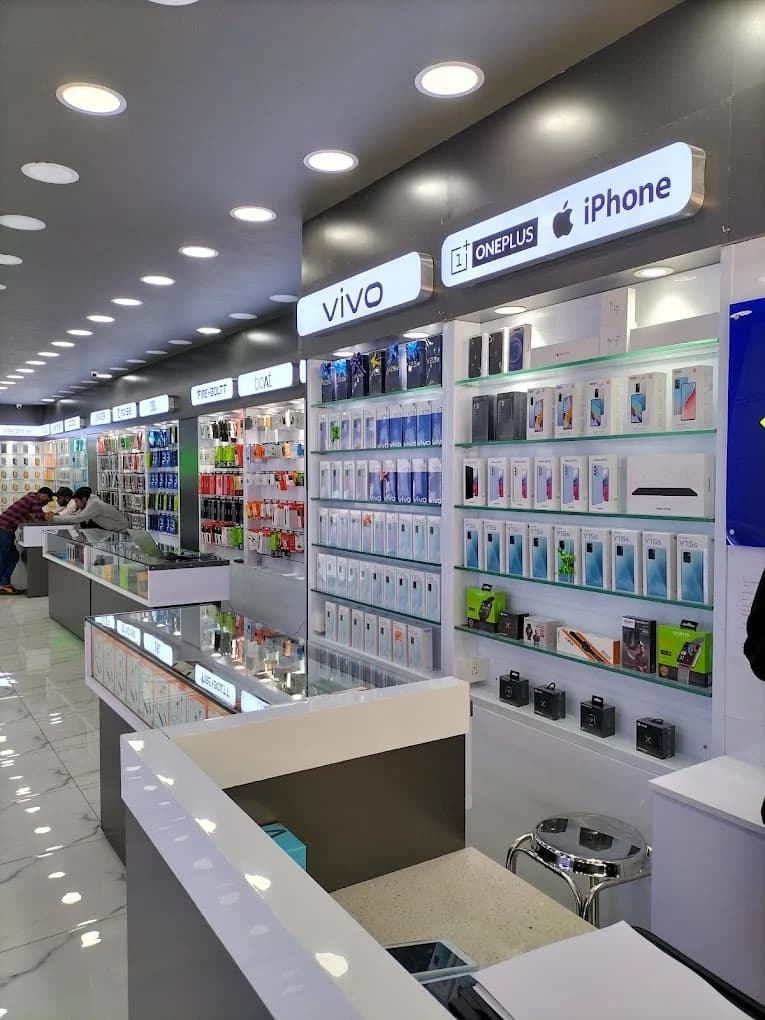
At its core, SS Retail is a multi-brand mobile phone retail chain. Think of it as the organised, franchise-driven alternative to your neighbourhood mobile shop, but at scale. Incorporated in 2016, the company has grown to operate 503 stores across 5 states as of March 31, 2026, making it the largest mobile phone retail chain in Maharashtra and West India, and the 3rd largest in India by store count.
What makes its model interesting is the franchise architecture. The company runs stores under three formats: company owned, franchisee operated (COFO), company owned, company operated (COCO), and franchisee owned, franchisee operated (FOFO). The COFO model dominates, contributing 66.59% of FY26 revenue, and has enabled rapid scaling without proportionate capital deployment. This asset-light approach is central to the SS Retail growth story.
Equally important is where these stores are. Roughly 52% of SS Retail's outlets are in Tier III cities and beyond- markets that organised retail has historically underserved. In FY26, Tier III and beyond contributed 49.43% of total revenue, while metros and mini-metros together accounted for less than 8%. This is a deliberate bet on India's consumption upgrade story playing out in smaller towns, not just in Mumbai and Bengaluru.
The numbers tell a strong story: up to a point
On pure financial momentum, SS Retail is hard to ignore. Revenue grew from ₹1,207 crore in FY24 to ₹2,351 crore in FY26; a 2-year CAGR of 39.58%, the highest among its listed peers. Profit After Tax grew from ₹26.6 crore to ₹59.3 crore over the same period. Return on Equity has held remarkably steady at ~30.6% across all three years, well above the peer average of 16.92%.
The company also leads peers on store-level productivity, clocking ₹1,46,347 in sales per square foot in FY26; the highest in its category. Inventory turnover at 8.83x beat the peer average of 7.41x, and net working capital days of 46 days compare favourably to the peer average of 58 days. These aren't vanity metrics; they reflect genuine operational discipline.
| Financial Metric | FY24 | FY25 | FY26 |
|---|
| Revenue (₹ Cr) | 1,207 | 1,598 | 2,351 |
| PAT (₹ Cr) | 26.6 | 39.9 | 59.3 |
| EBITDA Margin | 4.68% | 5.03% | 5.32% |
| PAT Margin | 2.21% | 2.49% | 2.52% |
| Return on Equity | 30.20% | 30.94% | 30.60% |
The pre-owned smartphone segment deserves a special mention. Under the Mobile Exchange Wala brand, revenue grew from ₹51.5 crore in FY24 to ₹169.3 crore in FY26: a 3.3x jump in two years. As upgrade cycles shorten and value-conscious consumers grow, this segment could become a meaningful margin contributor over time.
How does it stack up against peers?
The listed peer set for SS Retail includes Aditya Vision, Electronics Mart India, Jay Jalaram Technologies, and Fonebox Retail. The comparison is revealing; SS Retail outperforms on growth and returns, but the valuation picture is more nuanced.
| Company | P/E (x) | RoNW | Revenue CAGR (FY24–26) |
|---|
| SS Retail (at IPO price) | ~46.5x | 32.60% | 39.58% |
| Aditya Vision | 66.29x | 18.38% | — |
| Electronics Mart India | 62.66x | 6.81% | — |
| Jay Jalaram Technologies | 14.41x | 13.74% | — |
| Fonebox Retail | 15.08x | 17.94% | — |
| Bhatia Communications & Retail | 24.44x | 15.16% | — |
| Umiya Mobile Ltd | 8.46x | 29.32% | — |
At ~46.5x trailing FY26 earnings, SS Retail sits in the middle of the peer valuation range; cheaper than Aditya Vision and Electronics Mart, but significantly more expensive than Jay Jalaram and Fonebox. The RHP itself acknowledges that the IPO is priced at a premium to the average P/E of its listed peers. Whether that premium is justified depends on how much weight you give to SS Retail's superior ROE and growth trajectory versus the concentration risks that shadow the business.
The red flags you cannot ignore
For all its operational strengths, SS Retail carries a set of risks that any serious investor must weigh carefully.
Geographic concentration is the biggest structural risk. Of 503 stores, 458 or 91% are in Maharashtra. The company is, in many ways, a Maharashtra story dressed up as a national retail chain. Any regulatory shift, competitive disruption, or economic slowdown specific to the state could disproportionately hurt the business.
The DSCR number is a quiet alarm bell. The company's debt service coverage ratio stands at 0.72 in FY26 below 1, meaning operating cash flows are technically insufficient to cover debt obligations. Combined with a declining current ratio (1.86 in FY25 to 1.72 in FY26), this signals that the balance sheet is being stretched as the company funds its rapid expansion.
Store closures are accelerating. The closure rate has risen from 2.12% in FY24 to 5.37% in FY26, with 44 stores shut over three years. For a company opening stores at a CAGR of 74.64%, some churn is expected; but a tripling of the closure rate in two years raises questions about site selection quality and franchisee viability.
Disputed GST liabilities have surged. Contingent tax liabilities jumped from ₹0.03 crore in FY24 to ₹2.84 crore in FY26; a near-100x increase in two years. While not catastrophic in absolute terms relative to net worth, the trajectory is worth monitoring.
Promoters are partially cashing out. Of the ₹500 crore IPO, ₹140 crore (28%) is an offer for sale by the promoter group. Promoters currently hold 75.70% of the company and will retain dominant control post-listing. The partial exit at IPO is not unusual, but it does mean a meaningful chunk of investor money goes to existing shareholders rather than the business.
Finally, the e-commerce overhang is real. Online platforms held 41.5% of the mobile phone market in FY24, and that share is unlikely to shrink. SS Retail's Tier II/III focus provides some insulation; last-mile service, exchange offers, and touch-and-feel experiences matter more in smaller towns; but the structural pressure from Amazon and Flipkart is a permanent feature of this industry.
The bigger picture
SS Retail is entering the public markets at an interesting inflection point. The Indian mobile phone and accessories market is projected to grow from ₹4,24,200 crore in FY26 to ₹5,19,800 crore by FY30, driven by 5G adoption, rising disposable incomes, and increasing smartphone penetration in smaller cities. SS Retail's geographic positioning in Tier II/III markets places it squarely in the path of this demand wave.
The company's auditors- M/s. Manek & Associates; have issued clean opinions for all three years (FY24–FY26) but they have added an ‘emphasis of matter’.
The IPO proceeds (₹360 crore fresh issue) are earmarked for new store capex, and general corporate purposes; a straightforward deployment plan that aligns with the stated growth strategy.
The verdict
SS Retail is a genuinely well-run regional retail business with best-in-class store productivity, consistent returns, and a growth rate that outpaces every listed peer. The franchise model is capital-efficient, the Tier II/III focus is strategically sound, and the pre-owned smartphone segment adds a differentiated growth layer.
But it is also a Maharashtra-concentrated, single-category retailer with a sub-1 DSCR, rising store closures, and a day 1 subscription that has seen zero QIB interest; typically the most informed segment of IPO investors. At ~46.5x earnings, the valuation is not cheap for a business with thin 2.52% PAT margins and meaningful execution risk ahead.
The story is real. The risks are real too. This is not a clear-cut IPO; it is one that rewards investors who understand the mobile retail landscape and are comfortable with the concentration bets embedded in this business.
This AI-generated analysis, based on RHP/DRHP information, is for informational purposes only. Investors should conduct due diligence and consult financial advisors before making investment decisions. Past performance does not guarantee future results, and all investments carry inherent risks including potential loss of principal.