SS Retail shares extended gains to trade over 6% higher at ₹677 following a strong debut on Wednesday, marking a 50.73% premium to the IPO issue price of ₹424. On the BSE, the stock listed at ₹639.10, while on the NSE it debuted at ₹624, translating to a 47.17% premium. The listing surpassed unlisted market expectations, which had suggested a debut gain of up to 35%, with the stock commanding a grey market premium of around 36% ahead of the listing. The SS Retail IPO had achieved an overwhelming overall subscription of 103.30 times, with qualified institutional buyers subscribing 203.61 times, non-institutional investors at 143.32 times, and retail portion at 36.36 times.
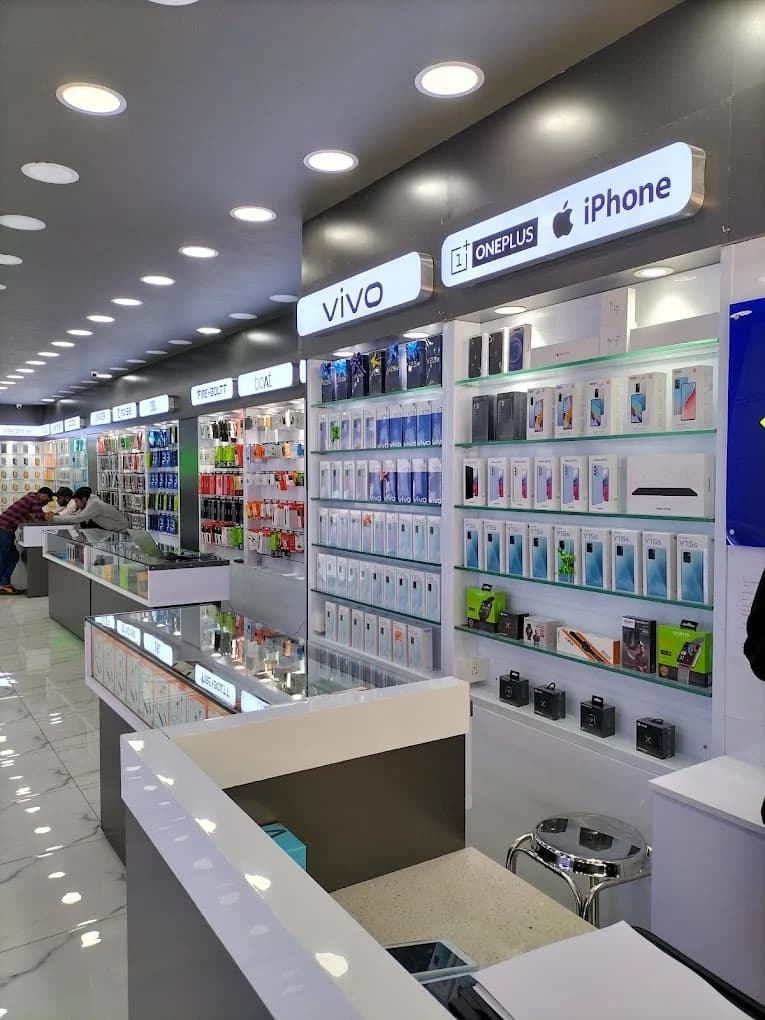
SS Retail demonstrated strong financial performance with total income rising 47% from ₹1,600 crore in FY25 to ₹2,353 crore in FY26. The company's profit after tax increased by 49% from ₹40 crore in FY25 to ₹59 crore in FY26, indicating improved profitability during the year. The company operates 503 stores across 215 cities covering approximately 2,41,365 sq. ft. as of March 31, 2026, under brands SS Mobile, Mobile Exchange Wala and The Mobile Space. The network expanded to 536 stores covering 2,60,597 sq. ft. as of July 31, 2026. The company plans to utilize the net proceeds of ₹253.80 crore towards capital expenditure for fit-outs of new stores planned for FY2027 and FY2028, with an estimated allocation of ₹12.45 crore, and ₹241.35 crore towards incremental working capital requirements.
Indian equities have demonstrated remarkable resilience despite facing significant global challenges, according to CNBC TV18 reports. Nilesh Shah of Envision Capital highlighted the notable strength of Indian markets, noting that oil prices have doubled from $60 to $105, with Indian crude basket trading at $130. Shah attributed this resilience to earnings momentum, GDP growth, regular policy changes, and domestic savings, with domestic investors providing a "huge cushion" to equities. Sanjay Parekh of Sohum Asset Managers also observed strong domestic momentum, particularly in passenger vehicles, commercial vehicles, and two-wheelers demand, while credit growth has been robust. The global environment remains challenging, with Parekh pointing to the large supply of new paper - ₹3.4 lakh crore came to the market between January and August, and the global environment remains a headwind, particularly because of crude oil prices and the 10-year yield.
Digital transformation remains a key focus area for both investors, with UPI expansion identified as a major opportunity. Shah believes there are currently fewer than half a billion active users using UPI for payments, which could eventually reach 1 billion or 1.5 billion users. The introduction of merchant discount rate (MDR) on UPI transactions is expected to be incremental for payment solution providers, though the revenue pool distribution among stakeholders will determine individual company opportunities. Shah's preference within capital markets centers on digital platforms that can onboard millions of customers and offer equities, mutual funds, bonds, currencies, commodities, and wealth-management services. In insurance, Shah said his preference is currently more towards distributors rather than manufacturers of insurance products, while payments are another significant opportunity area.
While Shah remains cautious on large-cap IT services companies due to missing growth and unclear return timelines, he sees significant opportunities in mid-cap and small-cap IT services companies that can benefit from AI implementation. The scale advantage is crucial - while large IT companies may not see material growth from few hundred million dollars of AI contracts due to potential cannibalization of legacy business, smaller tier-two, tier-three, and tier-four companies can experience much bigger impact from winning such contracts. This creates a clear preference for smaller IT services companies in the AI adoption phase. Shah's approach focuses on businesses that are using technology to grow, gain market share and create relevance, leading him towards digital financial services, UPI, distribution, wealth management, smaller IT companies and advanced manufacturing.