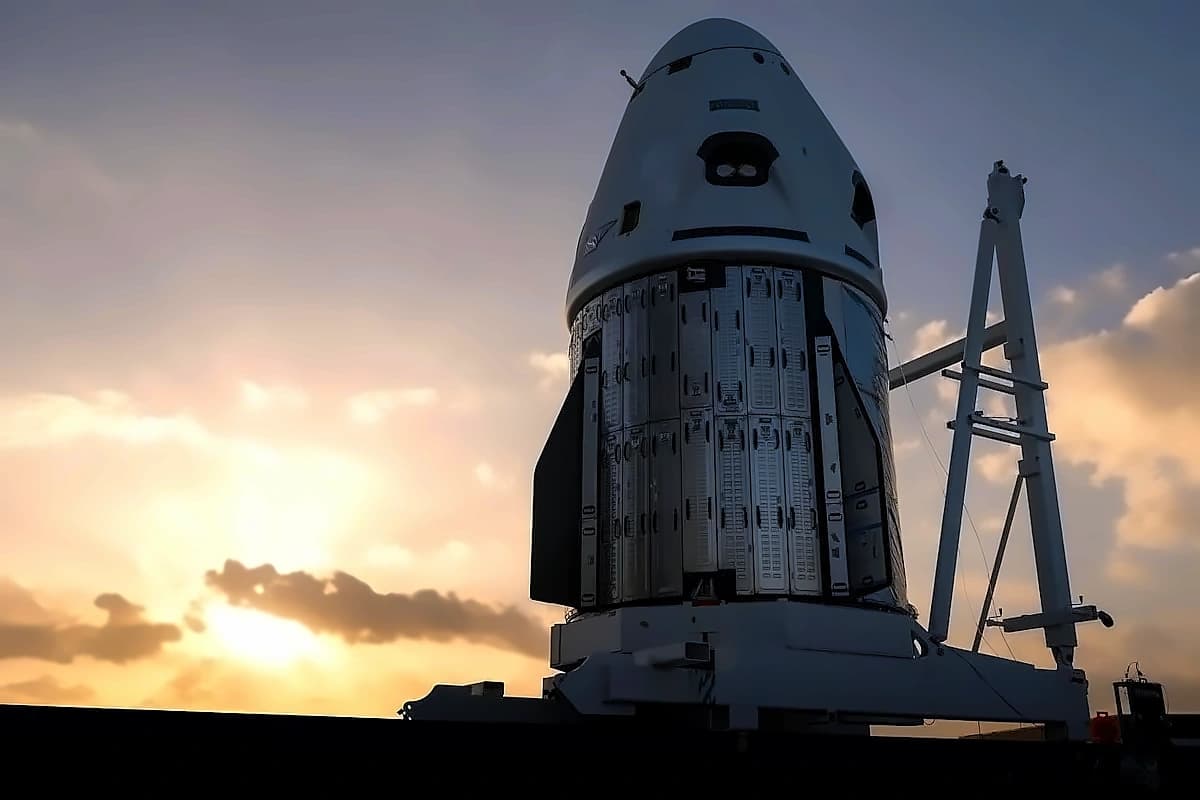
SpaceX IPO officially opened on Nasdaq today, June 12, 2026, with shares indicated to open at $150, representing a 20% pop from the IPO price of $135. The company is offering 555.6 million Class A shares in what is now confirmed as the world's largest initial public offering, raising approximately $75 billion. The strong debut has pushed SpaceX's valuation toward $2.24 trillion, vaulting Elon Musk's stake in SpaceX alone to approximately $866 billion, with his total net worth set to surpass $970 billion once shares began trading. The stock closed at approximately $160.95 per share, up 19.2%, making it the sixth largest U.S. company by market value. According to The Financial Express, SpaceX finished the day just below $161 with a market value of $2.1 trillion, even higher than electric vehicle maker Tesla where Musk is also the CEO. Trading surpassed 510 million shares worth about $84 billion, with shares swinging between gains of 15% and 30% above Thursday's pricing throughout the session. SpaceX President Gwynne Shotwell and Chief Financial Officer Bret Johnsen rang the Nasdaq opening bell at 9:30 a.m. ET, while Musk held a separate event for employees in Texas as his company launched 29 Starlink satellites into orbit.
The SpaceX IPO has generated unprecedented retail investor interest, with SpaceX allocating a record 30% of its IPO shares for retail investors, driving strong first-day trading performance. Retail buying pushed up SpaceX stock price by as much as 19% on opening trade day, according to Reuters. Net buying of SpaceX shares accounted for about 4% of all single-stock retail turnover on Friday, totaling $453 million and running at 3.5 times the pace of runner-up Nvidia. "This allocation to retail is far and away the highest I've ever seen in my decades on Wall Street," said Art Hogan, investment strategist at B. Riley Wealth. "The deal became the largest and most subscribed offering on our platform to date," said a spokesman for SoFi, one of the retail brokerages involved. "Retail investors have shown up for SpaceX in a big way," said Vanda Research, noting that in the first 20 minutes of trading, SpaceX shares had vaulted to second place in the ranks of most actively purchased stocks by retail investors and by mid-afternoon was in first place, dwarfing its rivals. However, some investors faced allocation challenges, with Reddit posters reporting requests for 250 shares receiving nothing, 555 shares getting only 10, and 1,000 share requests yielding just 85 shares.
U.S. stocks ended higher on Friday as investors held out hope for a peace deal between Iran and the United States and as SpaceX shares surged in their debut, making it Wall Street's biggest public listing in history. The S&P 500 added 0.5% to close out its 10th winning week in the last 11, with the Dow Jones Industrial Average climbing 353.51 points, or 0.7%, to 51,202.26 and the Nasdaq Composite gaining 79.18 points, or 0.3%, to 25,888.84. The small-cap Russell 2000 nabbed a record closing high, with each of the three major indexes up roughly 7% for the week. SpaceX shares closed up 19.2% at $160.95, well above the IPO price of $135 apiece, with its market capitalization reaching $2.2 trillion. Shares of other space stocks, which soared in the lead-up to the debut, eased on Friday, with Rocket Lab's stock falling 10.8%, AST SpaceMobile down 15.5%, and Planet Labs declining 9%. As per The Hindu BusinessLine, Jake Dollarhide, chief executive officer of Longbow Asset Management, noted that "There's still hope for a peace deal. Trump called off the attacks ... Third parties are confirming a peace deal is happening," which puts pressure on oil prices and reduces worries about higher inflation and interest rates. Oil prices fell 3.4% to $87.33 per barrel, with Brent crude dropping from roughly $70 per barrel as President Trump called off threats to launch strikes on Iran and indicated a potential deal may be imminent.

SpaceX's embrace of AI with the acquisition of Musk's xAI in February made the listing somewhat of a referendum on the current leadership of the market as well as the IPO prospects of competitors Anthropic PBC and OpenAI, both of which plan to go public as soon as this year. "It bodes well for the market and for these other IPOs that are coming that are going to be quite sizable as well," said Robert Gruendyke, senior portfolio manager for the growth equity team at Allspring Global Investments. "They clearly priced it right, at least for one day. It should just make you optimistic for the markets, especially for growth stocks." Despite the record-breaking debut, many investors remain skeptical about the valuation. "On the fundamentals, investors have got ahead of themselves," said Amanda Lyons, head of research at Energy Group Capital, adding that she believes a sum-of-its-parts valuation would be about $600 billion, roughly one third of its IPO market capitalization. "But 'expensive' has never been a catalyst with Elon Musk, and betting against his premium has been a losing trade for a decade."
Despite the record-breaking IPO, SpaceX faces significant financial headwinds that raise questions about its ability to justify the valuation. For 2025, the company reported revenue of $18.7 billion and a net loss of $4.94 billion, according to Reuters. As reported by Fortune, achieving the valuation would require the company to reach annual revenues of $1.1 trillion, nearly 60 times what it earned in 2025. This would demand the company grow its sales by 50% every single year for the next 10 years, a rate of sustained expansion that no company in history has come close to achieving. By 2035, SpaceX would need to be over 50% bigger than the entire utilities sector or the entertainment industry, making it as large as an entire industry made up of dozens of Fortune 500 companies. With revenue of $18.7 billion in 2025, the company's market cap puts its price-to-revenue ratio at a lofty 112, far above other megacap stocks. Data shows that Space Exploration Technologies Corp. lost $8.7 billion between the start of 2025 and March 31 this year, according to The Financial Express. Some analysts have already issued positive ratings on the company, with Morningstar analysts earlier this month saying it is more fairly valued at around $780 billion, while CFRA on Friday started coverage with a sell rating. Some analysts expect SpaceX's debut to trigger a reshuffling of investor portfolios, creating selling pressure on other technology heavyweights as funds rotate into the stock. On Friday, shares of other space firms and satellite companies declined sharply, with Planet Labs down 9% and EchoStar down 11%.