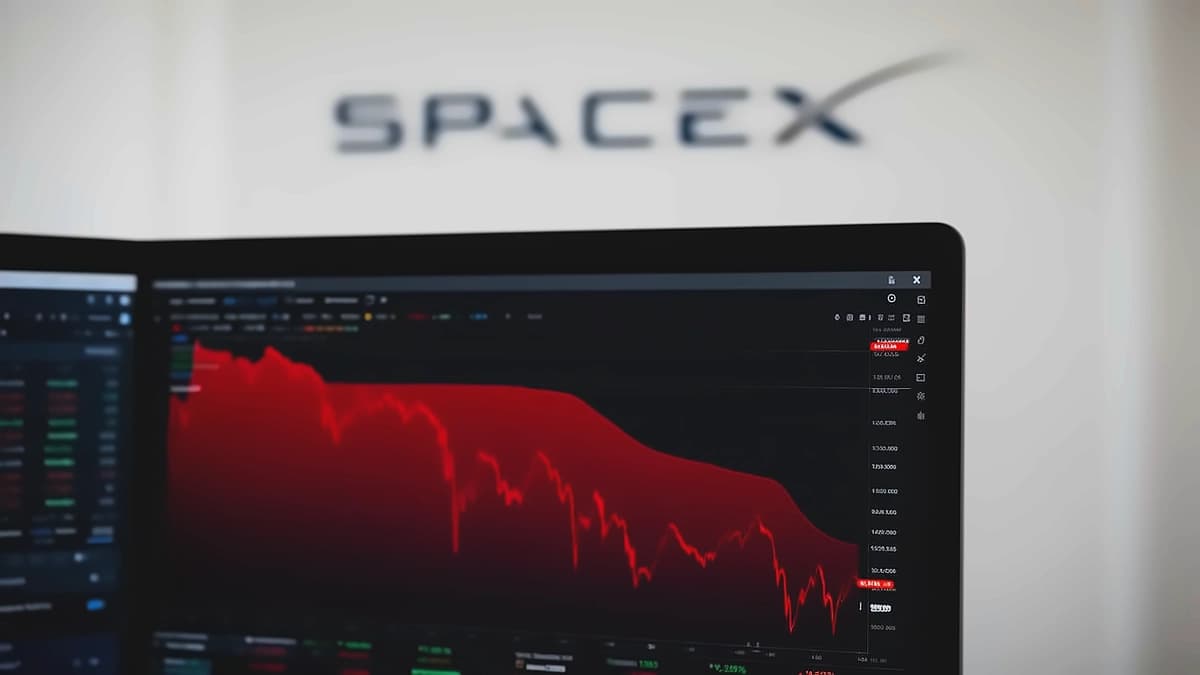
SpaceX shares jumped for a second straight day, bringing them close to breaking back above the company's $135 initial public offering price for the first time since falling below the key level last month. According to Business Standard, Friday's 16% surge brought the stock's two-day rally to about 23%, adding more than $327 billion in market value over that span. The move represents a swift reversal for the stock that had been under pressure, shedding more than $1 trillion in market value from the high it hit shortly after its record IPO. Before the two-day rally, short sellers had amassed paper gains of more than $9 billion betting on the stock's slump, but the recent surge has forced them to unwind positions.
The lockup expiration more than doubled the total number of shares available to trade to 1.55 billion from the 639 million in circulation when Space Exploration Technologies Corp. went public. According to Business Standard, Thursday's unlock increased the company's free float from 4.9% to 11.8% of shares outstanding, freeing stock worth roughly $100 billion. Analysts had warned that the end of the first lockup could lead to selling pressure on the stock, but investors snapped up shares even as restrictions blocking some early insiders from selling were lifted. Matt Maley, chief market strategist at Miller Tabak, noted that "Once the dust settles from the trading around the end of the lockup period, investors are going to have to decide whether they're willing to pay such an expensive price for a company that will not show its full promise for many years."
Friday's rally gained momentum as Argus Research upgraded SPCX from Hold to Buy with a $160 target, citing early payback on the company's heavy AI infrastructure spending. The upgrade landed days after SpaceX's first earnings beat, which showed revenue of $7.8 billion, up 92% year-over-year and above the $6.8 billion analysts expected. SpaceX also recorded $3.5 billion in adjusted earnings before interest, taxes, depreciation and amortization, exceeding Wall Street expectations of about $2.1 billion. The stock opened near $115 before rising above $120 and accelerating toward $131 during afternoon trading, extending its rebound from an August low near $105. Friday's rally followed a 6.1% gain on Thursday, reversing part of the 13.6% decline recorded after SpaceX released its first quarterly results as a public company. Although SpaceX's AI business generated $2.6 billion in second-quarter revenue, more than three times the level recorded a year earlier, the segment remained loss-making, underscoring the high cost of scaling AI operations.
More than 250 million SpaceX shares have been sold short, or about 16% of those available to be traded, according to data from S3 Partners LLC. As reported by Business Standard, that figure had topped 36% on Wednesday before the 911.5 million shares were unlocked for trading. "I'm sure there were some bearish bets that had to be unwound today," Maley added. Short sellers had crowded in first, with exchange data showing 165 million shares sold short at the July 15 settlement date, near 26% of the float, later rising to 219 million by July 29. The Nasdaq Composite and semiconductor stocks also advanced during the session, indicating that at least part of the SPCX rally reflected a broader return to technology and growth shares.
Despite the recent rally, analysts remain cautious about the stock's valuation. According to Business Standard, nearly 80% of analysts covering SpaceX have given the stock a buy rating, with their average price target of roughly $221 implying more than 65% upside from where shares closed Friday. Wall Street has maintained an overwhelmingly bullish view on the company, even as the stock faces additional pressure from the upcoming unlock of additional shares. The next test will be whether the shares can reclaim the company's $135 IPO price while the market absorbs additional insider unlocks, with additional lockup restrictions scheduled to expire through December 8 will increase the company's freely tradable shares to about 40% of its total outstanding stock, with the remaining 60%, including Elon Musk's stake, expected to remain locked until mid-2027.