Of the 1,192 SME companies that have listed since 2016, 52% trade below their issue price today. However, this figure assumes investors bought at issue price, which is rarely the case in heavily oversubscribed IPOs. According to reports from The Economic Times, the allotment queue has lengthened dramatically, with applications per successful allottee climbing from 4 in 2021-22 to 46 in 2022-23 and then to 245 in 2023-24. When measured from listing price, the performance deteriorates further, with 57% of companies trading below their entry price and the median return falling from -6% to -13%. This global trend is evident even in massive IPOs, with SpaceX's $75 billion offering making a spectacular debut but subsequently slipping below its IPO price of $135 after surging to $225.65.
The stark difference between issue price and listing price performance is evident in specific cases. NACDAC Infrastructure's 2024 IPO was subscribed 1,976 times, making allotment effectively a lottery. While the company priced shares at ₹35, they opened at ₹66.5 (90% jump), but now trade near ₹26. As reported by The Economic Times, the allottee is down about a quarter while the listing-day buyer, which is what nearly every retail investor was, is down about 61%. This pattern holds across the market, with 73% of issues opening above their issue price and the typical debut jumping about 6%. Similar trends are visible globally, with SK Hynix's $26.5 billion Nasdaq listing climbing to $194.45 before retreating to $152.31, only marginally above its issue price of $149.
The data reveals a clear divide between successful companies and failures. Of the 200 companies that migrated from SME boards to main boards, their median return was +49% with 43% becoming multibaggers, compared to 17% of companies that stayed behind. Notable success stories include Knowledge Marine (listed near ₹19 in 2021, trades around ₹2,400 today) and Advait Energy (rose 86x from ₹0 debut). Conversely, 20 delisted companies in the sample have a median return of -82%, with Suumaya Corporation falling from ₹70 to ₹1.01 and Varanium Cloud dropping from ₹30 to below ₹6. In India, Hyundai Motor India's ₹27,870-crore IPO priced at ₹1,960 per share briefly rallied to ₹2,890 but has settled around ₹2,000, while Life Insurance Corporation of India's ₹21,008-crore offering has delivered little meaningful returns since listing.
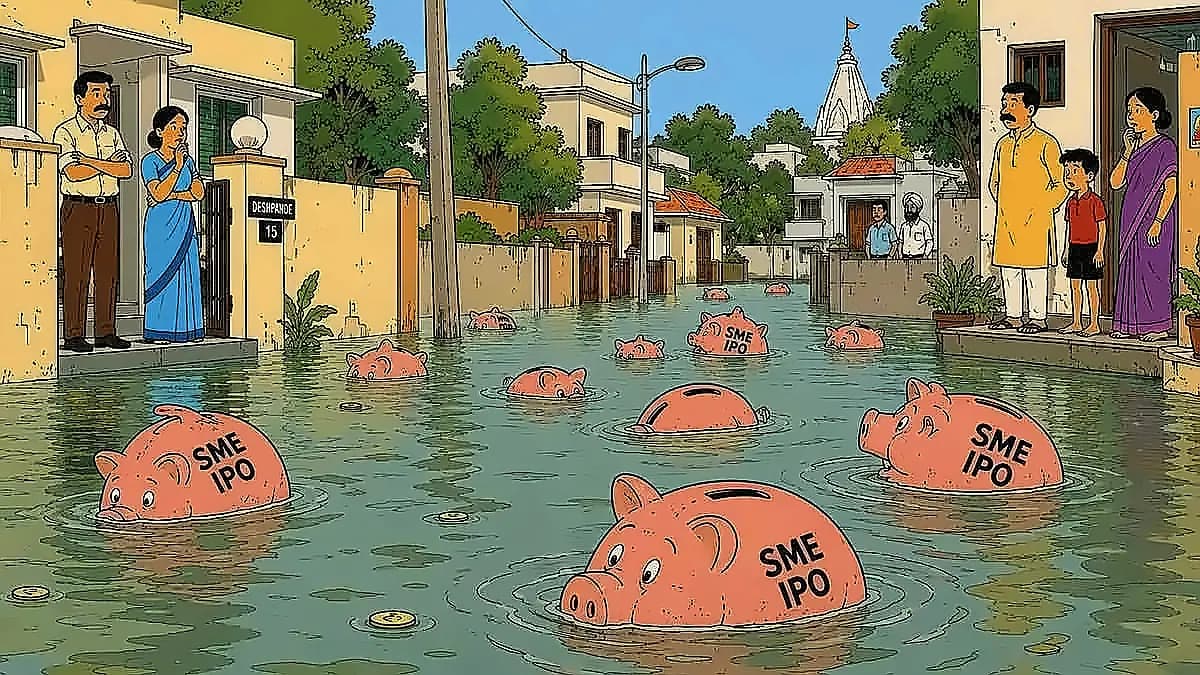
The losses are concentrated in recent cohorts, with 2023-2024 accounting for almost two-thirds of all SME IPOs since 2016. According to The Economic Times analysis, the 2023-2024 vintage has a median holding period of 2.4 years and median total return of -28%, with median annual returns of -12.8%. The 10 biggest listing-day pops ranged from 242% to 387%, but eight now trade below their listing price and six have lost more than 60% from it. The bottom 10 companies are all down by 90% or more from their listing prices. This global trend extends to major IPOs, with Saudi Aramco's $25.6 billion issue trading around SAR 26 well below its issue price of 32 Saudi riyals, despite touching a lifetime high of SAR 39.40.
SEBI implemented stricter rules from July 1, 2025, requiring companies to report operating profits of at least ₹1 crore in two of the previous three years and limiting promoter sales to one-fifth of the issue. As reported by The Economic Times, the 270 businesses listed since these rules took effect are down a median 15% from their listing price, with 62% below debut. The analysis suggests that while SME IPOs may offer stellar listing-day gains, they come with significant risks including lack of transparency and business volatility, with the median SME IPO since 2016 down 13% from its listing price. The lesson extends beyond India, with global IPOs like SpaceX's $75 billion offering and SK Hynix's $26.5 billion listing demonstrating that successful IPOs are only the beginning of a company's journey, with execution and long-term performance ultimately determining true value creation.