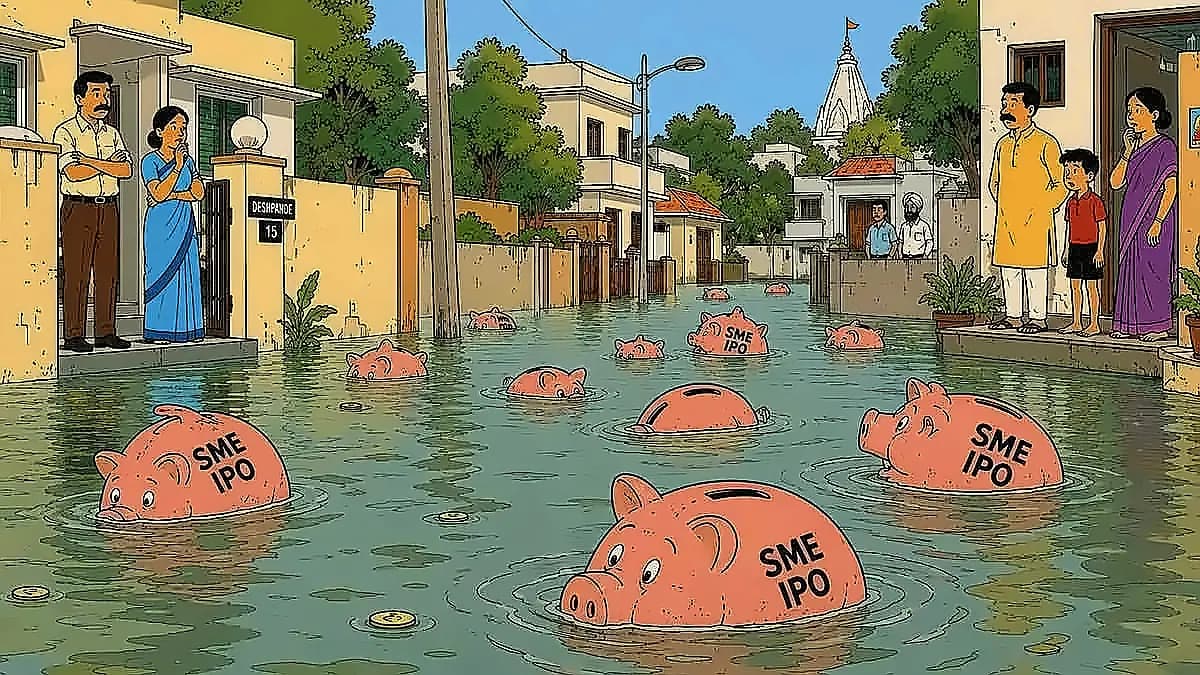
India's SME IPO market in 2026 presents a stark contrast between exceptional winners and widespread underperformance. According to The Economic Times, 21 out of 126 tracked issues have delivered multibagger returns, with the top performer Apsis Aerocom gaining 456% above its offer price. However, this success masks significant challenges as only 65 stocks are currently trading above their offer prices, while 60 stocks remain below their issue prices and one remains unchanged. The median return stands at just 3.9%, significantly below the 24.4% average return for the entire cohort.
Market analysts emphasize that the current performance reflects a highly skewed market rather than broad-based success. As reported by The Economic Times, Vaqarjaved Khan, senior analyst at Angel One, noted that "an average of 24.4% against a median of 3.9% is not a broad-based market, it is a skewed one." Khan explained that 21 names are doing the heavy lifting for a cohort of 126, creating an illusion of strong market performance. The data from PRIME Database shows that nearly half the class of 2026 trades below its issue price, indicating that most investors have not benefited from the headline gains.
The standout performers in the SME IPO segment have delivered exceptional returns that have lifted the overall average performance. According to The Economic Times, Millworks Technologies, Indo SMC and Tipco Engineering have each delivered gains of more than 200%, alongside the top performer Apsis Aerocom. These exceptional returns have created the illusion of a robust market, but the median return of 3.9% reveals the reality that most investors have not participated in these gains. The contrast between average and median returns demonstrates the concentration of success among a small number of companies.
Regulatory changes by SEBI have significantly improved the quality of SME IPO issuers, creating a more selective but higher-quality market environment. As reported by The Economic Times, Ritaban Basu, CEO of B2K Analytics, noted that regulatory tightening has raised the entry bar through stronger profitability requirements, limits on promoter offer-for-sale transactions, enhanced disclosures and monitoring of issue proceeds. The current market also includes minimum operating profit tests, ₹2 lakh application size, tighter limits on offer-for-sale components and restrictions on IPO proceeds usage. Khan from Angel One emphasized that "issuer quality has clearly improved" despite the need for continued work on pricing discipline.

The 2026 SME IPO market presents a complex landscape where exceptional returns coexist with widespread underperformance. According to The Economic Times, the segment remains exposed to low free float, limited liquidity and momentum-driven trading, creating challenges for sustained performance. Market experts recommend treating the segment as a stock-specific opportunity set rather than expecting broad-based returns. The lack of breadth in investor participation suggests that while 21 multibaggers may be encouraging, the market has become more selective rather than mature. Sustaining early gains will depend on companies delivering earnings growth, effective deployment of IPO proceeds, and maintaining governance standards after listing.