In 1977, Reliance Textile Industries made history with its ₹10 per share IPO, raising approximately ₹2.8 crore and achieving seven times oversubscription. According to reports from ET Now, the company attracted close to 58,000 investors by year-end, marking a significant milestone for India's equity markets. This public issue demonstrated that retail investors were prepared to invest in rising concerns, even when the process involved documents, paper certificates, and slower procedures compared to today's digital systems.
The transformation accelerated in 1996 with the launch of India's first depository, the National Securities Depository Limited (NSDL), which became operational in November. As reported by ET Now, this electronic ownership system eliminated the need for physical certificates and reduced risks associated with paper-based ownership. The depository system laid the foundation for faster, more robust securities markets and made investing more accessible to a growing number of market participants.
In 2006, Reliance Petroleum issued 45 crore shares at ₹60 per share, aggregating to ₹2,700 crore and achieving over 51 times oversubscription with 21,08,279 applications. According to ET Now, the retail investors' portion was oversubscribed 14.91 times, demonstrating unprecedented investor appetite. This issue marked the last Reliance group IPO before the anticipated Jio Platforms offering, showcasing the evolution of retail investor participation in major public issues.
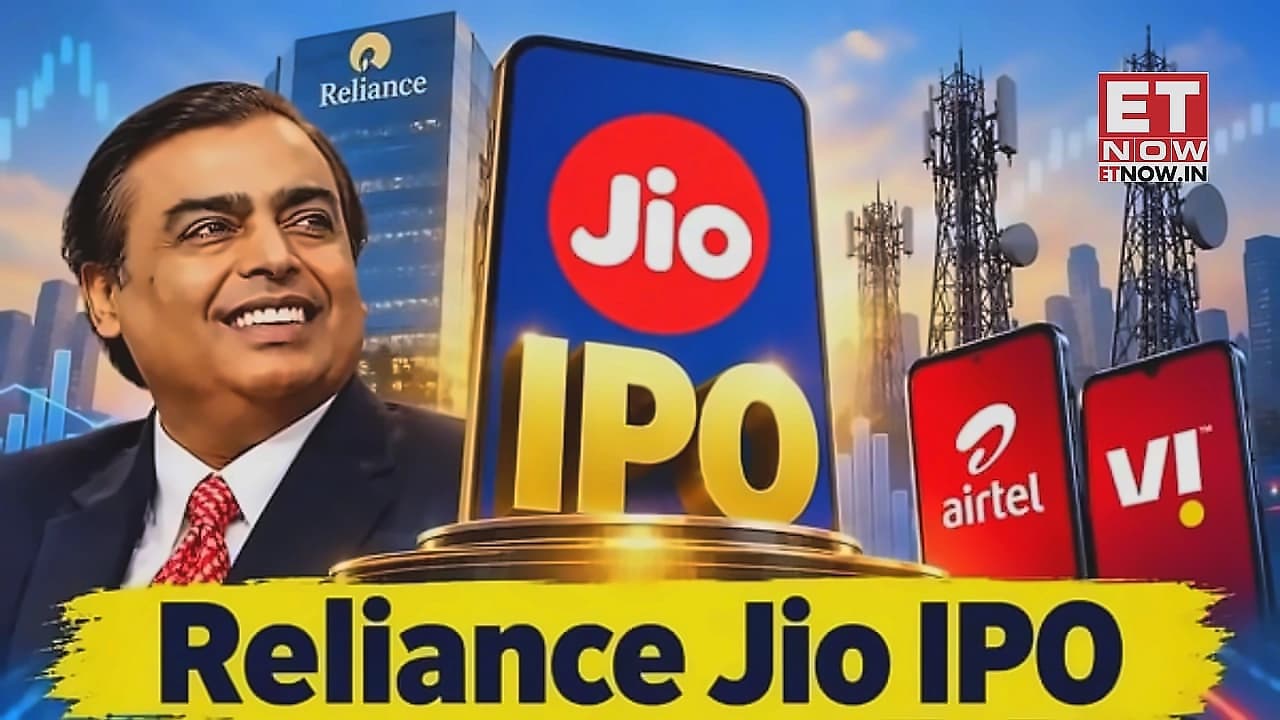
On October 14, 2026, Jio Platforms filed its Red Herring Prospectus with India's Registrar of Companies, setting a price band of ₹1,065-1,119 per share for what will be India's largest-ever public offering. The ₹30,213 crore (~$3.17 billion) IPO is structured as a pure fresh-issue with no proceeds going to existing shareholders, with all funds earmarked for retiring telecom subsidiary RJIL's debt. At the upper price band, the offering surpasses India's previous record IPO — Hyundai Motor India's ₹27,870 crore raise in October 2024 — by approximately ₹2,343 crore. The IPO opens for subscription on October 21, 2026 and closes on October 23, 2026, with listing expected on October 28, 2026.
The introduction of UPI payment systems for IPO applications in 2019 revolutionized the application process, allowing investors to submit bids through smartphones and authorize payments digitally. As reported by ET Now, the UPI application limit was increased from ₹2 lakh to ₹5 lakh for issues opening on or after May 1, 2022. This development made the IPO process more accessible to investors comfortable with digital banking and mobile payments, significantly reducing manual steps and paperwork requirements.
The upcoming Jio Platforms IPO represents a stark departure from recent major listings, which were largely exit events where existing shareholders sold stakes. According to ICICI Direct, Jio Platforms is taking a pure fresh-issue approach, with 27 crore shares at ₹10 face value completely excluding any offer for sale. The company plans to use the proceeds to prepay up to ₹27,500 crore of borrowings at its telecom business Reliance Jio Infocomm, with any remaining funds directed toward general corporate purposes. Market expectations suggest the company could be valued at more than ₹10 lakh crore, which would make it the first Indian company to list above this threshold and rank among the country's top four listed companies by market capitalisation. Representing the merchant bankers, Uday Kotak noted that the price band was determined after extensive consultations with institutional investors.
According to The Hindu BusinessLine, Jio Platforms plans to commercialise its technology stack in international markets through partnerships rather than selling hardware or software licences. The company intends to operate as a managed services partner, offering its technology to telecom operators in both developed and emerging economies. Akash Ambani, Managing Director of Jio Platforms, emphasized leveraging infrastructure investments and expanding service offerings to address India's $1.4 trillion digital economy by FY31. The company expects growth to be driven by mobility, enterprise, home broadband, and digital services, with plans to introduce additional services that can generate higher revenue per user rather than depending primarily on per-gigabyte pricing. At the upper end of the price band, Jio's valuation translates into 34 times FY26 earnings, compared with 41 times for its closest peer, representing a 17% discount on a like-for-like basis.