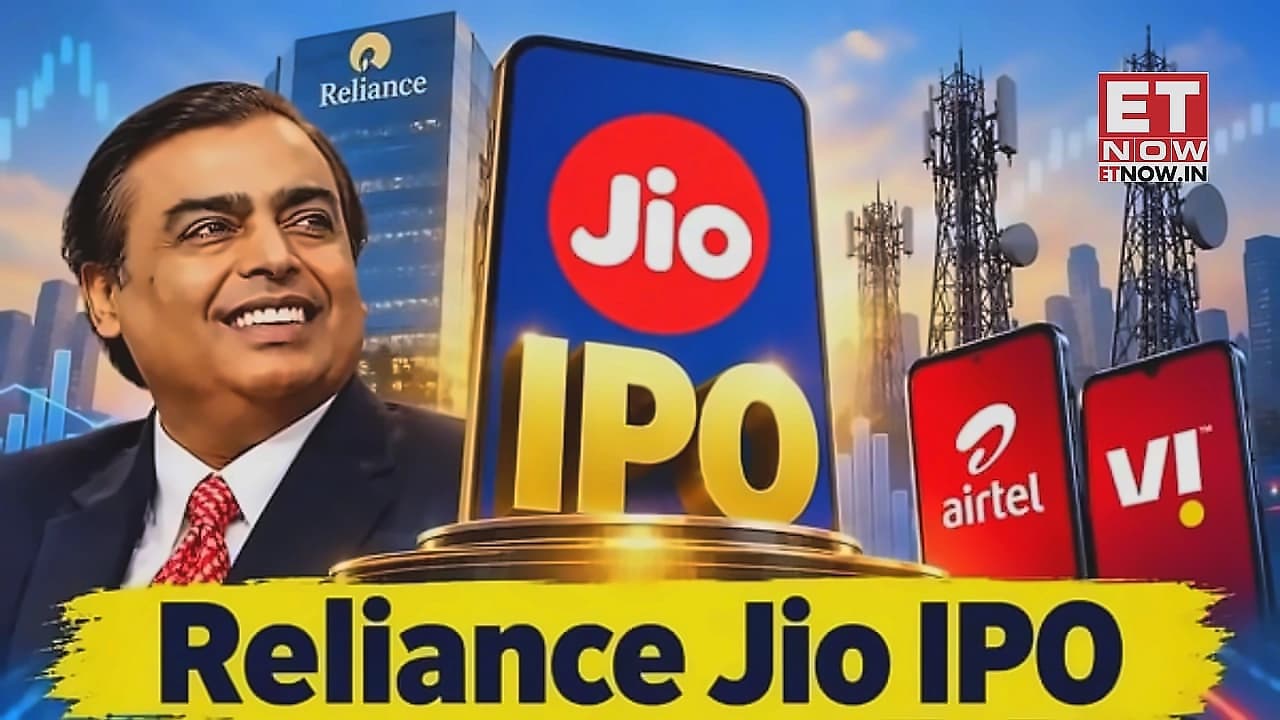
Jio Platforms is preparing for India's largest public offering, with the company's managing director Akash Ambani confirming the aspiration to make it India's biggest public offering and focus on creating shareholder value. The IPO is pegged at around ₹35,000 crore and comes just a month after the ₹22,562 crore listing of National Stock Exchange on BSE. According to Mint, the offering will issue up to 27 crore new shares with no offer for sale component, with proceeds primarily used to repay debt for Jio's telecoms division. The company is reportedly planning to raise around ₹37,700 crore with a proposed price band of ₹1,150–1,220 per share, though latest market reports indicate an estimated price range of around ₹1,300–₹1,450 per share. The shares are expected to list on October 28 subject to market conditions, with the anchor book potentially opening on October 19.
Jio Platforms has demonstrated exceptional market dominance, carrying around 60% of India's wireless data traffic in Fiscal 2026 and adding around 27 million net active mobility customers in the same period, excluding machine-to-machine connections. As per The Economic Times, citing the Analysys Mason Report, the company's network carried more mobile data globally, excluding China, than any other network during the year. The company's digital gateway enables consumers and businesses to access products and services across multiple digital categories through a single platform, allowing it to distribute additional services to its existing customer base at low incremental customer acquisition costs. During IPL 2026, more than 198.7 million viewers accessed IPL content through an integrated JioHotstar package with Jio connectivity services, while the company provides Jio Unlimited 5G users access to the Google AI Pro plan at no additional cost for 18 months.
Jio Platforms has demonstrated strong financial performance with revenue from operations growing at a 15.79% CAGR between Fiscal 2024 and Fiscal 2026, while EBITDA grew at a 17.79% CAGR during the same period. According to The Economic Times, net leverage declined from 0.88 times in Fiscal 2024 to 0.36 times in Fiscal 2026, indicating improved financial health. The company's growth strategy is built around four areas — mobility, homes, enterprise and international technology services. Enterprise technology, home broadband and digital services are expected to become increasingly important growth drivers, alongside the company's core mobility business. The company's technology investments include 6,817 patents covering areas including 4G, 5G, 6G, cloud-native core network architectures and AI-driven network automation.
Home broadband represents another significant growth opportunity with Jio Platforms having 27.1 million home broadband customers as of March 31, 2026, offering services through JioFiber and JioAirFiber. According to The Economic Times, the company had around 27 million home broadband customers in its draft red herring prospectus, while its UBR customer base was approximately 6.5 million. The company is targeting India's 79 million micro, small and medium enterprises, combining connectivity with offerings such as customer relationship management, selected enterprise resource planning applications, managed Wi-Fi and other information and communications technology services. The addressable Indian ICT market is estimated at around $52 billion, while telecom operators currently account for only about 5-7% of this opportunity, giving Jio an opportunity to compete for spending that is currently directed towards IT companies and system integrators.
Beyond traditional broadband, Jio Platforms is expanding into satellite broadband operations with plans to significantly increase home connectivity across India. As per Mint, Akash Ambani emphasized that Jio has always stood for inclusivity and that satellite plays a part in the home-connect story, stating that "today we need to ensure that the home broadband story is that every Indian home should be able to get a home broadband connection." The company currently covers 99% of Indian homes through its existing technology, and satellite technology will rapidly increase this coverage. Regarding tariff strategies, he stated that "we will stick to being very inclusive for all Indians and very affordable" and will explore all avenues to deliver value to consumers while maintaining affordability as a core principle. Currently, Jio is trailing Airtel in average revenue per user (Arpu), with Airtel having an industry-leading ₹264 as of June end compared to Reliance Jio's ₹215.6* and Vodafone Idea's ₹177*.
The latest Jio Platforms IPO grey market premium (GMP) is reported at ₹172, as of October 10, 2026, according to Investorgain.com, with the premium showing a steady upward trend over the past four sessions, rising from ₹148 on October 4 to ₹166 on October 7. The GMP has gained ₹18, or around 12.2%, in four sessions, with the premium remaining within a steady range of ₹18-₹19. With a reported upper price band of ₹1,119, the listing price is estimated to be ₹1,291, indicating a listing premium of 15.4% from IPO price. A separate IPO tracker currently reports Jio Platforms' GMP at around ₹157, highlighting that grey-market quotes can vary across sources and should be treated as unofficial indicators. It is important to note that GMP is an unofficial indicator and is not an assurance of the eventual listing price, with the final IPO price band and market conditions at the time of listing determining the actual listing price.