According to The Economic Times, the West Asia conflict has knocked out roughly 10% of global aluminium production, compounding a demand-supply gap that already existed before the war. Market expert Sudip Bandyopadhyay expects aluminium prices to remain elevated for the foreseeable future, which is broadly good news for Indian producers. Vedanta and NALCO are well-positioned to capitalise on this structural supply crunch and are unlikely to face material headwinds from the current tariff environment. However, Hindalco presents a different story, as its US-based subsidiary Novelis has faced a string of operational setbacks including fire incidents that create a distinct layer of risk unrelated to the macro tailwinds. The latest tariff adjustments maintain a 50% import tariff on steel, aluminum, and copper commodity imports, but introduce a 15% by weight exemption for goods with less than 15% metal content, effectively exempting many derivative products from the full tariff burden.
For Indian steel producers, Bandyopadhyay sees limited direct impact from US tariff actions. The outlier is Tata Steel, which carries significant exposure through its European operations. Europe's defence production ramp-up had been generating fresh steel demand and fuelling hopes of a recovery in those facilities. Whether new US tariff measures disrupt that trajectory remains uncertain, but the overall situation is 'destabilising for the industry' even if it does not directly hurt domestic Indian producers.
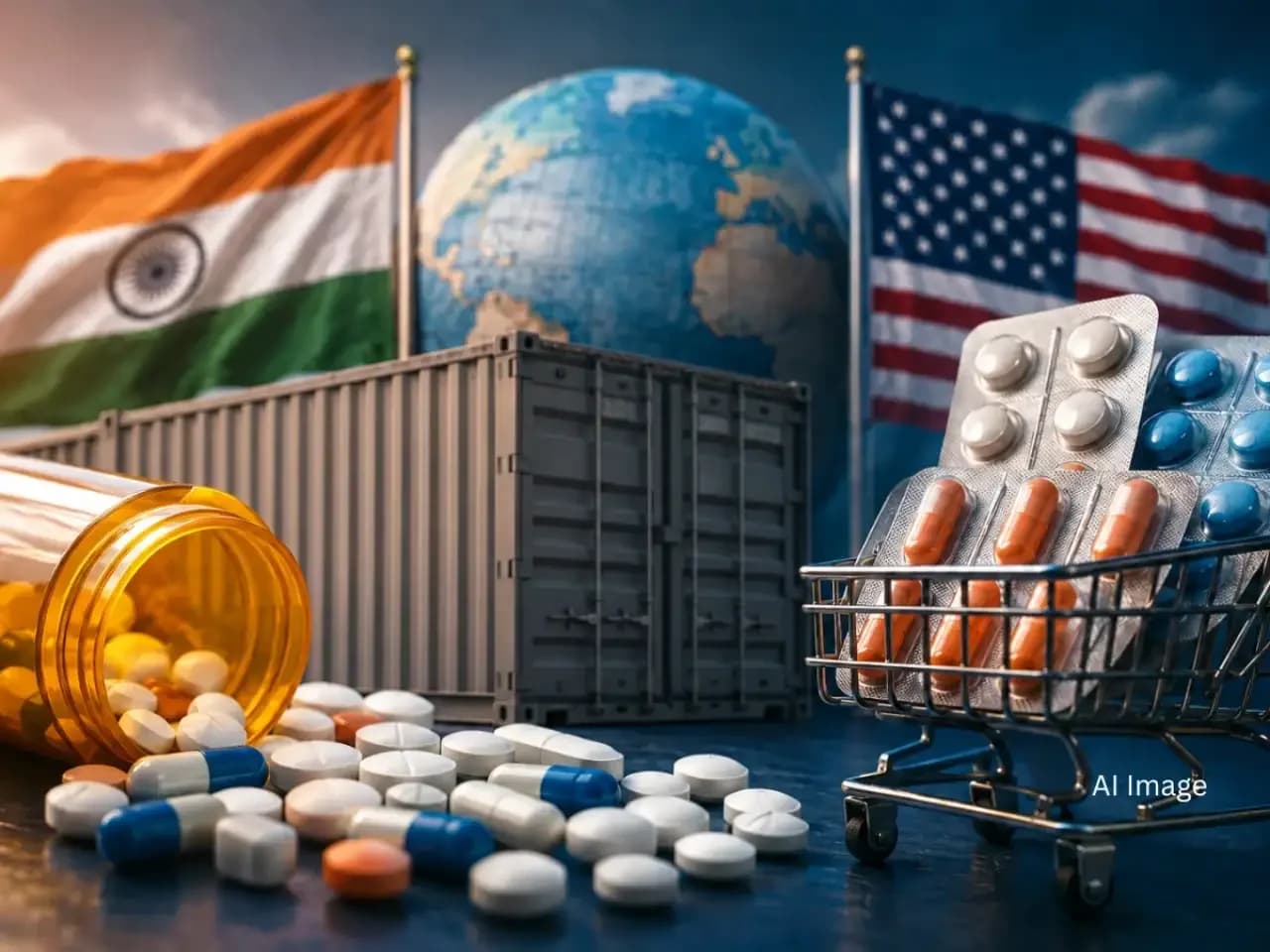
The proposed 100% US tariff on branded drugs creates a dramatic escalation from previous expectations, with the administration implementing a 100% tariff on patented pharmaceutical products and ingredients as part of the April 2 announcements. However, the latest implementation details reveal a more nuanced structure with multiple ad valorem duty rate structures including 100% on imports for companies without MFN deals or US plant commitments, 15% for products from Japan, EU, South Korea, Switzerland, and Liechtenstein, 10% on UK products, 20% for companies with branded products planning US facilities, zero for companies with fully executed MFN agreements (13 companies), zero for Orphan Drugs, and zero for generic formulations, biosimilars, and generic APIs for at least the next year. This represents a significant departure from the persistent low-grade risk that had been factored into industry planning for over a year. The tariff announcement creates an 120-180 day implementation window that allows companies to adjust supply chains and potentially secure exemptions through Most Favored Nation (MFN) pricing deals or onshoring agreements, with the 0% tariff path available through January 20, 2029 for compliant companies. Bandyopadhyay believes India's pharmaceutical industry — which is overwhelmingly built on generics and contract manufacturing — is structurally protected, as the cost of medicine in America would rise to politically untenable levels if Indian generic drugs were tariffed.
Geopolitical uncertainty has pushed the price of platinum to almost double in the last six months, with prices surging to ₹8,000 per gram in February from ₹3,869 last September. According to The Economic Times, this surge has made the current ceiling price for carboplatin commercially unviable in January itself. An industry executive warned that if the government does not intervene, it may threaten the profitability and availability of an important first-line cancer treatment. The problem is compounded by the fact that geopolitical uncertainty has pushed the price of platinum to almost double in the last six months, in tandem with other precious metals such as gold and silver. Although the price seems to be stabilising, it remains historically high, creating significant challenges for cancer drug manufacturers who rely on platinum-based chemotherapy agents.
The tariff announcement casts a shadow on Indian contract development and manufacturing organisations (CDMOs), which have emerged as global suppliers of high-value drug substances and patented intermediates. While not explicitly targeted, the proclamation stresses the US goal of reshoring pharmaceutical manufacturing — a signal that upstream suppliers could face growing pressure. Companies such as Divi's Laboratories, Laurus Labs and Piramal Pharma's CDMO arm may need to accelerate investments in US-based capacities or deepen onshore partnerships to remain competitive over the medium term. The White House said the tariffs follow a commerce department investigation that found US reliance on imported patented drugs posed a national-security risk, adding the threat of levies has already spurred about $400 billion in new pharmaceutical investment commitments in the US. The key motive behind the tariffs appears to be pushing innovator companies toward MFN deals or investment in plants/R&D units to bring down drug prices.
According to the analysis, Vedanta and NALCO are insulated from current policy risks, with both companies well-positioned in the elevated aluminium price environment. Hindalco requires separate analysis due to Novelis' operational challenges. In the pharmaceutical sector, Sun Pharma faces mid-single digit impact due to its innovative medicine business, while Glenmark's strategy may need full restructuring before launching branded products in the US market. The assessment suggests that India's metals and generic pharma sectors have more structural protection than headlines suggest, with real risk concentrated in a handful of names. For Indian pharma players, the impact is uneven, with generics spared the tariffs for now, though exporters of innovative medicines and CDMO services face a recalibration where drugs are made will increasingly matter as much as what they treat. The $400 billion in new investment commitments highlights the administration's strategy of offering cooperation incentives to reshape the competitive landscape, while the 120-180 day implementation timeline provides companies with specific deadlines to adjust their strategies.