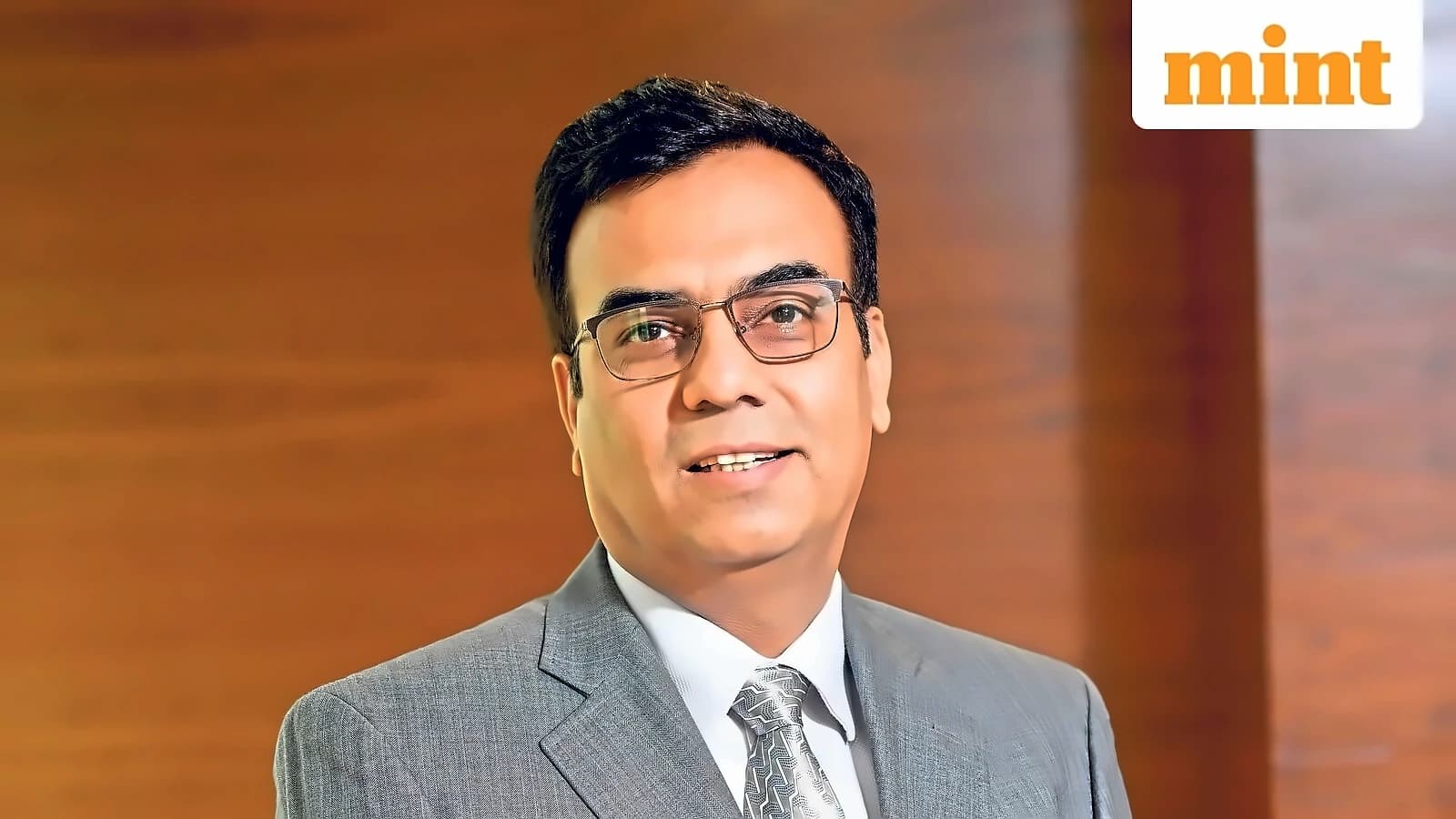
According to an exclusive interview with Moneycontrol, Sachee Trivedi, Founder and Director of Trident Capital Investments, maintains a bullish outlook on Indian markets despite current challenges. She explains that India's valuation framework has fundamentally changed in the post-COVID era, creating new opportunities for investors. Trivedi emphasizes that this shift represents a significant departure from previous market dynamics and opens up new investment avenues for global capital. The interview highlights how India's valuations have normalized to around 2020 levels, with most companies trading at pre-COVID multiples, creating a comfortable setup for capital deployment in the Indian market.
As reported by Moneycontrol, Trivedi discusses the AI-driven "FOMO" trade that has redirected global capital to markets like South Korea and Taiwan. She breaks down how this trend has created opportunities for investors who can identify the underlying fundamentals beyond the hype. The interview highlights how this global capital reallocation has affected different regional markets and created new investment patterns in emerging technology sectors. However, Trivedi warns that the volatility in Asian markets is essentially a 'FOMO' trade, where investors are not investing in countries but in specific AI companies, leading to episodic market capitulations and questioning of business models.
According to the exclusive interview, Trivedi believes India could regain favour as investors shift their focus back to fundamentals. She discusses the long-term opportunities that global investors should be watching in India, suggesting that the country's competitive advantages are becoming more apparent to international investors. The interview emphasizes how India has developed a structural buyer in the form of SIP flows in the mutual fund industry - a phenomenon that did not exist in the pre-COVID era. This structural demand has raised the floor on valuations versus 2014 and 2015 levels, creating a more stable investment environment.
As reported by Moneycontrol, Trivedi shares her views on RBI's handling of the rupee and provides insights into the outlook for foreign institutional investment. The interview covers the central bank's approach to currency management and its implications for foreign investor flows into Indian markets. Trivedi discusses how India has experienced at least 28-30% rupee depreciation over the last five years, which has been on a glide path and is easier to manage compared to volatile currencies like Brazil. She praises RBI's proactive steps in containing currency volatility through debt instruments, tax incentives on debt instruments, or FCNR deposits, maintaining control while being seen as proactive rather than desperate.
According to the latest interview, Trivedi argues that India's positioning in the AI trade is unique and potentially advantageous. She emphasizes that India doesn't need to have a foundational AI model like chip manufacturing to be attractive, as this can be associated with sovereignty rather than a limiting factor. Trivedi draws parallels to India's mobile technology success, where the country leapfrogged from pigeon to cell phones without participating in the standards or chip manufacturing. She highlights India's ability to restructure around technology, adapt and transform it, and build on it - qualities that will define winners in the AI trade. The interview suggests that Indian youth, engineering talent, and chip design capabilities will be crucial in transforming AI technology to solve India's specific problems, creating a diversification opportunity from overheated Asian markets.