The US-Iran war has triggered significant volatility in equities and gold, leaving investors unsure of the right investment strategy at this juncture. According to Mint, benchmark indices have declined about 10% year-to-date, with gold prices swinging between gains and losses as investors grapple with the uncertain outlook. The Strait of Hormuz remains the focal point of concern, carrying nearly 20% of the world's fuel supply and keeping oil prices elevated above $100 per barrel. The unease has spilled over into global equities, where major indices have come under sharp pressure as investors adopt a cautious stance.
Dalal Street has remained on edge since the conflict began, alternating between gains and losses as optimism around a ceasefire is offset by concerns over a possible closure of the Strait of Hormuz. As reported by The Times of India, on Monday morning, the pressure was clearly visible across markets. The Rupee weakened by 49 paise against the US dollar to trade at 93.32, while equities saw a sharp sell-off. The Nifty50 slipped below the 23,600 mark, trading at 23,608.45 at 9:16 am, down 442 points or 1.84%. The BSE Sensex also declined steeply, falling over 1,500 points to 75,988.32, a drop of 2.01%.
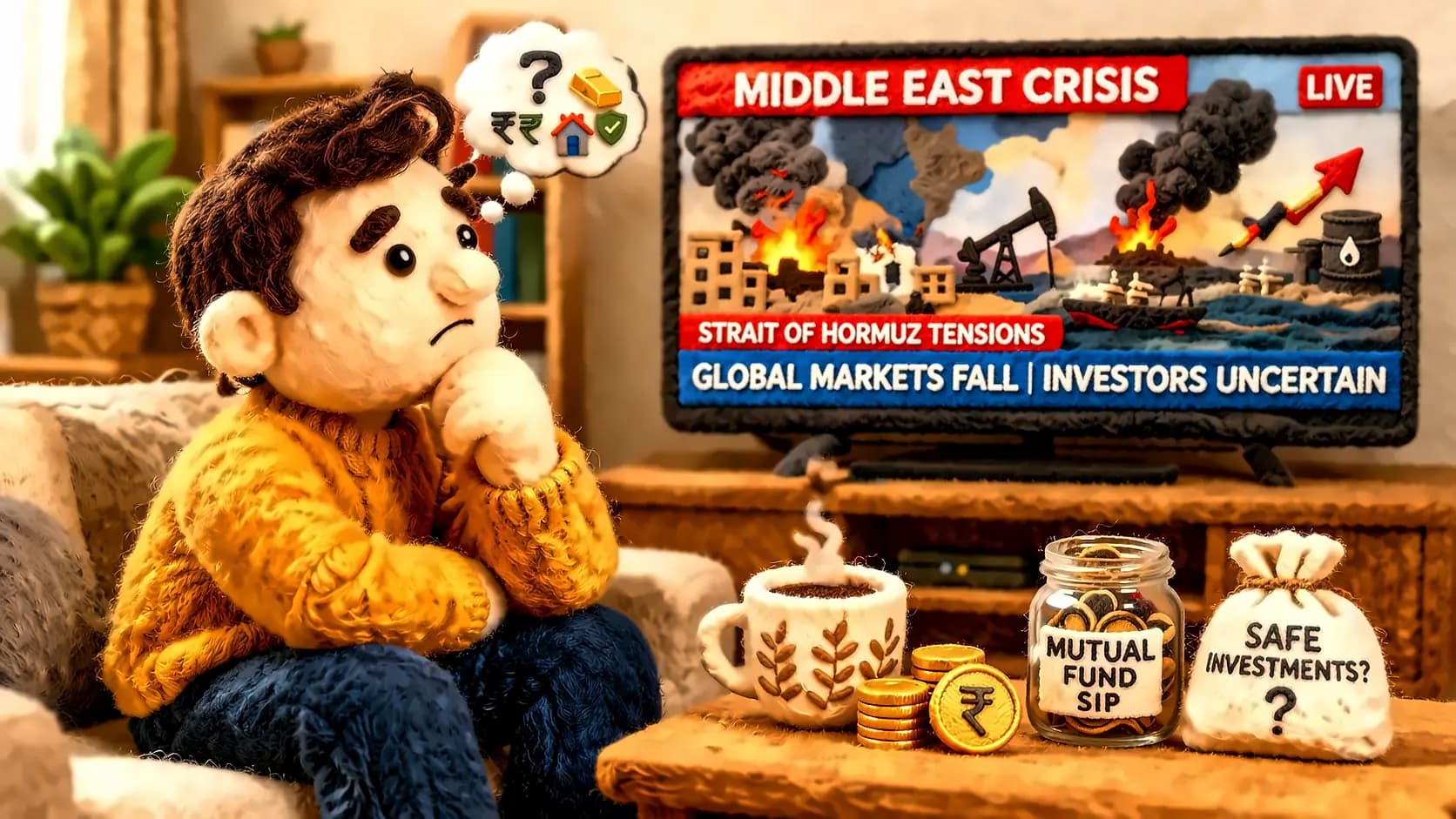
Market expert Ajay Bagga told ANI that the optimism seen earlier in the week has faded, with sentiment turning negative once again. According to The Times of India, Bagga explained that 'Last Wednesday, there was hope in the markets that something was coming by when the ceasefire and the talks were announced. But that momentum has faded'. He cautioned against impulsive decisions and emphasised the importance of staying disciplined, stating 'Not the time to trade. Invest, do your discipline monthly investment through the SIP route. Do not try to time this market because I don't think the bottom has formed but nobody knows when the bottom will be formed'. Mint reports that Vinit Bolinjkar from Ventura recommends diversification, quality focus, and a tilt toward stability without abandoning long-term growth.
Experts suggest a balanced investment strategy focused on diversification, quality equities, and strategic gold allocation to protect portfolios amid the ongoing uncertainty. According to Mint, Bolinjkar recommends viewing equities as the core growth engine but being selective, reducing or tilting defensively versus the usual 60-70% in bull markets. He suggests focusing on large-caps for liquidity and stability, with recommendations for defence, pharma/healthcare, FMCG, IT, banking, and infrastructure sectors. For gold allocation, Bolinjkar suggests a 10-15% strategic hedge targeting Sovereign Gold Bonds (SGBs) or gold ETFs/mutual funds, while Badjate maintains 80-85% in equities and 15-20% in gold and silver. Debt is positioned as a stability anchor through high-quality government securities and short-to-medium duration funds.
Ripple effects are extending beyond energy markets, with around 20% of India's goods exports facing disruptions as shipping routes through the Red Sea and the Gulf of Oman come under strain. As reported by The Times of India, Bagga urged investors to remain cautious amid the ongoing uncertainty, warning 'Caution on the Indian markets, caution on the global markets, conserve capital right now, not the time to go bottom picking because you might be catching falling knives and get hurt in the process'. However, Mint notes that India's macro backdrop remains supportive with GDP growth projected at 6-7%, GST collections sustaining above ₹1.7 lakh crore, and government capex exceeding ₹11 lakh crore. Tushar Badjate expects market stability to improve over the next 12-18 months with upcoming triggers such as the 2026 US Midterm Elections and potential shifts in US Federal Reserve policy.