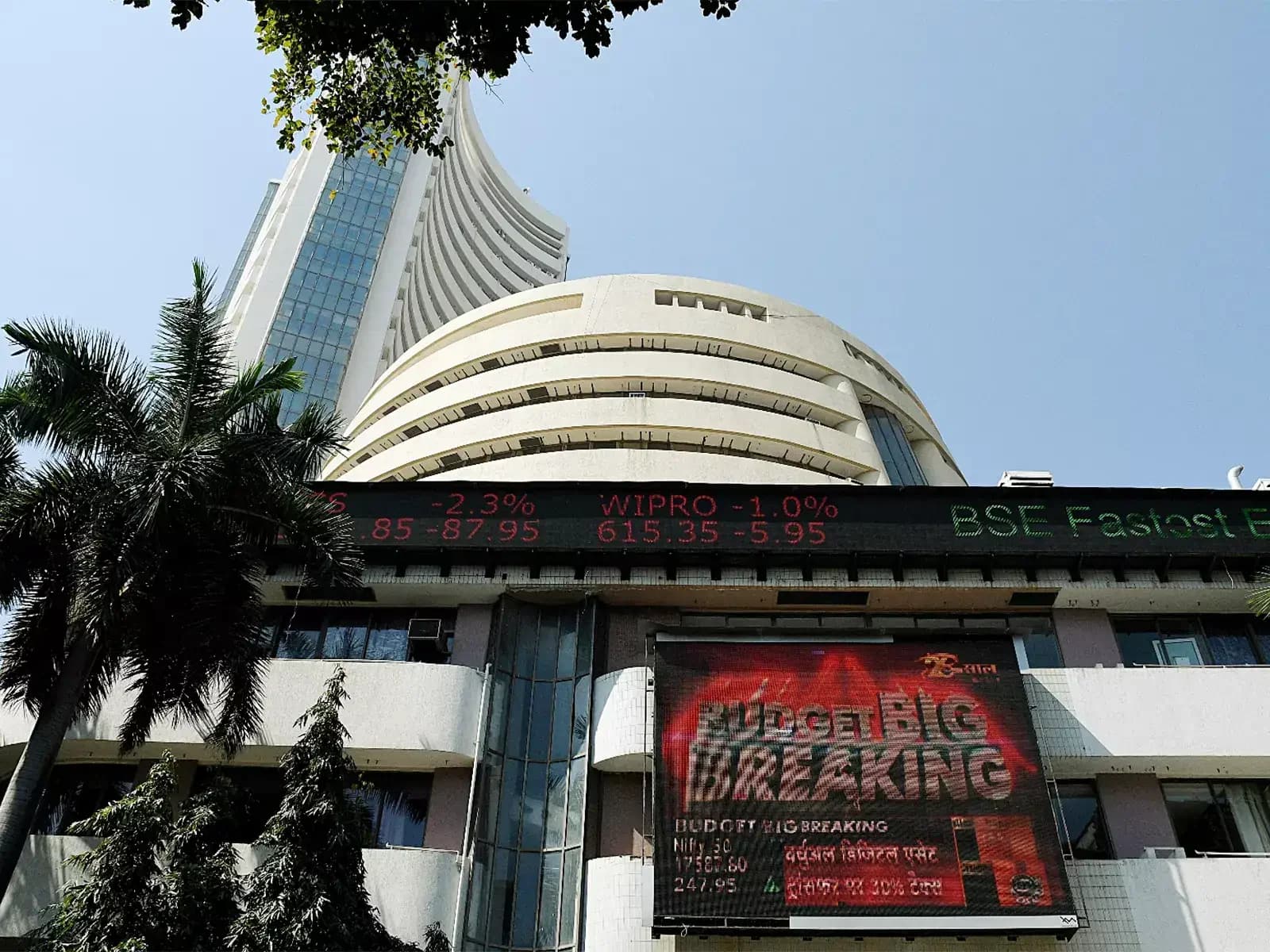
According to Axis Direct's latest analysis, the Nifty50 is projected to reach 28,615 by 2027, representing a significant upward revision from previous estimates. As reported by The Economic Times, Rajesh Palviya, Head of Research at Axis Direct, believes this target is achievable given the improving market conditions, with benchmark valuations having corrected to around 18x one-year forward earnings, bringing them closer to historical averages. The projection assumes sustained cooling in crude prices, reversal of foreign investor flows, and double-digit earnings growth will drive the market rally. The base case scenario depends on Brent crude prices stabilizing within the $70-$80 per barrel range with permanent resolution around the Strait of Hormuz chokepoint, along with FII re-engagement leading to net inflows of ₹1.42-₹1.89 lakh crore over 3-4 months as India's valuation premium over emerging markets normalizes. Ventura's Vinit Bolinjkar now predicts another 7-8% upside by year-end from current levels, contingent on large private banks reversing NIM compression, crude price relief, and continued auto sector strength.

The Q1 FY27 results season has surprised positively at the aggregate level, with ex-OMCs corporate earnings growing around 17% YoY, led by BFSI, metals, technology and autos sectors. As reported by Business Standard, Ventura's Vinit Bolinjkar notes that the Nifty has already staged a recovery, gaining around 2.4% in July after a prolonged five-month losing streak, trimming its YTD losses to roughly 6-7%. The Nifty IT rose 18.4% in July, its best month since June 2020, driven by a "reverse AI trade" narrative as global tech wobbled while Indian IT services rebounded sharply. However, the market has not yet priced in compressor norms coming into effect from March next year for consumer durables, creating a divergence within the sector that the market hasn't fully differentiated yet. Ventura remains constructive on niche IT players like Coforge, Persistent Systems, LTIMindtree and Tech Mahindra, while being more cautious on larger legacy players facing AI adoption disruption.
According to Axis Direct's analysis, the AI market cycle has strong long-term support with the probability that Jevons' paradox will ultimately create demand right through the supply chain. As reported by The Economic Times, Palviya notes that India is beginning to see large investments in data centre capacity, alongside the build-out of a startup ecosystem developing not only AI applications but also models. The brokerage highlights growing investment in semiconductor manufacturing ecosystem, from which more progress is expected in coming years. The opportunity from global defence spending, manufacturing and the build-out of AI-related data centres, startups and semiconductor capacity presents significant opportunities for India's growth trajectory. Ventura identifies defence, aerospace and precision engineering as key beneficiaries of the broader China+1 diversification trend, with several domestic players achieving genuine technological know-how backed by active government push for domestic arms manufacturing.
According to Axis Direct's latest analysis, largecaps offer a superior risk-reward profile for the next 12 months over midcaps, citing valuation margin of safety, FII capital flow advantages, and earnings resilience. As reported by The Economic Times, their top three sectoral picks include Financials (BFSI) anchored by credit growth acceleration (17-18%), Capital Goods & Defence backed by government capex and ₹2 lakh crore domestic defence production target, and Power & Utilities driven by record peak power demand of 270.8GW. Ventura's top sectoral bets include pharma and healthcare benefiting from healthcare inflation running into double digits and strong domestic expansion, small finance, MSME and MFI lending with disbursements picking up and systematic NPA reduction, and auto ancillaries and capital goods catering to the EV boom with strong margin improvements. The brokerage recommends overweight quality BFSI, capital goods and pharma sectors with selective allocation to IT on dips, staying neutral on FMCG sector due to monsoon-related uncertainty.
According to Axis Direct's assessment, FII sentiment is shifting towards neutral as India becomes cheaper and more attractive, with FCNR flows bringing in $40 billion and more coming. As reported by The Economic Times, Palviya notes that all of that may not be enough to take us back to an overweight position in the MSCI, but the changing sentiment is significant. The market capitalisation of top 1,000 listed companies is expected to rise to ₹21 lakh crore in FY27, compared with ₹19 lakh crore reported in FY26, with earnings of these companies expected to rise 11% in FY27. Ventura expects FPI inflows between ₹1.4-1.8 lakh crore by the end of the year in their bull case scenario. FIIs will still come into banks, because banks are well regulated and hence more trusted, but beyond banks, there are many large-cap companies where they will find strong growth opportunities. The CAS implementation has been off to a rocky start with wide divergence between Sensex and Nifty, but NSE has flagged this as expected during transition, with the gap narrowing session-on-session as arbitrage capital steps in.