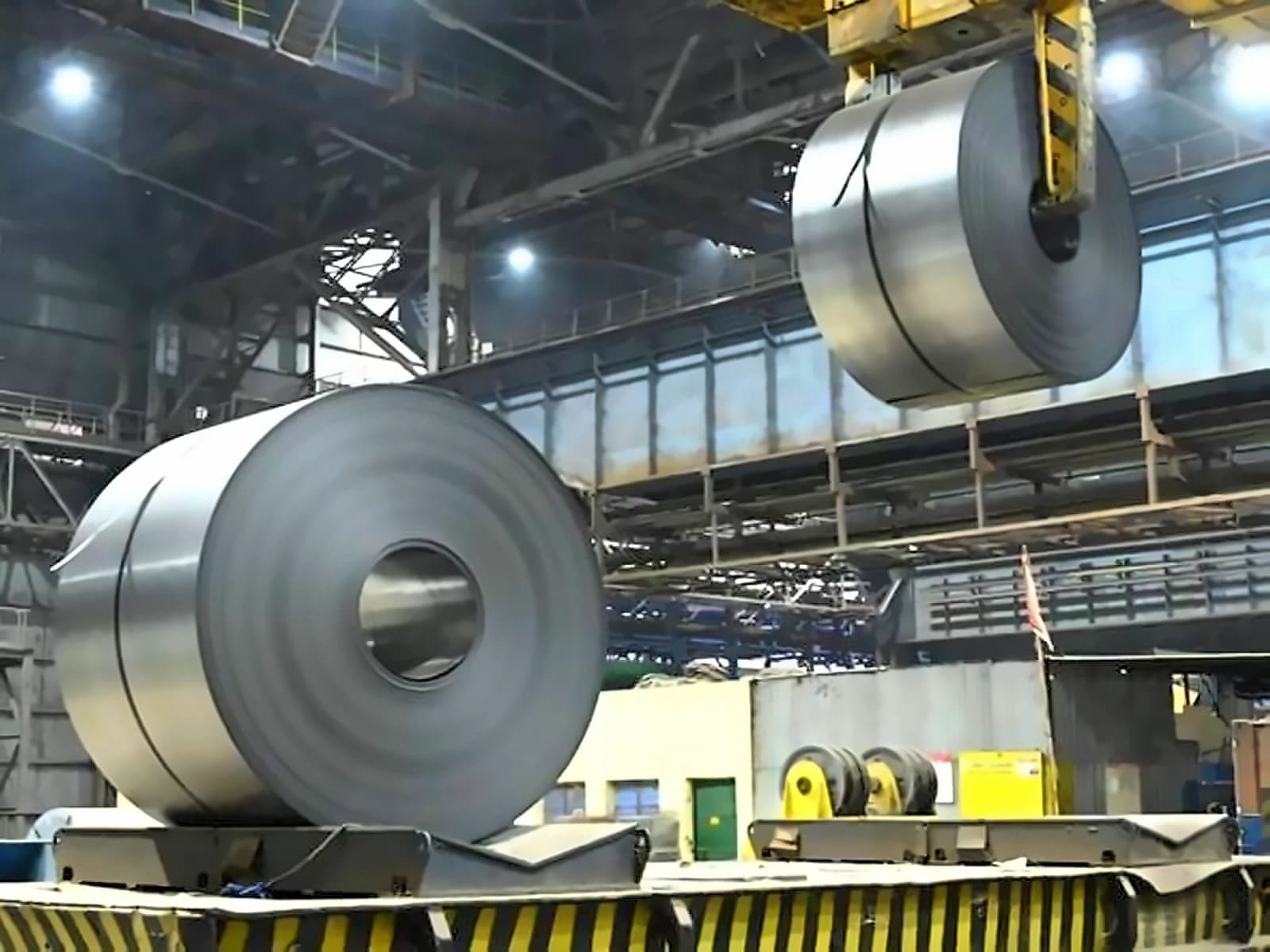
According to reports from Motilal Oswal Financial Services, Tata Steel and JSW Steel emerged as top metal stock picks with significant upside potential. The brokerage has maintained a 'constructive' stance on domestic steel prices, supported by lean channel inventories, maintenance-related supply constraints, improving domestic consumption, and broad-based raw-material inflation. Jindal Steel and SAIL also received 'Buy' ratings, with the recommendations indicating substantial upside potential across the steel sector. As per The Financial Express, the brokerage expects the steel sector could enter the second half of FY27 with a stronger pricing environment than current market expectations, with the immediate earnings outlook to benefit from stronger realisations.
As reported by Motilal Oswal, Tata Steel received a target price of ₹220 per share, indicating a 17% upside from Thursday's closing price. The stock was trading at ₹187.25 per share on BSE with a market capitalisation of ₹2,33,752.46 crore. JSW Steel received a target price of ₹1,340 per share, with the stock trading at ₹1,278 per share and a market cap of ₹3,12,039.93 crore. SAIL was assigned a target price of ₹195 per share, trading at ₹177.05 per share with a market cap of ₹2,33,752.46 crore. Jindal Steel received a target price of ₹1,200 per share, trading at ₹1,133.5 per share with a market cap of ₹2,33,752.46 crore. According to The Financial Express, Tata Steel shares rose around 3% in 2026 so far, with the company maintaining a market capitalisation of around ₹2.34 lakh crore.
According to the Motilal Oswal report, steel prices remained firm during Q2 FY2026-27 despite seasonal demand weakness. Domestic hot-rolled coil (HRC) prices jumped 7% month-on-month to a four-year high of ₹62,000 per tonne in September, while cold-rolled coil (CRC) prices rose 8% MoM to ₹70,500 per tonne. Rebar prices also recovered sharply to ₹56,800 per tonne in September, from ₹48,850 per tonne in June. This rally signals a broad-based pricing strength across both flat and long products. The brokerage expects steel prices to remain firm in the near term with another ₹1,000-1,500/t increase possible in the coming months. Companies with stronger cost positions, captive raw materials and greater downstream/value-added exposure should be better positioned to maintain margins intact.
According to The Financial Express, India produced around 67.4 million tonnes of finished steel between April and August 2026, up 3.7% year-on-year, while finished steel consumption grew at a faster 7.2% to 70.3 million tonnes during the same period. This gap between production and consumption has helped keep the domestic market relatively tight. The global picture also supports the bullish outlook, with global crude steel production falling 0.6% YoY to around 1.08 billion tonnes during January-July, while China's production declined 3.1% to about 577 million tonnes. The structural decline in Chinese steel output is important for global market balance given China's major role in global steel production and exports.
According to Motilal Oswal, rising steel prices are being accompanied by higher raw-material costs, with the brokerage estimating that every $10-per-tonne increase in coking coal prices adds around $7-8 per tonne to input costs. The brokerage added that margin sustainability will depend on mills' ability to pass through further price increases as the impact of cost inflation will be evident steadily in the coming quarters. The companies that can protect margins in this environment are those with stronger cost positions, access to captive raw materials and greater exposure to downstream or value-added products.