Goldman Sachs and Jefferies have both initiated coverage with 'Buy' ratings for Manipal Health, while J.P. Morgan has taken a 'Neutral' stance. According to reports from CNBC TV18, Goldman Sachs analysts Shyam Srinivasan and Karan Vora initiated coverage with a 'Buy' and ₹865 target price, while Jefferies analysts Alok Dalal and Dhawal Kut also initiated with a 'Buy' and ₹870 target. UBS analysts have initiated coverage with a 'Neutral' rating and ₹850 target, and J.P. Morgan analysts Bansi Desai and Amlan Jyoti Das, however, initiated with 'Neutral' and an ₹800 target. The common point among all brokerages is Manipal's scale, with the difference lying in how quickly that scale can translate into stronger returns.
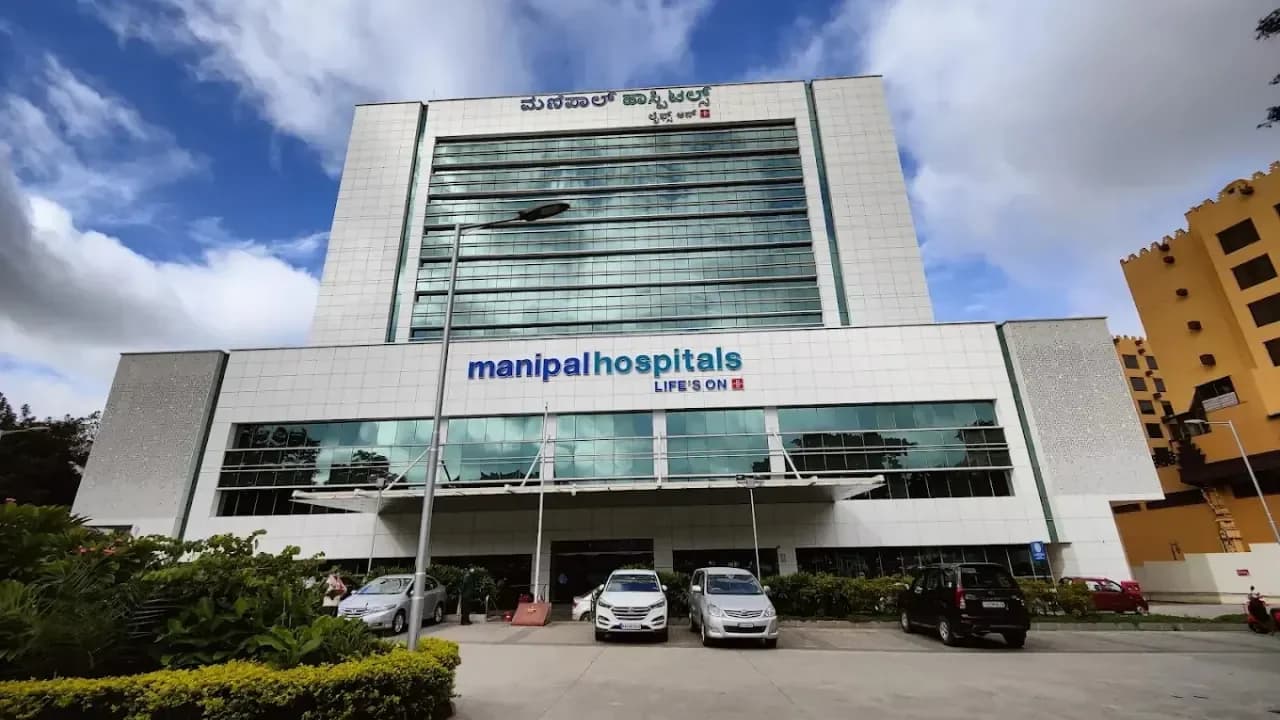
Manipal Health has established itself as one of India's most aggressive hospital consolidators through its acquisition strategy. As reported by CNBC TV18, Goldman Sachs estimates the company has acquired more than 5,500 beds over the past five to six years, more than the next five companies combined. The company continues to evaluate inorganic growth opportunities across Karnataka, Maharashtra and Goa including the Mumbai-Pune economic corridor, and Eastern India comprising West Bengal, Odisha, Jharkhand and Sikkim. The real question now is whether the company can repeat that playbook at an even larger scale, with new-hospital ramp-ups and an improving business mix expected to drive future growth. According to the latest annual report, the company added over 5,500 beds between 2020-21 and 2025-26, making it the leading consolidator among private hospital chains in India by bed additions.
The Sahyadri transaction was the largest acquisition, involving an enterprise value of ₹63 billion and 1,606 licensed beds. According to The Economic Times, Sahyadri's occupancy improved from approximately 60% at acquisition to 62.6% in Q1 FY27, while average revenue per occupied bed rose about 15% to ₹44,800 per day. In the latest quarter, Sahyadri's revenue rose about 13% year-on-year and 12% sequentially to ₹3.32 billion, with EBITDA increasing 19% year-on-year and 61% sequentially to ₹580 million. The company's financial performance in FY26 showed strong growth with revenue from operations growing by 25.4% to ₹10,336 crore, while EBITDA stood at ₹2,644 crore. The year was marked by the successful integration of Sahyadri Hospitals in Maharashtra and Medica Synergie in Eastern India.
The company is actively evaluating strategic opportunities in Telangana, Kerala, Andhra Pradesh, and Chhattisgarh to selectively deepen its presence in identified markets. A key pillar of its upcoming infrastructure is the greenfield project in Juhu, Mumbai, where the group recently completed the acquisition of remaining land and building for a total consideration of ₹495 crore, of which ₹130 crore is payable subject to certain conditions. On the technology front, the company is scaling a unified Hospital Information System (HIS) to link clinical, diagnostic, and administrative workflows across its network. Future investments are directed towards AI-enabled nursing handovers -- already launched at 24 hospitals -- and wireless patient monitoring platforms. The group is also implementing call centre automation through AI-driven chat, voice, and omnichannel assistants to manage triage inquiries and appointments. As per Dilip Jose, Managing Director and CEO, the next phase will be defined by how effectively the company harnesses collective strengths of people, clinical expertise, technology platforms and integrated network.
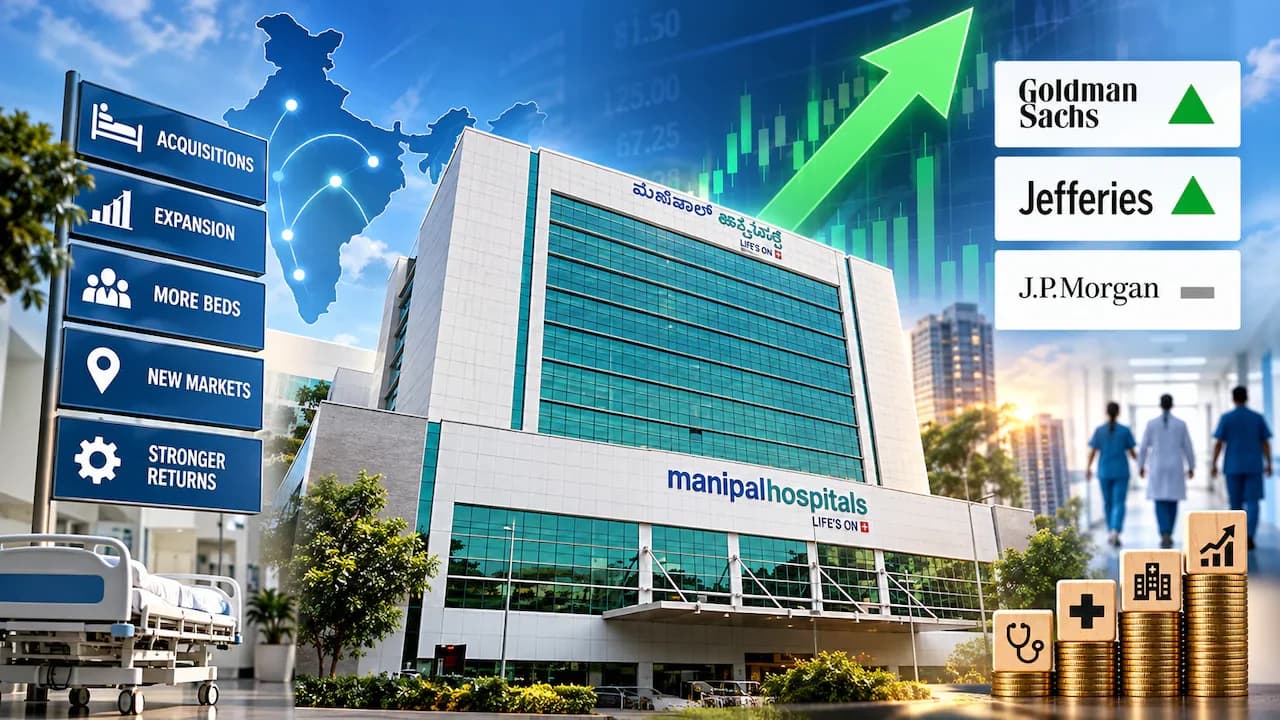
The brokerages have presented varying growth expectations for Manipal Health. According to CNBC TV18, Goldman Sachs expects Manipal to deliver more than 20% revenue CAGR over FY26–29E, or high-teens growth on a pro forma basis. The company plans to add around 2,426 beds through FY30, comprising 483 brownfield and 1,943 greenfield beds. Jefferies expects revenue and EBITDA to compound at 17% and 19%, respectively, through FY26–29E, with the turnaround at Sahyadri serving as a key proof point for the integration strategy. UBS forecasts 19% revenue CAGR and 20% EBITDA CAGR over FY26-2030, with potential upside from faster-than-expected Sahyadri turnaround and quicker ramp-up of new facilities in Bengaluru. Goldman's estimates are already above Bloomberg consensus by as much as 6% for revenue and 10% for EBITDA over FY27–29E.
The divergent brokerage opinions reflect different perspectives on Manipal Health's execution capabilities. According to CNBC TV18, Goldman and Jefferies are willing to pay for the possibility that the company can turn scale into superior returns, while J.P. Morgan wants more evidence of improved profitability and returns before becoming more constructive on the stock. As of March 31, 2026, the network comprised 49 hospitals and 13,037 licensed beds across 14 states and Union Territories, serving over 76 lakh patients during the year. The company's clinical strategy remains centred on 'CONGO-R' -- a cluster of six complex specialties including cardiac sciences, oncology, neurosciences, gastro sciences, orthopedics, and renal sciences, which accounted for 64.3% of gross inpatient revenue in FY26. The next phase will focus on proving that its consolidation strategy can consistently deliver higher operational metrics across its expanded hospital network, with the major part of the thesis resting on the company's ability to replicate its integration playbook at Sahyadri, its biggest acquisition so far.