Kaynes Technology India Ltd. shares fell more than 5% on Monday, August 31, following concerns raised by brokerage firm Investec about the electronics manufacturing services company's balance sheet quality. Investec has reiterated its 'Sell' rating on Kaynes Technology with a target price of ₹2,790 per share, implying a downside of around 29% from Friday's closing price of ₹3,943.10. According to CNBC TV18, the brokerage noted that weak cash collection was already a concern in recent quarters, but the FY26 annual report raises additional questions around balance-sheet quality and the potential path to resolving these issues. The stock was trading at ₹3,723.4 on Monday, down by a similar quantum on a year-to-date basis and declining 43% over the past 12 months.
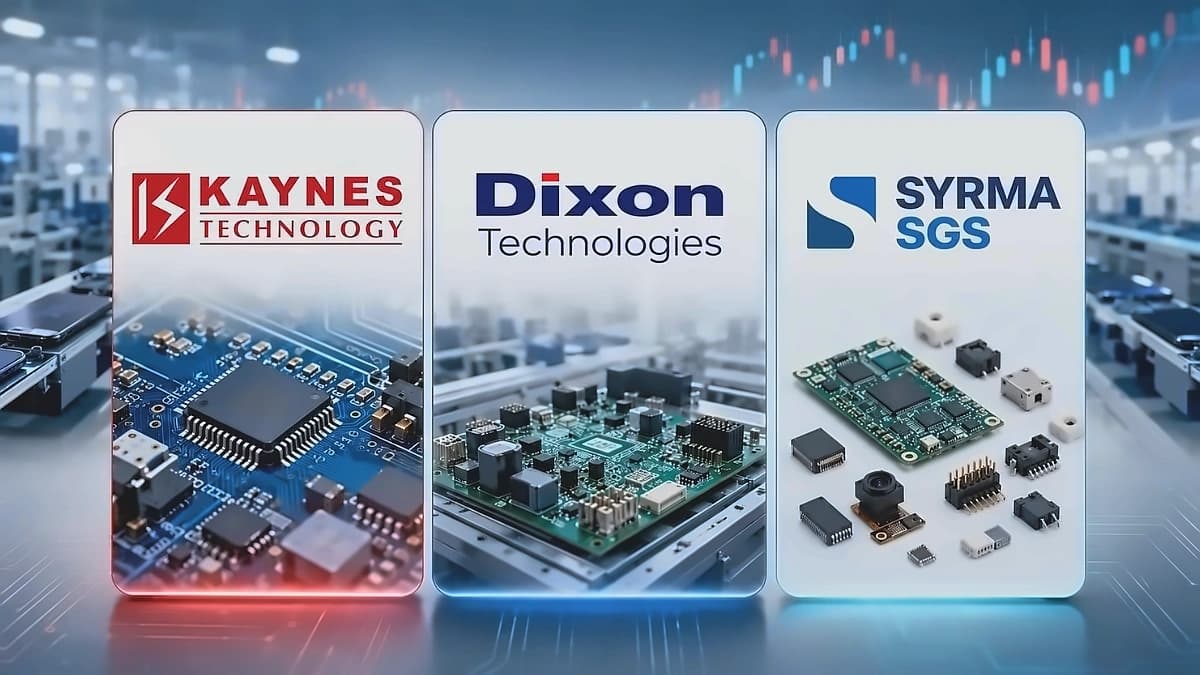
Global brokerage Jefferies has issued contrasting ratings for three key electronics manufacturing companies as India transitions from smartphone assembly to component manufacturing. The brokerage assigns a 'Buy' rating on Kaynes Technology with a revised target price of ₹4,480 per share, while maintaining 'Hold' ratings on Dixon Technologies (target ₹12,730) and Syrma SGS Technology (target ₹1,430). According to The Economic Times, Jefferies prefers component plays over assembly-focused companies, citing the government's latest incentives that could reshape earnings opportunities across the electronics manufacturing services (EMS) space. The brokerage specifically states "We prefer Component plays (KAYNES; Buy; 55x 1-Y fwd) vs Assembly OEM (DIXON; Hold; 67x)", emphasizing the strategic advantage of component manufacturers in India's indigenization drive.
Investec highlighted several concerning trends in Kaynes Technology's financial performance. As reported by CNBC TV18, receivables from Iskraemeco ballooned while payables to Kaynes Electronics Manufacturing rose by a similar amount in FY26, raising questions over whether a potential divestment of Iskraemeco would actually resolve cash-flow issues. The brokerage estimates that the smart-meter business likely contributed around 40% of Kaynes' consolidated EBITDA, meaning a potential divestment could materially impair the profitability of the company's core EMS business. Investec also flagged the sharp increase in receivables despite bill discounting rising from ₹110 crore to ₹460 crore in FY26, while fixed-asset turns deteriorated and intangibles increased sharply, adding to concerns over balance-sheet quality. The company has incurred only around ₹900 crore of capex in OSAT and bare PCB, according to Investec's analysis.
India's electronics production has experienced remarkable growth, rising from ₹5.5 lakh crore in FY21 to ₹12.1 lakh crore in FY26, representing more than a doubling in five years. As reported by The Economic Times, mobile phones account for nearly half of this production, but domestic value addition remains below 15%. The government is now seeking to address this gap through the Electronics Component Manufacturing Scheme (ECMS) and the recently rolled out Mobile 2.0 Production Linked Incentive (MPMS) scheme. The ECMS has so far approved 106 projects covering total investments of around ₹695 billion across 14 states, with 38 plants already started production and another 16 at advanced stages. The MPMS scheme has an outlay of ₹625 billion over five years from FY27 to FY31, targeting mobile production of ₹39 trillion with incentive rates between 2.25% and 5% for domestic sourcing.
Despite Investec's bearish stance, analyst sentiment on Kaynes Technology remains mixed according to Bloomberg data. As reported by CNBC TV18, 7 of 25 analysts recommend Buy, 9 Hold and 9 Sell, with the consensus 12-month target price standing at around ₹3,782, broadly in line with the stock's recent trading levels. The mixed view reflects ongoing concerns about the company's balance sheet quality and execution capabilities in the competitive EMS market. The stock's 43% decline over the past 12 months and current trading levels around ₹3,723.4 reflect broader market skepticism about the company's ability to address its financial challenges while maintaining profitability in the evolving electronics manufacturing landscape.