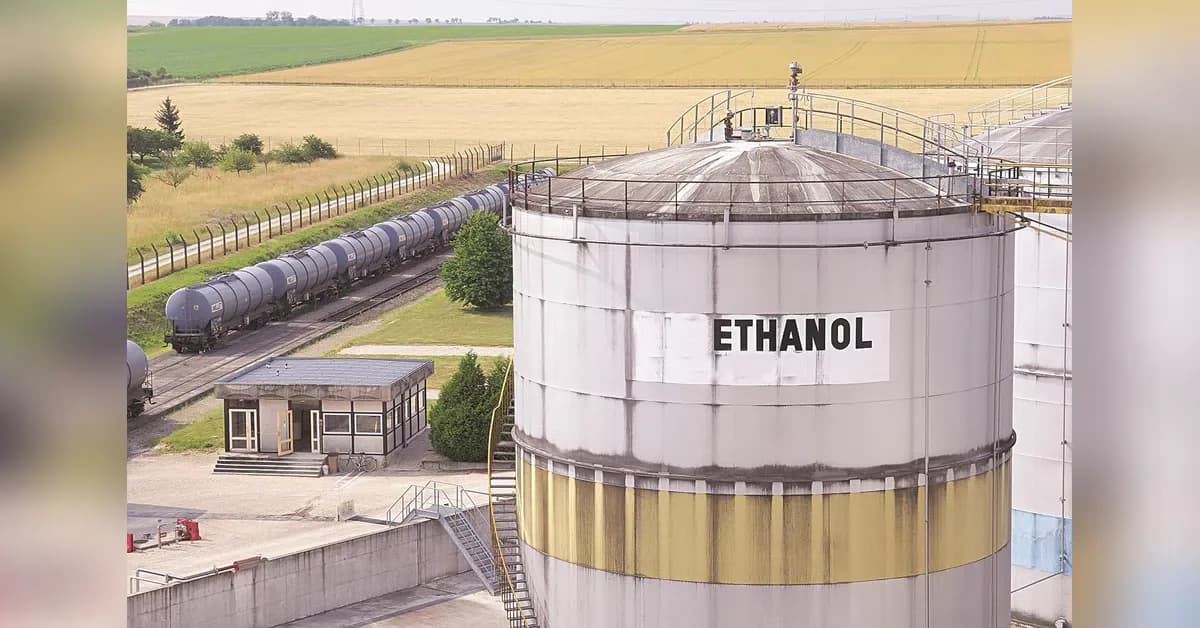
India's ethanol industry is entering its next phase with the government's focus shifting towards higher blending levels beyond the E20 milestone. According to reports from The Financial Express, the government has introduced BIS standards for E22, E25, E27, E30, and E85 and mandated petrol with up to 20% ethanol from April 2026. Every 1% increase in national blending mandate requires an additional 55-56 crore liters of ethanol, creating sustained demand for production capacity and infrastructure expansion. The latest development sees the rollout of E85 fuel containing 85% ethanol at 50 fuel stations across the country, with plans to expand to 500 stations by the end of 2026 and approximately 5,000 stations by 2027. As per the PIB, E85 costs nearly ₹20 per litre less than petrol, offering significant cost savings for price-conscious Indian buyers. Indian Oil Corp. Chairman AS Sahney confirmed that the company is better prepared for E85 and E100 supply chain management after gaining experience from the E20 rollout, with existing infrastructure largely supporting the transition.
The government has introduced tax incentives by waiving excise duty on petrol blended with 22%, 25%, 27%, and 30% ethanol (E22, E25, E27, and E30) to accelerate adoption of higher blending levels. According to The Financial Express, these fuel variants will have nil excise duty under the revised structure, coming at a time when fuel prices have risen by ₹7.5 per litre following West Asia tensions. The naming convention follows the percentage of ethanol mixed with petrol by volume - E22 contains 22% ethanol and 78% petrol, E25 contains 25% ethanol, E27 contains 27% ethanol, and E30 contains 30% ethanol. The Bureau of Indian Standards (BIS) issued specifications on May 20, 2025, requiring fuel produced with anhydrous ethanol for positive ignition engine-powered vehicles. Indian Oil's Sahney noted that ethanol pricing must maintain a balance between keeping fuel affordable for consumers, ensuring fair returns for producers, safeguarding the company's commercial viability, and advancing India's energy security objectives.
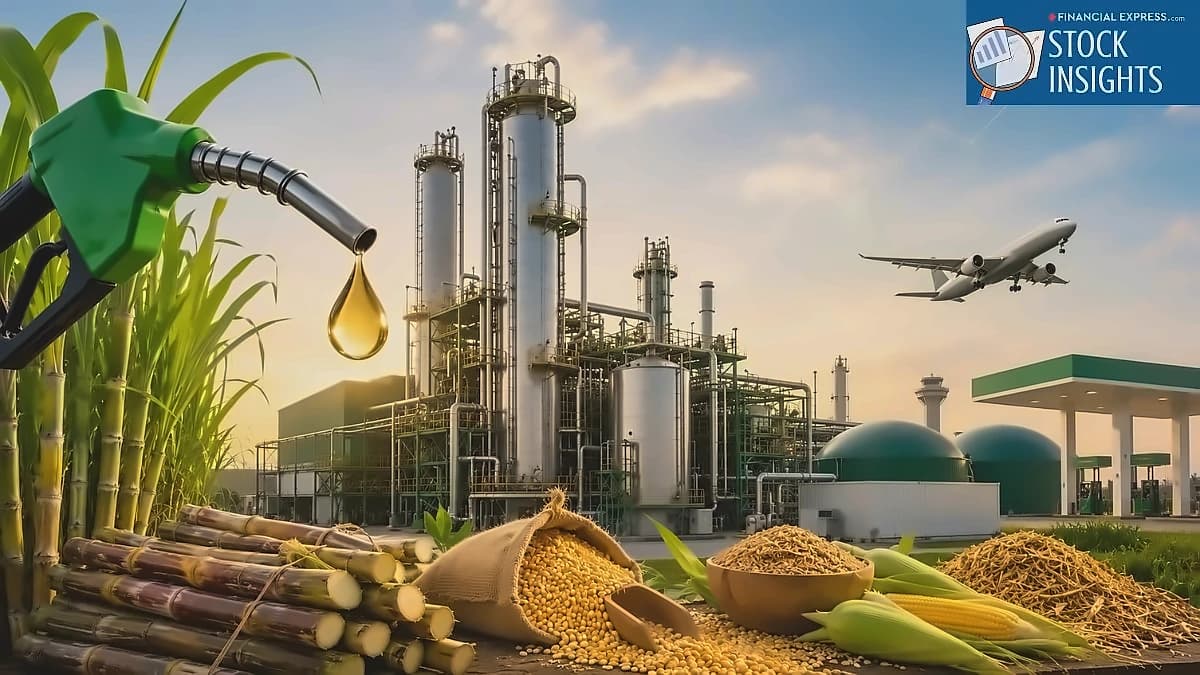
TruAlt Bioenergy operates India's largest ethanol production platform with 2,000 KLPD capacity, strategically transforming from mono-feed to multi-feed operations. As reported by The Financial Express, the company invested over ₹400 crore to transition 1,300 KLPD capacity across three units into dual-feed systems, enabling year-round production through sugarcane syrup during crushing season and grains like maize for remaining 200-230 days. The company is expanding across four verticals including Compressed Biogas (CBG) from 10 TPD to 162.2 TPD over nine months, with ₹340 crore capex funded through 70:30 debt-equity mix. Godavari Biorefineries sold 98 million liters of ethanol equivalent in FY26 with a diverse product mix of 81% government EBP, 13% ENA, and 6% other grades.
Despite policy support for higher ethanol blending, vehicle compatibility remains a significant challenge with only 3% of passenger vehicles and two-wheelers currently on Indian roads being ethanol-compatible. According to analysis of vehicle registration data from the Ministry of Road Transport and Highways' Vahan dashboard, approximately 9 lakh passenger vehicles out of 30.36 lakh registrations were compatible with ethanol-blended fuel, while around 50.2 lakh two-wheelers out of 13.76 crore registered units were E20 compliant. A survey by LocalCircles involving 24,710 respondents found that about half reported a decline in fuel efficiency over the previous nine months, with some participants stating mileage had fallen by as much as 20%. The Ministry of Road Transport and Highways proposed draft amendments to the Central Motor Vehicles Rules (CMVR) to recognise E85 and E100 as automotive fuels, indicating regulatory support for the transition. Ethanol blending reduces mileage by roughly 3-6% depending on engine type, with vehicles manufactured from 2023 onwards built to handle E20 without issues.
According to The Financial Express, TruAlt generated ₹1,968.5 crore revenue in FY26 with net profit of ₹96.9 crore, while Godavari achieved ₹2,000.2 crore revenue with net profit of ₹3.5 crore. Praj Industries reported ₹3,167.9 crore revenue but experienced significant decline with net profit dropping to ₹23.8 crore. The companies are positioned to benefit from India's long-term ethanol opportunity through policy tailwinds including SAF mandates by 2027 and CBG blending targets of 5% by FY29. The India E85 ethanol rollout began on June 5, 2026, when Petroleum Minister Hardeep Singh Puri launched E85 fuel at an IndianOil outlet in New Delhi, marking the next step in the ethanol roadmap. Ethanol blending rose from 1.53% in 2014 to 20% in 2026, five years ahead of target, with the push saving over ₹1.84 lakh crore in foreign exchange.