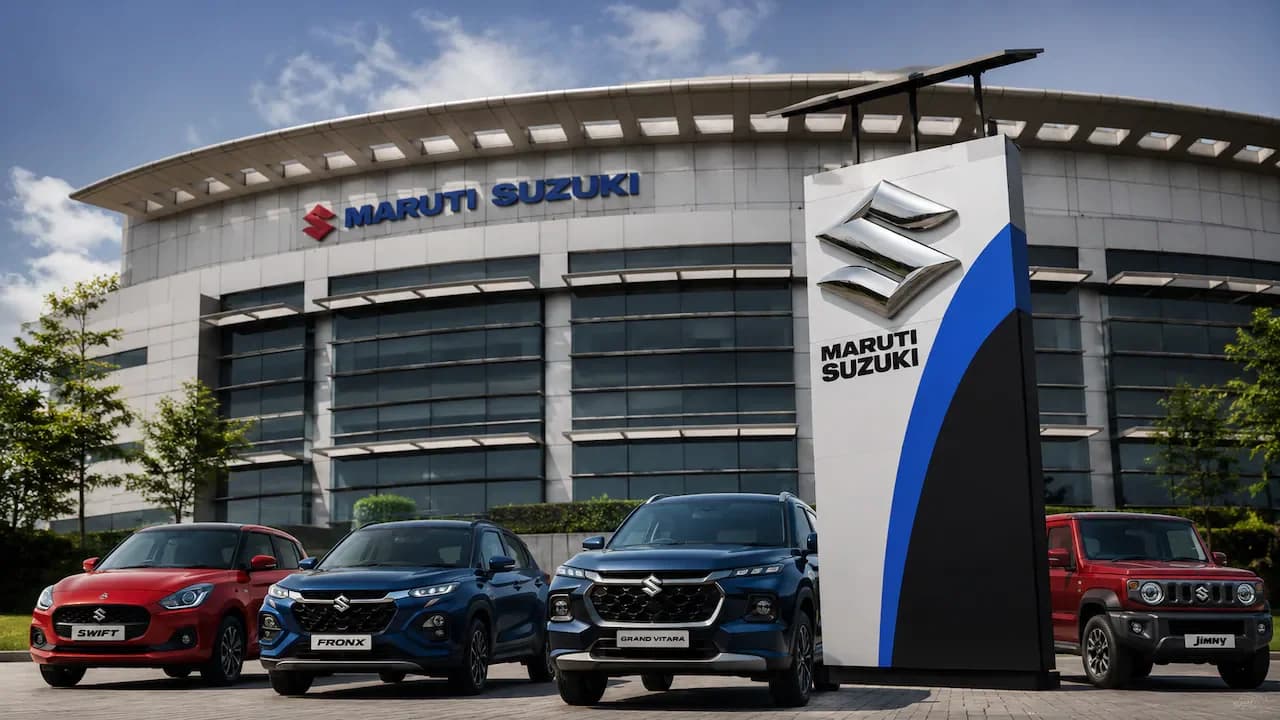
Maruti Suzuki is positioned for a significant market share recovery in Q1 FY27, with the company targeting a two percentage-point gain to reach 41% market share. As per ETAuto, Partho Banerjee, Senior Executive Officer, Sales & Marketing, MSIL, confirmed during the monthly media briefing that the company expects to achieve at least 2% growth in both wholesale and retail during the quarter. This recovery comes after the company's passenger vehicle share fell to a 13-year low in the previous fiscal year. The growth is primarily driven by robust rural demand, with the rural market growing 45% in the last month and accounting for approximately 53% of total sales for the June period.
Despite facing geopolitical uncertainties and production disruptions, Maruti Suzuki achieved its highest-ever sales for a month and quarter in June 2026. According to ETAuto, total domestic passenger vehicle sales stood at 1,50,150 units during the June period, even after losing production due to a planned week-long shutdown for maintenance. The company's export performance remained resilient with 13% growth in June, selling 42,768 units compared to 37,842 units in the same month last year. As reported by ETAuto, Rahul Bharti, Senior Executive Officer, Corporate Affairs, noted that shipments to the Middle East continued through alternative shipping routes to minimize disruptions, with the company maintaining exports despite longer routes through the Cape of Good Hope and Mediterranean into the Red Sea.

The ongoing energy crisis stemming from the closure of the Strait of Hormuz has triggered the largest supply disruption in global oil and gas markets history, exposing India's heavy reliance on imported crude oil. With imports responsible for around 85% of India's crude oil supply, nearly half of which transited the Strait of Hormuz prior to the war, the crisis has forced the government to implement rapid diversification measures and austerity initiatives. In May 2026, the Prime Minister announced emergency measures urging citizens to reduce fuel consumption, shift to public transport and electric vehicles, and avoid non-essential foreign travel to conserve foreign exchange. The government is pursuing dual strategies: accelerating electrification as part of austerity measures and increasing ethanol blending in petrol to reduce oil dependence.
Industry responses to the energy crisis reveal a significant shift in corporate positioning toward clean energy solutions. According to InfluenceMap's analysis, a growing number of companies are citing energy security and geopolitical risk to advocate for policies favoring renewables and EVs, positioning the clean energy transition as essential to both economic and environmental goals. Maruti recently announced plans to introduce flex-fuel vehicles capable of operating on 100% ethanol, while new petrol standards permit higher ethanol blends of up to 27%. The Intergovernmental Panel on Climate Change states that electrification powered by low-carbon electricity offers the greatest decarbonization potential for road transport globally, though biofuels may complement electromobility in developing countries in the short to mid-term.
Despite facing challenges from weak Southwest monsoon and geopolitical tensions in West Asia, Maruti Suzuki expects industry demand to remain healthy aided by tax relief measures, lower interest rates and improving rural sentiment. As per ETAuto, the company is expanding its portfolio across fuel types, including flex fuel vehicles, and deepening its retail presence along with recent production capacity expansion. The management noted that all market segments are performing well, with strong growth across rural, urban and export markets. However, the company remains cautious about the weak monsoon and geopolitical tensions in West Asia, which could impact future performance despite current positive momentum.