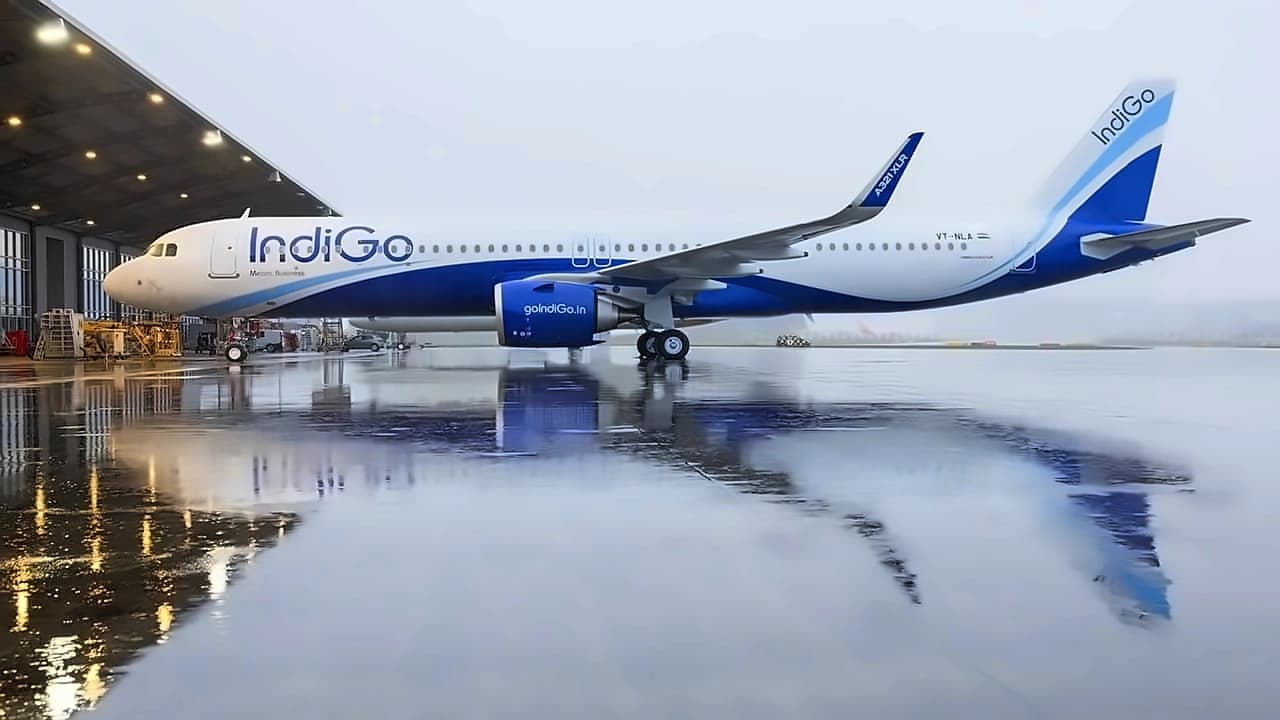
InterGlobe Aviation (IndiGo) shares have extended their rally for a second consecutive session on Thursday, June 25, rising another 5% after a strong performance in the previous session. According to CNBC TV18, the stock has gained more than 9% over the last two trading days, building on the 23.7% surge recorded in June 2026. The stock reached an intra-day high of ₹5,449 on Thursday as crude oil prices continued to plunge following the US-Iran truce pact. As of 11:50 AM, IndiGo quoted 4.7% higher at ₹5,448 on volumes of around 30 lakh shares on the NSE, significantly outperforming the NSE Nifty's 0.8% gain at 24,209. The stock has outperformed the market with a 7.7% year-to-date gain compared to a 7.4% fall in the Nifty, with the strong performance reflecting investor confidence in the airline's ability to navigate operational challenges while maintaining robust demand fundamentals.
The sharp correction in crude oil prices has emerged as a key positive catalyst for IndiGo's extended rally. As reported by Choice Broking, Crude WTI Oil and Brent Crude Oil prices have crashed around 42% from their respective highs, falling below US-Iran war levels. Crude WTI oil futures declined 41.9% from its peak of $119.48 hit in mid-March, while Brent prices were down by 42.3% from its peak of $126.41 registered in late April. The moderation in crude oil prices has led to significant improvements in the airline's financial projections, with the company upgrading its FY27/28E PBT estimates by 26% and 16% respectively. According to CNBC TV18, crude has retreated close to pre-conflict levels, improving the outlook for fuel expenses, which account for nearly 30% of an airline's operating costs. The Indian rupee has also strengthened and moved below the ₹95-per-dollar mark, easing concerns of a potential depreciation towards ₹100 against the US currency, providing additional cost relief.
At IndiGo's analyst meet in early June, the management outlined ambitious expansion plans to reach available seat kilometres (ASKM) of 300 billion by FY30, representing a 15% annual capacity growth over FY26-30. The airline aims to increase the share of owned and finance-leased aircraft to 30-40% of the fleet by FY30, up from 20% in FY26, with ownership helping deploy ₹51,700 crore of cash more prudently and reduce forex exposure associated with lease payments. IndiGo targets a fleet of more than 550 aircraft, 200 million passengers, and more than 3,000 daily departures by 2030, with the international ASKM share planned to reach 40% by FY30. The airline's international network comprised 44 destinations and more than 150 routes in FY26, with the induction of A321XLRs and wide-body aircraft supporting long-haul expansion. The company is also investing in an in-house MRO facility in Bengaluru, the GIFT City leasing platform, and IndiGo Ventures.
ICICI Securities has issued a buy rating on InterGlobe Aviation with a revised target price of ₹6,020, representing an upgrade from the previous target of ₹5,210. According to the research report dated June 23, 2026, the brokerage maintains its positive outlook on the airline despite ongoing market challenges. The recommendation is based on a 25x FY28E PAT of ₹9,300 crore (EPS of ₹241), assuming full tax implications, with the target price implying an upside of around 20% from current levels. HSBC has reiterated its 'Buy' rating on IndiGo with a price target of ₹5,545, implying an upside of nearly 12% from Monday's closing price of ₹4,961.4. The moderation in crude oil prices has led to expansion in spread estimates, leading to the 26% upgrade in FY27E PBT and 16% upgrade in FY28E PBT estimates. According to CNBC TV18, 21 of the 26 analysts covering InterGlobe Aviation have a 'buy' recommendation, while three suggest 'hold' and two recommend 'sell', with the average analyst target price standing at ₹5,323.67.

The investment thesis centers on IndiGo's ability to maintain strong demand despite facing multiple challenges throughout FY26. As reported by ICICI Securities, the airline's FY26 results demonstrated robust demand even amid internal and external disruptions, along with cost escalations. Strong demand trends were evident in FY26 and have carried into Q1 FY27, supported by robust passenger traffic and stable pricing. The Q1FY27 yield outlook based on trends from April and May 2026 continues to show positive momentum, supporting the brokerage's bullish stance. According to CNBC TV18, analysts pointed to lower fuel costs, easing operational challenges and resilient ticket prices as factors that could support stronger yields and profitability in the coming quarters. The Q1FY27 yield outlook has exhibited a positive surprise, apart from the moderation in crude prices, reinforcing the airline's competitive positioning. HSBC noted that industry capacity constraints are likely to keep fares elevated, while fuel surcharges may not be fully rolled back, supporting revenue growth. The airline is likely to carry more than 120 million passengers in FY27, compared to 123 million in FY26, with the world's largest aircraft order book including A321XLRs and A350s.