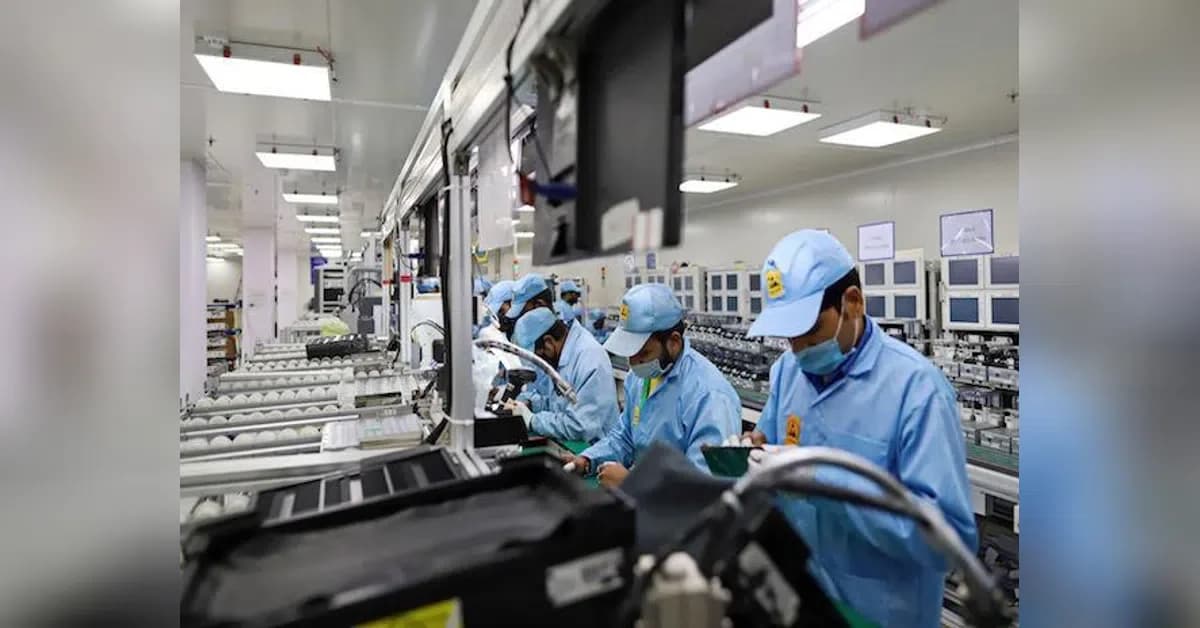
India has committed $13 billion for the second phase of its semiconductor mission, targeting a complete domestic chip ecosystem covering design, manufacturing, assembly and testing. According to The Times Kuwait, the government has already approved 12 semiconductor projects across six states, with Micron, Kaynes Semicon and CG Semi beginning commercial production this year, primarily in assembly, testing and packaging rather than advanced wafer fabrication. A Tata Electronics–Taiwanese Powerchip partnership in Dholera, Gujarat, is targeting its first chip output in December, while Tata has signed an $11 billion memorandum of understanding with ASML for advanced chipmaking serving industries including automobiles and artificial intelligence. The Central government is offering subsidies of up to 50% of semiconductor manufacturing project costs, with additional support available from state governments.
The defence sector presents another significant opportunity for EMS companies as the government pushes to increase domestic procurement. The Defence Acquisition Council has provided about ₹1.1 lakh crore for indigenisation, which Sahay expects to benefit not only large defence companies but also component suppliers. He cited Syrma SGS as an example, noting that about 10%-12% of its revenue comes from defence and the company supplies components such as PCB assemblies and box-build systems to larger suppliers. These opportunities benefit players already in this segment, including not only large defence players but also component suppliers, as noted by Sahay in his interview with NDTV Profit.
Sahay sees opportunities from the next phase of the government's semiconductor programme, with the allocation under Semicon 2.0 being about ₹1.27 lakh crore, while the Electronics Component Manufacturing Scheme has been scaled up from ₹22,000 crore to ₹40,000 crore. He expects companies involved in PCB assemblies and box-build manufacturing, including Syrma SGS, Avalon Technologies and Kaynes Technology, to benefit. The next phase is focused more on building the domestic component ecosystem and reducing dependence on imports, with the entire EMS space benefiting from the component ecosystem development. As per NDTV Profit, the entire EMS space, not only those who are directly going to the fab or the OSAT facilities, but those who are going for the component ecosystem as well, like Avalon or the Syrma DLM, are going to benefit from this expansion.
India's semiconductor strategy emphasizes talent development as a central pillar, with Union Minister Ashwini Vaishnaw stating that India aims to develop 100,000 semiconductor engineers. According to The Times Kuwait, 85,000 engineers have already been trained in four years, compared with an original 10-year target. Semiconductor design programmes are now available at 355 universities, including institutions in smaller cities and towns, positioning India to potentially benefit from the global industry's projected shortage of 1 million workers by 2032. India's advantage lies in its established position in semiconductor research and design, though the country faces a shortage of fab-floor operators and process engineers needed to manage wafer production.
Despite growth prospects, valuations remain a key concern across the sector. Syrma SGS is trading at more than 50 times FY28 earnings, while Avalon Technologies is trading at more than 65-70 times FY28 earnings. Sahay noted that these valuations give him discomfort at current price points, though he expects opportunities in the sector to support potential earnings upgrades. Syrma SGS has an order book of about ₹6,800 crore and is expanding into industrial and mobility segments with joint ventures that could contribute to revenue and margins over the next three to five years, with one joint venture potentially providing an opportunity of $50 million-$100 million with margins of 12%-13%. Avalon has an order book of about ₹2,200 crore and recently tied up with a joint venture to target exports to the European market, providing visibility for the next few years.