Quant Mutual Fund expects market leadership to temporarily shift back towards largecap companies after a prolonged period of outperformance by mid- and smallcap stocks. Founder & CIO Sandeep Tandon believes investors will favour larger stocks if global uncertainty increases, especially as they offer better liquidity and relatively attractive valuations. Foreign investors returning to India are also likely to concentrate their buying in largecap names, supporting this trend. The fund house, which manages assets worth nearly $10.02 billion as of the April-June 2026 quarter, remains positive on Indian equities despite expecting heightened volatility in global markets over the next few months.
Foreign investor sentiment towards India appears to be improving as the global AI trade comes under scrutiny. According to Tandon's analysis, foreign portfolio inflows of ₹202 billion in July 2026 signal a return of foreign capital to Indian markets. However, National Securities Depository Ltd (NSDL) data shows net foreign portfolio investor selling of around ₹2.54 trillion from Indian equities between January and July 2026, with July itself recording a return to net buying. The tactical rotation into India could evolve into sustained FPI inflows, driven by three key factors: earnings momentum as corporate profits recover, currency stability with a steady rupee reducing FX risk, and weak oil prices that ease India's import bill. These alignments could shift the tactical trade into steadier, more durable inflows over time. Tandon argues that money will come to India, with the trend already beginning, as weakening prospects in several developed markets could redirect foreign investment towards Indian equities.
Quant MF has increased its exposure to the information technology sector after remaining underweight for several quarters. Tandon said the fund house started building positions when the Nifty IT index was trading near lower levels and now holds meaningful exposure across several schemes. The strategist believes the IT sector rally is primarily valuation driven, with the pessimism around AI gutting traditional IT services having become excessive and that narrative now unwinding. While acknowledging that AI is changing the technology landscape, he believes Indian IT companies still have significant opportunities as enterprises adopt and implement AI solutions. The sector is in the middle of a rerating cycle, where valuations are catching up after being beaten down excessively, and the strategist believes they are likely only midway through it. However, this represents a sentiment and valuation recovery, not yet an earnings story—a genuine earnings recovery is still about 3-4 quarters away. As per Mint's analysis, the IT sector is trading at a sizeable discount to its five-year average valuation, presenting contrarian opportunities where the market may not adequately differentiate between companies that can adapt to AI shifts and those whose business models are more vulnerable.
Within financials, Tandon expects non-banking financial companies (NBFCs) to continue outperforming both private and public sector banks over the medium term. He believes recent regulatory concerns are unlikely to alter the sector's longer-term growth trajectory. The strategist remains positive on PSU companies, saying government stake sales improve market depth, liquidity and institutional participation over time. He believes many PSU stocks continue to offer attractive valuations without the governance concerns often associated with some private companies. Within the broader market, he prefers consumption and industrial stocks, sees attractive opportunities in NBFCs and smaller private banks, and recommends a balanced market-cap allocation with a modest smallcap bias. For the next 12–18 months, he would overweight consumption and industrials while remaining underweight financials. FMCG, automobiles, oil and gas, consumer durables, and financial services were also below their respective historical averages, creating additional contrarian opportunities where the market may be pricing in temporary setbacks rather than structural problems.
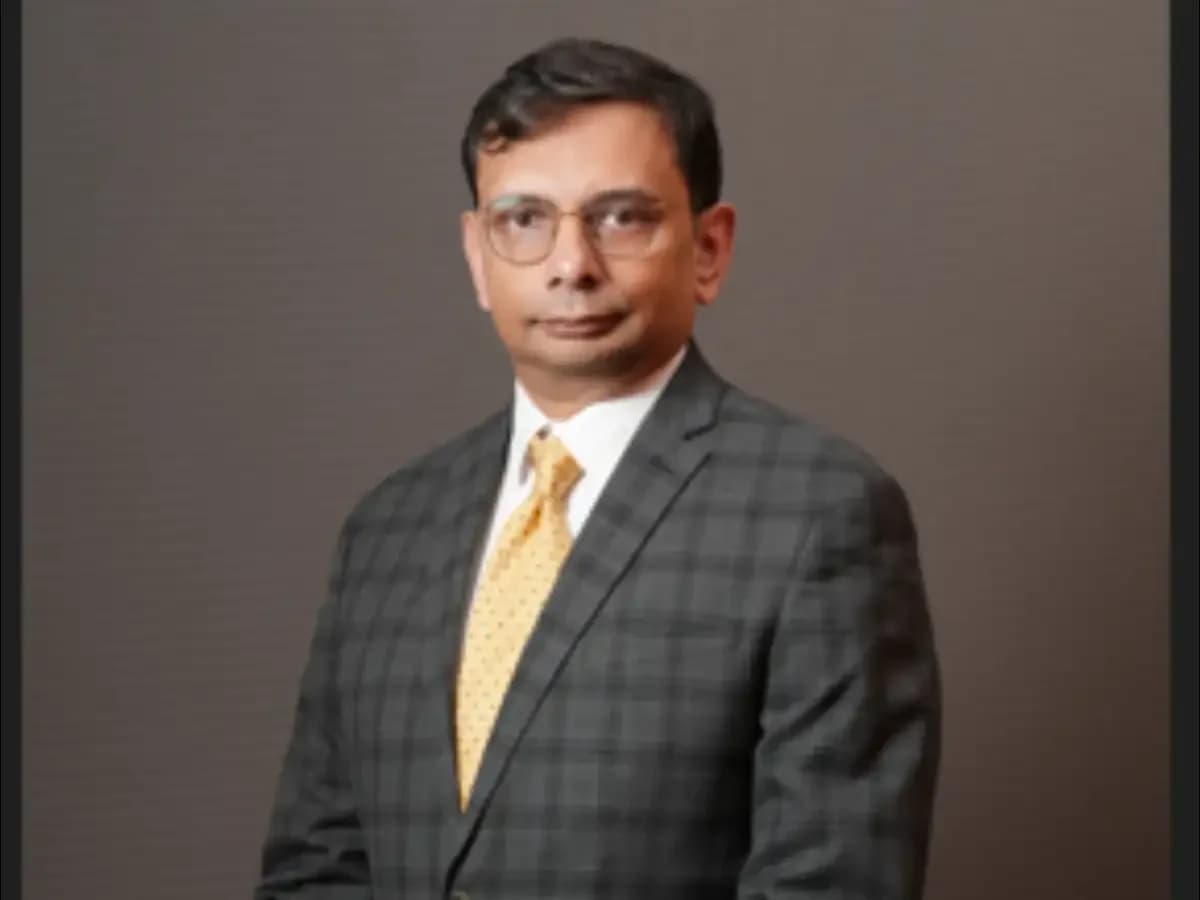
Tandon's outlook reflects broader concerns about global market stability, particularly noting that US markets are at lifetime highs but vulnerable from a vulnerability perspective. He cited the move in USD-JPY towards appreciation as potentially negative for global equities. While developed markets remain vulnerable, any sharp correction overseas could ultimately benefit India through higher foreign institutional inflows. The strategist's constructive stance on India comes as he argues that weakening prospects in several developed markets could redirect foreign investment towards Indian equities, making it a good time for India irrespective of global market conditions. Geopolitics adds another layer of uncertainty with the West Asia war, volatile energy prices, tariffs, currency movements and changing supply chains creating additional risks. The International Monetary Fund's July 2026 update projected India's real GDP growth at 6.4% for 2026, while warning that renewed conflict, commodity volatility, trade fragmentation, and a correction in technology-led expectations remain important risks to the global outlook.
Sen's top investment pick remains the auto sector, where he expects a multi-year growth cycle to unfold. As per his latest analysis, the auto sector presents the most compelling investment opportunity among traditional sectors, with strong fundamentals supporting sustained growth momentum. This sector preference reflects his view that the auto industry is positioned for sustained expansion, making it a key component of his overall market strategy for the next 12-18 months.