The Nifty 50's price-to-book ratio has dipped below 3 times for the first time in nearly six years, marking a significant shift in market valuations. As per DSP Asset Managers' Netra report, the index traded at 2.95 times book value on July 27, compared with 2.99 times on December 4, 2020. This milestone is particularly noteworthy as the 3x P/B level had largely acted as a valuation ceiling between September 2008 and December 2020, making the current breach a rare occurrence. However, the report emphasizes that "certainly not" the index is cheap at 20x earnings, with the market still between fair and average valuations.
Despite the historic P/B milestone, India's market fundamentals show mixed signals. According to DSP's Netra report, Nifty's implied return on equity has risen to 14.5% from 11.8%, while its price-to-earnings ratio has declined to 20.5 times from 25.34 times. At a 15% Return on Equity (RoE) and 10% - 12% earnings growth, DSP argues that fair value is closer to the 16.5x - 18x range. Axis Securities reaches a similar conclusion, noting that Nifty is trading at 18.6 times 12-month forward earnings, slightly above its long-term average of 18.2 times, while its forward price-to-book multiple remains in line with historical averages. The report observes that after a prolonged de-rating, the index sits between "fair" and "average," and DSP's stated stance is now to start raising equity allocations, since every rupee invested buys more units at a reasonable price.

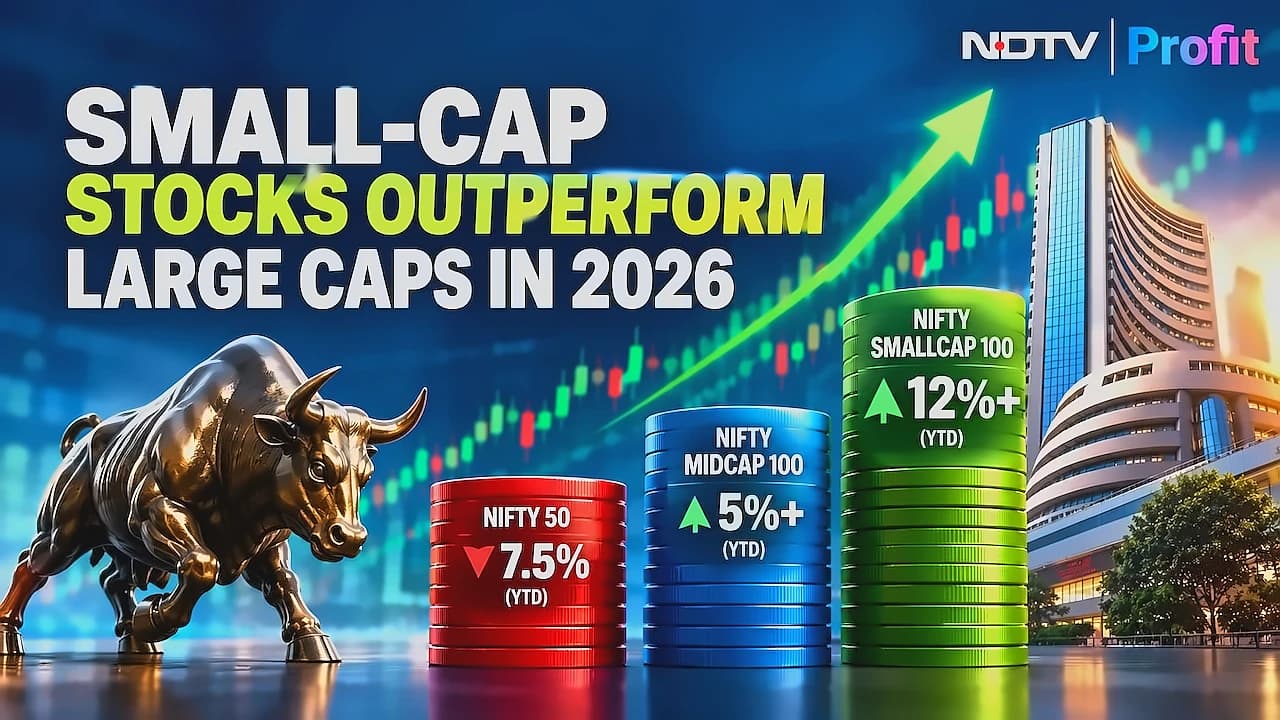
While largecaps have cooled off, the note highlights that small and midcap stocks remain stubbornly expensive, with a median trailing P/E of around 38x, well above the 20x historical average, even after two years of consolidation off a 46x peak. DSP flags something unusual: Smallcaps and Midcaps have not meaningfully underperformed largecaps this cycle, unlike prior downturns. The report treats this as a warning rather than comfort, arguing largecaps now offer better RoEs on a similar earnings trajectory, tilting risk-reward in their favor. Axis Securities notes that elevated valuations imply that future market appreciation will increasingly depend on earnings upgrades rather than multiple expansion, making style rotation and sector selection critical for generating alpha.
Citing NSE 500 data, the report notes that only 32% of largecaps and 33% of Small and Midcaps now trade below 3x their book value, up from 2024's cyclical lows but nowhere near the 70% seen during Covid-19. Meanwhile, roughly 43% of largecaps and 38% of Smallcaps and Midcaps trade above 6x book. DSP's conclusion: broad-based value is scarce, making a bottom-up, stock-picker's approach essential. The quality of book value remains a consideration, as depressed earnings growth over the past two years has kept Nifty's return on equity below 15%, even as book value has expanded faster, potentially indicating weak asset turnover, surplus cash, acquisitions or inadequate capital expenditure.
The earnings backdrop is beginning to improve significantly. According to HSBC's Prerna Garg, after a solid March quarter, 73% of companies reporting first-quarter fiscal 2027 results have met or exceeded expectations, with more earnings beats and fewer downgrades. Credit growth is holding up, demand has been more resilient than expected and recent Reserve Bank of India policies offer some support to the rupee. HSBC recently upgraded India to neutral within Asia, saying the market is likely to look through any further earnings downgrades as the year progresses. Axis Securities notes that India continues to command a valuation premium over most emerging markets, supported by stronger earnings growth, corporate governance, macroeconomic stability and favorable demographics, though that premium has narrowed significantly.