India's equity market continues to stand out among global peers as the most diversified across sectors, according to Motilal Oswal. The broad-based composition provides more investing pockets compared to other emerging and developed markets that remain skewed toward a handful of sectors. Unlike markets such as Taiwan (88% technology) or South Korea (61% technology), India offers a balanced mix of sectors including financials, information technology, consumer discretionary, industrials, and energy. This diversity reduces concentration risk and provides stability across market cycles, with financials forming the largest share at 29%, followed by consumer discretionary at 12%, energy at 11%, materials at 9%, healthcare at 8%, and information technology at 8%.
Market experts are increasingly advocating for 20% allocation to global markets as downside risks mount in Indian equities. According to Jones George, executive director at Geojit Financial Services, higher commodity prices, geopolitical uncertainties, and moderating demand have increased downside risks, making foreign investors more cautious about Indian markets. This recommendation aligns with investor Devina Mehra's successful global-focused approach, which delivered 39% returns in rupee terms while her Indian equity portfolio remained flat at 0%. As Mehra explained, "The 1997 Asian financial crisis was a wake up call for me that a single market risk is not worth it. No matter how well a country is growing in a year, a single crisis can wipe out most of your wealth."
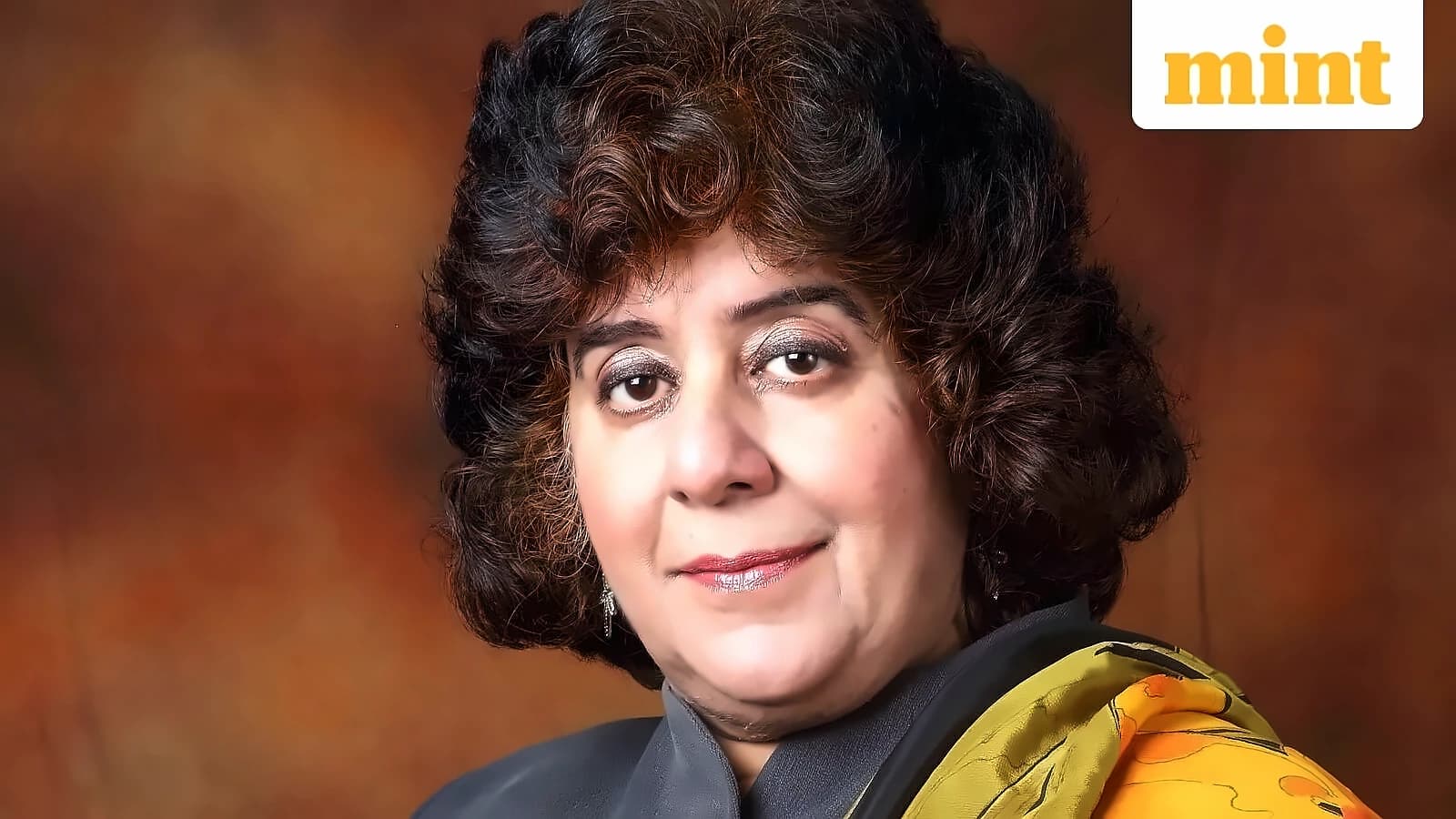
Investor Devina Mehra's global-focused approach delivered significant returns over the past year, with her global portfolio returning 39% in rupee terms while her Indian equity portfolio remained flat at 0%. According to reports from Mint, this performance demonstrates the effectiveness of her diversification strategy that began in 1999. The founder and managing director of First Global emphasizes that India represents only 3% of the world market cap, making it inadvisable for investors to concentrate their entire portfolio in the domestic market. As she explained, "The 1997 Asian financial crisis was a wake up call for me that a single market risk is not worth it. No matter how well a country is growing in a year, a single crisis can wipe out most of your wealth."
Mehra's investment philosophy centers on the principle that asset allocation accounts for 85-90% of returns, while stock selection receives less emphasis. Her portfolio allocation includes roughly 70% in equities, with fixed income and commodities each accounting for about 15%. The global portion now constitutes nearly 85% of the portfolio, with less than 40% invested in the US and the remainder spread across other countries. Within equities, large-caps represent about 60% of holdings, while exposure to companies with market capitalization below ₹5,000 crore remains tightly controlled. "Investing is a loser's game. The first thing you have to ensure is that you don't take a big hit on capital," Mehra emphasized. "Don't be too skewed towards a single sector, a single country or a single asset class."
Despite recent challenges, India's macroeconomic fundamentals remain relatively strong with healthy economic growth and a stronger banking system than previous cycles. However, persistent FII selling and rising crude prices have contributed to rupee depreciation and affected investor sentiment. According to Geojit's analysis, India continues to trade at a premium compared to many emerging markets, though this premium has moderated closer to long-term averages after recent market corrections. The Russell 2000 has outperformed the S&P 500 by two-and-a-half times, with every sector showing positive returns, while five of the seven Mag Seven stocks underperformed in 2025. Global diversification allows investors to participate in themes such as AI, semiconductors, space technology, and large global technology platforms that may have limited representation in India.
Mehra maintains a conservative stance across all asset classes, avoiding real estate investments beyond her primary residence and limiting gold exposure to 14% in her India multi-asset portfolio. She questions the trade-off in private credit funds, which offer only 1-2% extra returns while taking liquidity risks. "You are lending to companies that often cannot access traditional bank financing, and at the same time you are taking liquidity risk. For an extra 1-2% return, I don't think that trade-off makes sense," she said. Her investment process includes quarterly portfolio reviews from a 'base-zero' perspective to avoid endowment bias, with 85-90% of holdings remaining unchanged in most quarters. "Every quarter, I review my portfolio from a 'base-zero' perspective. The question we at First Global ask is: if I had cash today, where would I invest it? Otherwise, you suffer from endowment bias, where you value what you already own more than you should," she explained.