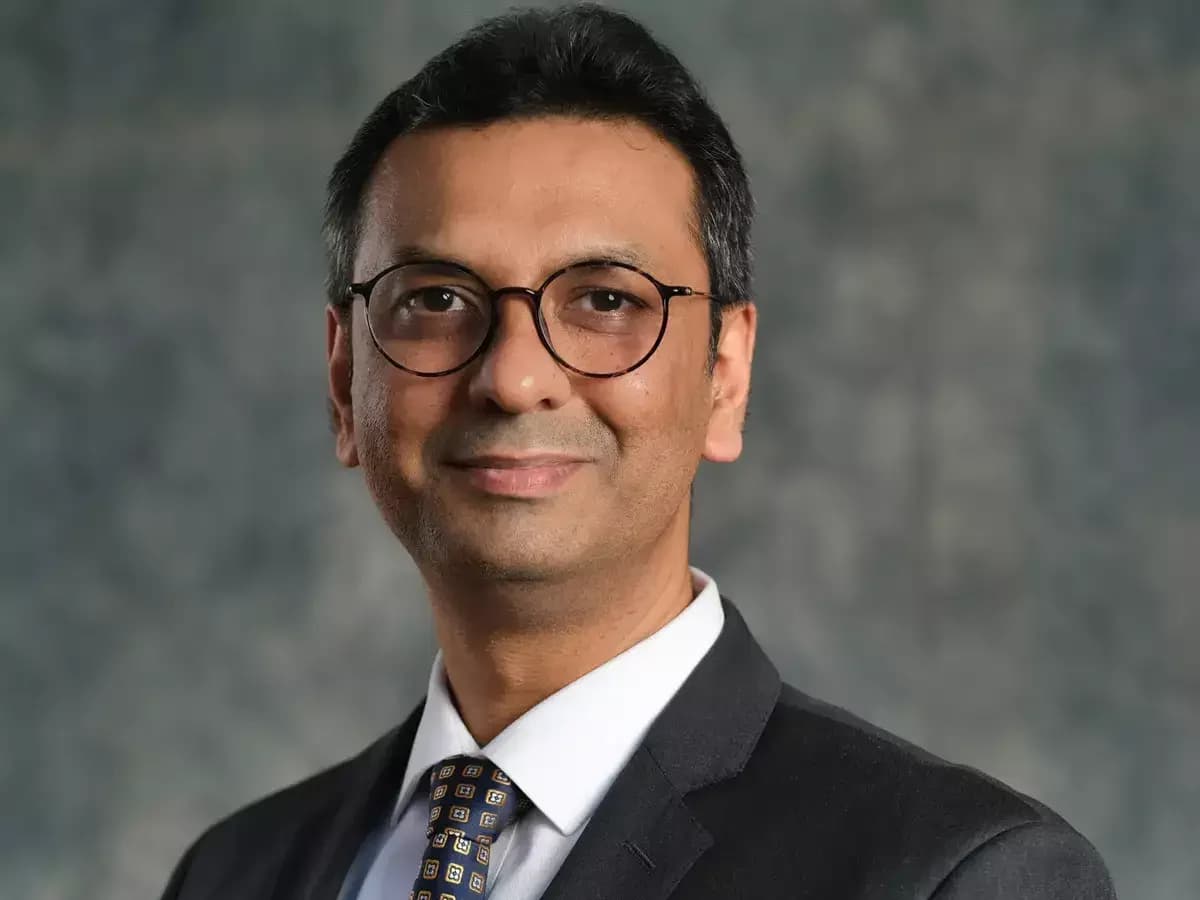
India's stock market is positioned for broader recovery as four core cycles - macroeconomics, corporate earnings, credit growth, and market sentiment - align positively, according to Bajaj Finserv AMC's CIO Nimesh Chandan. As reported by The Economic Times, these improving indicators create a foundation for sustained equity growth, provided earnings momentum continues and global market headwinds soften. The $4 billion asset manager highlights that an improvement across all four cycles could support wider market participation and open opportunities across market capitalizations and sectors. Chandan cautioned that markets will not have every indicator working in their favour at the same time, noting that "In any market, you won't find all the boxes blue." However, he emphasized that "the majority of the issues are favouring India."
India's economic cycle shows robust improvement with real GDP growth accelerating to 7.8% in Q1 FY27, up from 6.9% a year earlier, while real GVA grew 8.2%. According to The Economic Times, investment growth rose to 11.9%, household consumption increased 7.1%, and exports grew 12%. The data suggests domestic demand and investment provide stronger foundation for the market's next phase, with domestic equity mutual fund inflows rising 19% month-on-month to ₹29,328 crore in August and SIP inflows hitting a record high of ₹32,297 crore. Chandan noted that large-cap stocks had reached "very reasonable valuations," which could give investors a more balanced opportunity set after periods of concentrated market leadership.
The earnings cycle shows early signs of recovery with Nifty companies reporting 18% year-on-year profit growth in Q1 FY27, the strongest in 10 quarters, as reported by The Economic Times. Beyond the benchmark, excluding oil marketing companies, broader companies recorded 18% sales growth, 15% EBITDA growth, and 22% profit growth. Large-cap earnings rose 21%, while mid-cap and small-cap profits grew 23% and 31% respectively. However, earnings growth was concentrated with the top five contributors accounting for 60% of the increase in Nifty profits. Chandan's framework suggests that an improvement across all four cycles could create a more favourable environment for Indian stocks, particularly if earnings momentum sustains and external uncertainties ease.
The credit cycle is gaining traction with bank credit growth of 18.3% year-on-year as of August 15, 2026, according to The Economic Times. Credit to industry grew 20% and credit to services rose 22.9% in July. Foreign investors have bought more than $10 billion of Indian debt in 2026, while FIIs poured in around $4 billion into equities in the September quarter. Sentiment improvement is evident with 6 IPOs opening on the same day in August - the first time this has occurred in 3 decades, indicating how sentiment is turning. Chandan highlighted India's ability to manage risks from elevated oil prices, noting that the Middle East crisis and oil price volatility remained concerns but India had so far managed the impact by diversifying its sources and passing on some of the increase in oil prices.
Chandan identifies AI, power, and EVs as long-term themes for the strategy, focusing on companies that can benefit from these trends. As reported by The Economic Times, he sees opportunities in semiconductors, aerospace, defence, physical artificial intelligence and robotics, as well as Indian companies supplying data centres and businesses using AI for productivity improvements. The power sector remains strong with transition toward renewables requiring additional investment in generation and transmission. Electric vehicles show visible shift from internal-combustion engines, particularly in India's two-wheeler market, while contract research and manufacturing presents opportunities as the US Biosecure Act could encourage pharmaceutical companies to shift R&D services from China to India. Chandan described Indian consumption as one of the strongest and longest-lasting megatrends, with per-capita income rises and households moving into higher income categories driving faster growth in discretionary spending. He expects continued growth in quick commerce and sees opportunities in areas such as data centre expansion and electrification of transport.