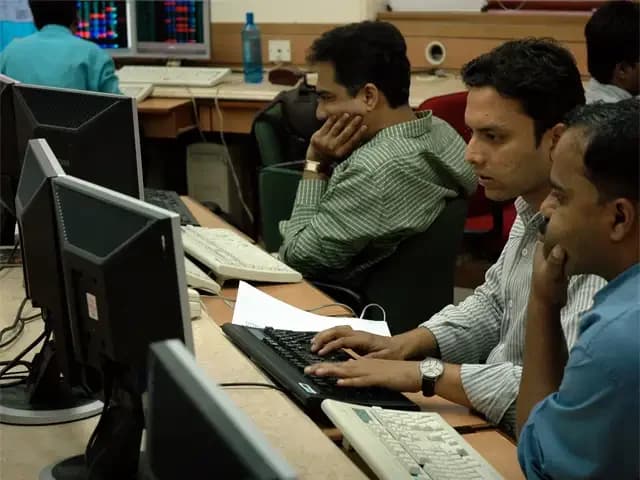
The current market phase is characterized by sharp swings with indices like the Sensex and Nifty showing rapid fluctuations—rising one day and falling sharply the next due to global cues and geopolitical developments. According to The Economic Times, successful traders understand that volatility is not a threat but an opportunity. Instead of predicting every move, they focus on reacting correctly and accepting uncertainty as the first step toward consistent trading performance. As reported by The Economic Times, one of the most important lessons from seasoned traders is simple: protect your capital first. In today's market environment where even large-cap stocks have seen significant valuation erosion and sudden corrections, risk management becomes critical through strategies including using stop-loss orders, avoiding over-leveraging, and limiting exposure to a single trade.
In today's market environment where even large-cap stocks have seen significant valuation erosion and sudden corrections, risk management becomes critical. As reported by The Economic Times, successful traders prioritize protecting capital first through strategies including using stop-loss orders, avoiding over-leveraging, and limiting exposure to a single trade. A trader who survives market downturns is better positioned to benefit from future opportunities, emphasizing the importance of capital preservation over aggressive position sizing. When markets become unpredictable, the temptation to overtrade increases but experts emphasize patience—waiting for high-probability setups rather than chasing every market move. According to The Economic Times, periods of consolidation and volatility often reward disciplined traders more than aggressive ones.
Current market conditions are influenced by macro factors like oil price shocks, inflation concerns, and global conflicts. According to The Economic Times, emotional trading can be dangerous as many beginners try to "catch the bottom" or "sell at the top," while professionals focus on trend-following strategies. When markets show weakness with sustained corrections or lower highs, it's wiser to stay cautious rather than aggressively bullish, demonstrating the importance of disciplined approach over emotional decision-making. In such conditions, emotional trading can be dangerous as many beginners try to "catch the bottom" or "sell at the top," while professionals focus on trend-following strategies.
Unlike earlier times, today's markets are deeply interconnected with global events. As reported by The Economic Times, rising crude oil prices impact inflation and corporate earnings, while geopolitical tensions affect foreign investor sentiment and currency fluctuations influence export-oriented sectors. These factors have already led to cautious outlooks from global institutions and significant foreign capital outflows, making it essential for traders to stay updated with macro and global developments beyond just chart analysis. A successful trader keeps an eye not just on charts, but also on global news and economic indicators to navigate the complex interconnected market environment.
When markets become unpredictable, the temptation to overtrade increases but experts emphasize patience—waiting for high-probability setups rather than chasing every market move. According to The Economic Times, periods of consolidation and volatility often reward disciplined traders more than aggressive ones. Trading is as much psychological as it is analytical, with fear and greed amplified in volatile markets. Successful traders build strong trading psychology by accepting losses as part of the process, avoiding revenge trading, and staying consistent with strategy. Mental discipline separates long-term winners from short-term speculators in volatile market conditions, with experts noting that fear and greed are amplified in volatile markets like the current one.
Despite short-term volatility dominating headlines, India's long-term growth story remains intact due to strong domestic demand and economic resilience. As reported by The Economic Times, this dual perspective is crucial for traders to trade short-term movements with discipline while investing long-term with conviction. Balancing both approaches helps traders stay grounded during market turbulence, recognizing that while volatility may persist in the near term, it also creates opportunities for skilled traders who can manage risk, control emotions, and adapt to changing market conditions. The stock market in 2026 presents a paradox where strong economic fundamentals and long-term growth prospects continue to attract investors, while rising geopolitical tensions, volatile crude oil prices, and foreign investor outflows have introduced significant uncertainty.