According to The Economic Times, one of the most powerful traits of successful investors is their ability to break away from the crowd. Great investors are often 'free thinkers' who are willing to stand alone when necessary. In today's markets, this trait is more relevant than ever, as when oil shocks trigger panic selling or global headlines drive herd behaviour, the majority tends to react impulsively. Contrarian thinking is not about being different for the sake of it—it is about having conviction rooted in research and logic. History shows that outsized returns often come from going against consensus, not following it. As William Green, author of The Great Minds of Investing, observes, many of the traits shared by the world's greatest investors are the same qualities that define exceptional human beings, extending far beyond finance into valuable life lessons.
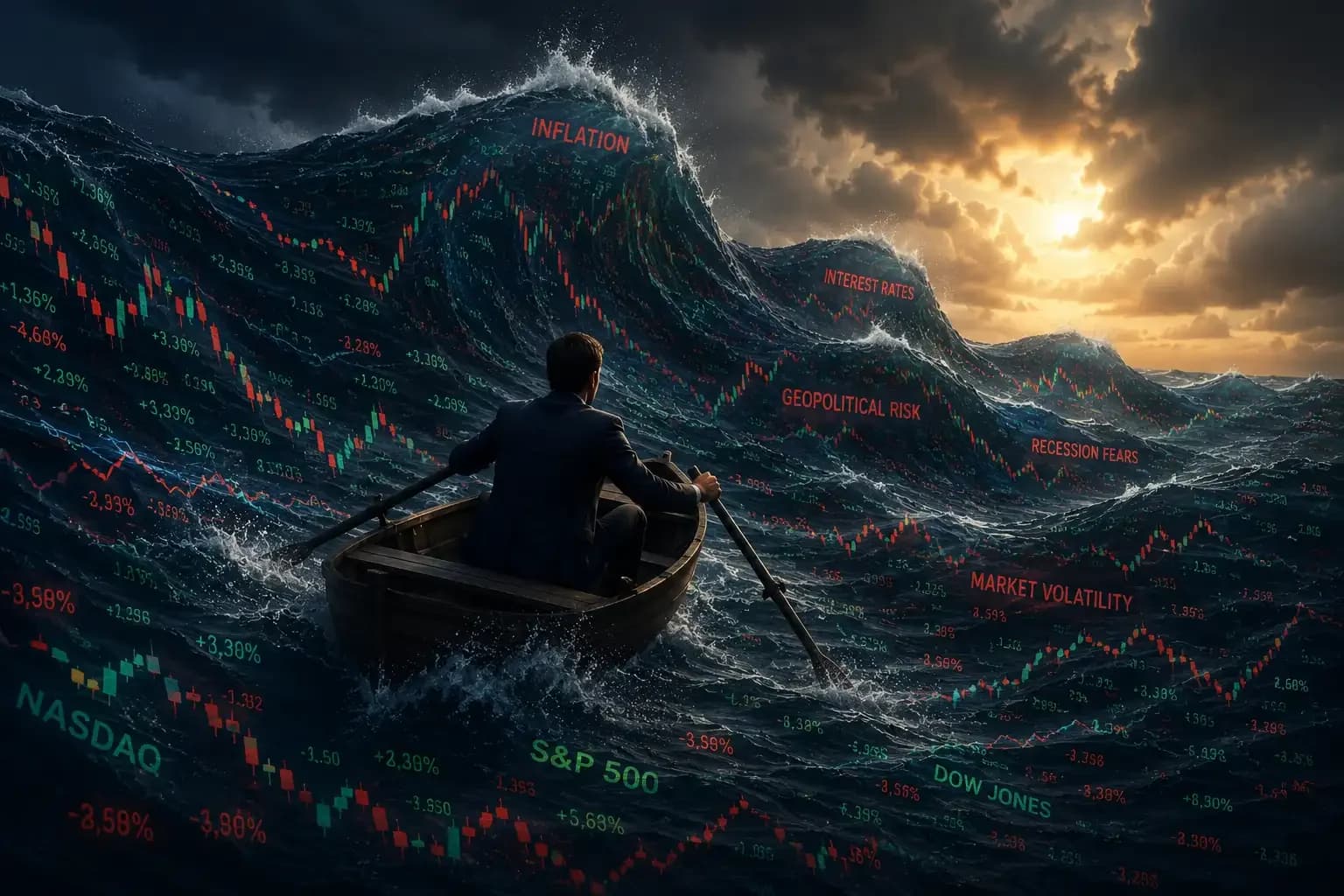
As reported by The Economic Times, modern markets are dominated by rapid information flow—breaking news, social media, and algorithmic trading. This environment amplifies emotional reactions, with recent global commentary suggesting that emotional investing during turbulent times can significantly harm long-term returns. Great investors display emotional resilience, not panicking during corrections or getting euphoric during rallies. Instead, they rely on process over impulse, with this ability to stay calm often being the difference between compounding wealth and destroying it. In today's fragile global environment—where uncertainty is the only constant—these traits become even more valuable, as markets will always fluctuate and crises will come and go, but the investors who succeed will be those who remain steady, think clearly, and act rationally when others cannot.
According to The Economic Times, with rising inflation fears and uncertain interest rate trajectories, markets are increasingly short-term focused. However, successful investors maintain a long-term horizon. The power of compounding rewards those who stay invested and patient, rather than those who attempt to time every market move. The power of compounding rewards those who stay invested and patient, rather than those who attempt to time every market move. In an era marked by geopolitical tensions, volatile energy prices, and shifting monetary policies, investing has rarely felt more uncertain. Yet, amid this chaos, the qualities that define great investors remain surprisingly simple—and remarkably timeless. Willingness to embrace discomfort and maintain a long-term perspective becomes crucial when markets are driven as much by emotion as by economics.
As reported by The Economic Times, great investors are always comfortable being uncomfortable. They accept that being right often means being early—and alone. Consider current global conditions: buying equities during geopolitical crises feels risky, holding cash when markets are euphoric feels foolish, and investing in unpopular sectors feels uncomfortable. Yet, these are often the moments where future returns are seeded. As William Green emphasizes, the wisdom of legendary investors like Warren Buffett and Charlie Munger extends far beyond finance, offering valuable life lessons that can guide individuals toward broader success and personal growth. In today's volatile environment, this willingness to be uncomfortable becomes even more critical for navigating uncertainty successfully.
According to The Economic Times, successful investors are lifelong learners who constantly update their understanding of macroeconomic trends, industry dynamics, and company fundamentals. This is especially critical today, when global linkages mean that events in one region can instantly impact markets worldwide. Adapting to changing conditions is a key differentiator between average and exceptional investors. As experts emphasize, markets evolve—and so must investors. The ability to learn and adapt is not complex or inaccessible, but demands a commitment to continuous improvement. In an era where global markets are driven by emotion as much as economics, this adaptability becomes essential for long-term success.
As reported by The Economic Times, in uncertain times, quality becomes paramount. Recent market insights highlight that investors are increasingly gravitating towards companies with strong fundamentals and durable competitive advantages as a way to navigate volatility. This reinforces a core investing truth: great investors focus on businesses, not just stock prices. In today's fragile global environment, where uncertainty is the only constant, this focus on quality becomes even more important. Simplicity is the ultimate edge in investing—these qualities do not require advanced degrees or insider information, but demand temperament over environment. The power of compounding rewards those who stay invested and patient, focusing on businesses with strong fundamentals rather than attempting to time every market move.
According to billionaire investors Warren Buffett and Charlie Munger, there are three primary factors that can destroy even intelligent investors' financial success. 'Liquor, ladies, and leverage' represent the three most common paths to financial ruin. Charlie Munger's famous warning begins with liquor, explaining that alcohol weakens judgment over time and interferes with clear thinking and disciplined decisions. The second factor, ladies, refers to ego-driven expenses including public divorces, private settlements, and reputation management that can drain fortunes faster than market downturns. Munger himself experienced this firsthand, losing everything in his 1953 divorce and rebuilding his wealth without borrowing heavily. The third and most dangerous factor is leverage, which Munger acknowledged could have made Berkshire Hathaway worth twice its current size if used more aggressively. Recent history reinforces this lesson, as firms like Three Arrows Capital that borrowed heavily during the 2021 crypto surge collapsed when prices fell in 2022, demonstrating how leverage can turn volatility into insolvency regardless of intelligence.