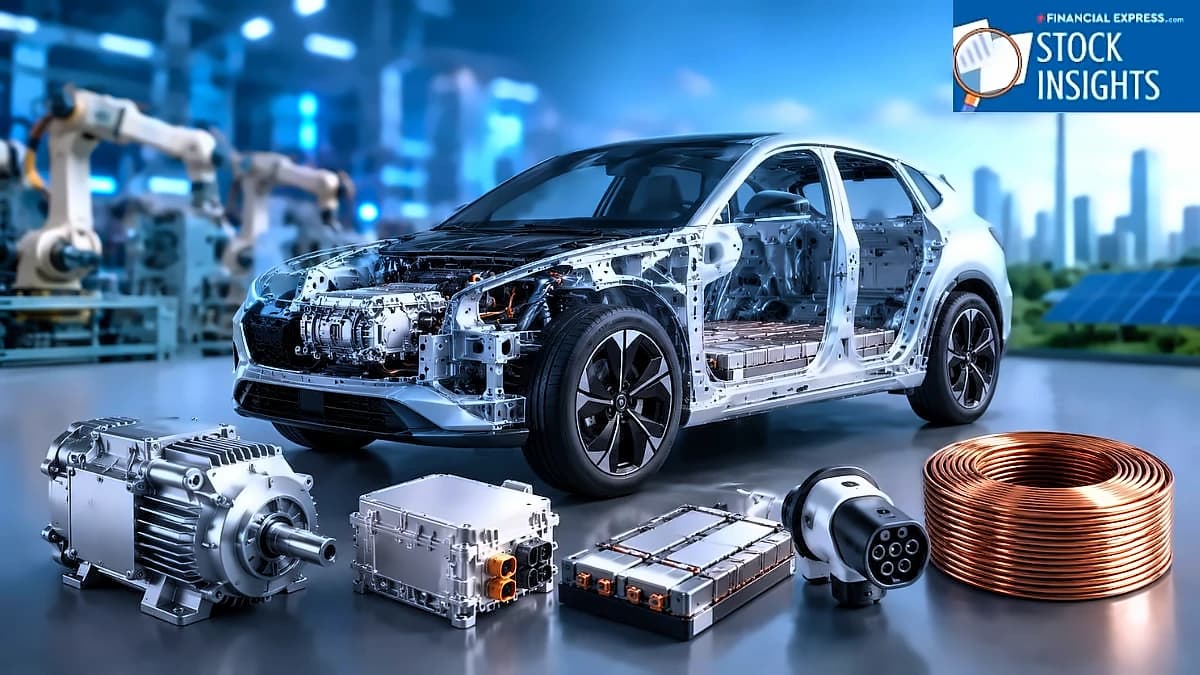
India's electric vehicle ecosystem is experiencing significant expansion beyond vehicle manufacturers to include critical component suppliers. According to The Financial Express, this growth is supported by government initiatives including the PM E-DRIVE Scheme, PM eBus Sewa, the PLI Scheme for Automobile and Auto Components, and the continued push for domestic manufacturing under Make in India. The EV supply chain is diversifying across batteries, lightweight engineering, braking systems, automotive electronics, and electric buses, with component manufacturers strengthening their technological capabilities and production capacity as automakers increase investments in electric mobility.
Olectra Greentech delivered strong financial results in FY26, with consolidated revenue reaching ₹18,351.8 million and operating profit of ₹2,645.6 million, resulting in an operating margin of 14.42%. Net profit stood at ₹1,641 million, translating to a net profit margin of 8.94%. The company delivered 1,280 electric buses during the year and reported Q4 FY26 revenue of ₹6,447.2 million with an operating margin of 15.45%. According to management, the performance was driven by record revenue, improved profitability, and higher electric bus deliveries.
NRB Bearings holds a dominant position in India's precision bearing market, with products used in more than 90% of vehicles running on Indian roads and a nearly 60% market share in the needle roller bearing segment. The company reported consolidated revenue of ₹13,351.5 million in FY26 with operating profit of ₹2,670 million and an operating margin of 19.5%. NRB Bearings has secured lifetime-nominated business worth more than ₹7,500 million, with nearly ₹6,000 million from global Tier-1 suppliers and OEMs for hybrid and electric vehicle platforms. The company's revenue mix includes two-wheelers and three-wheelers at 31%, commercial vehicles at 26-29%, and passenger vehicles at 17-20%.
Sharda Motor Industries operates across four business verticals with Emission Systems accounting for 88% of total revenue during FY26. The company reported consolidated revenue of ₹33,968 million with operating profit of ₹4,191 million and net profit of ₹3,454 million. Management highlighted their "powertrain-agnostic" strategy, allowing products to serve ICE, hybrid, and EV platforms. The company's lightweight suspension components are increasingly being supplied for new EV programs, with reducing vehicle weight capable of improving EV driving range by 13.7%. Sharda Motor follows a "powertrain-agnostic" strategy where many products can be used across ICE, hybrid, and EV platforms.
ASK Automotive has established a dominant position in advanced braking systems for two-wheelers with an estimated 50% domestic market share. The company reported consolidated revenue of ₹41,763.2 million in FY26 with operating profit of ₹5,510 million and net profit of ₹2,973.2 million. EV-related revenue currently contributes 4.5% of the business, with management highlighting that content value per vehicle is 40-50% higher in EVs compared to conventional ICE vehicles. The company manufactures EV-focused components including battery pack housings, electric motor housings, and geared pulleys, while continuing to supply lightweight aluminium products that improve vehicle efficiency.