India's rising defence spending and focus on modernising its armed forces have created significant opportunities for domestic warship manufacturers. According to reports from Equitymaster.com, the government is pushing for self-reliance in defence production, with a growing share of naval procurement being directed towards Indian shipyards. Investments in advanced warships, submarines, frigates and aircraft carriers are expected to support the industry's long-term growth, as the government continues to prioritise indigenous shipbuilding capabilities. The ₹69,725 crore shipbuilding package further supports domestic manufacturing, shipyard modernisation and maritime financing, creating new business opportunities across the maritime and defence sector.
Mazagon Dock Shipbuilders (MDL) has delivered 809 vessels since 1960, including 34 warships from advanced destroyers to missile boats, and 8 submarines. However, the company's Q2FY27 performance was weak with consolidated revenue dropping to ₹2,446 crore from ₹2,929 crore, while net profit plunged 58% to ₹346 crore from ₹749 crore. Despite the challenges, MDL has signed an MoU to be the Anchor Shipyard for a proposed greenfield shipbuilding cluster at Dugarajapatnam, Andhra Pradesh, with an envisaged investment of ₹150 billion and capacity of 1.2 million GT per annum.
Knowledge Marine & Engineering Works Limited (KMEW) is an integrated maritime company operating across three main business areas: Dredging, Charter and Hire of port vessels, and Shipbuilding. The company's dredging business contributes 67% of H1FY27 revenue, performing maintenance dredging, capital dredging and land reclamation, and rock dredging operations. In the charter segment, KMEW owns and operates small support vessels for port operations under long-term agreements that can last up to 15 years, including battery-powered green tugs for major ports. The shipbuilding segment accounts for 28% of H1FY27 revenue, building hybrid electric passenger ferries and constructing vessels at its dedicated Saphale shipyard facility designed to build up to 14 vessels per year.
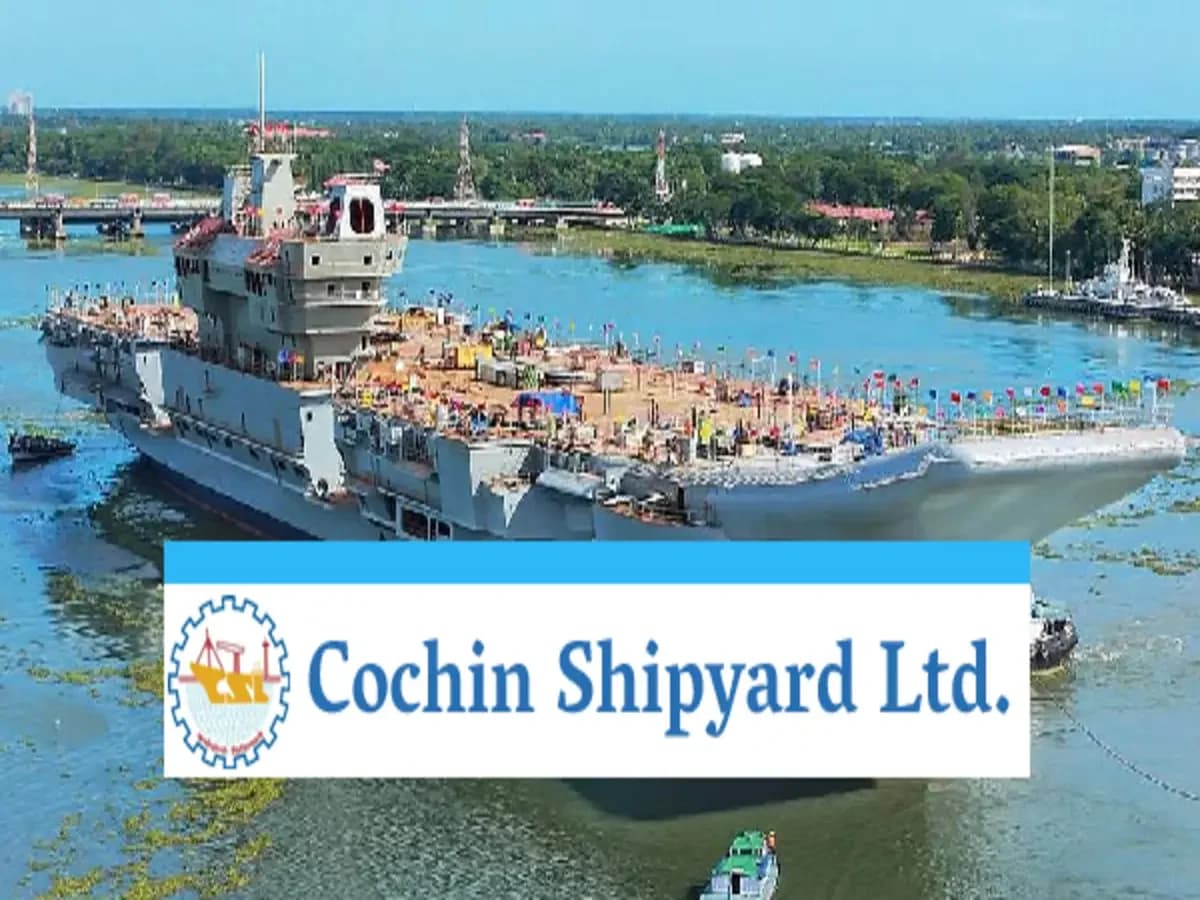
Cochin Shipyard Ltd (CSL) gained prominence by constructing INS Vikrant, India's first indigenously built aircraft carrier, and has an unexecuted order book of around ₹22,000 crore. In September 2026, the company held steel-cutting and keel-laying ceremonies for Next Generation Missile Vessels (NGMV) for the Indian Navy. According to Equitymaster.com, CSL was also declared L1 for five next-generation survey vessels for the Indian Navy, valued at approximately ₹50 billion, which would increase the total order book to around ₹270 billion. Choice Institutional Equities has upgraded CSL to a 'BUY' rating with a target price of ₹1,565, citing the company's strong medium-term growth prospects supported by its expanded infrastructure and defence order pipeline. The brokerage expects FY26–29E revenue/EBITDA/PAT CAGR of 19.8%/19.4%/21.8% despite trimming earnings estimates by 10-11%.
Krishna Marine & Allied Industries operates primarily in defence products, contributing 92% to 93% of total revenue, while dairy equipment accounts for 7% to 8%. The company specialises in shipbuilding steel sections (bulb bars), which contribute 55% to 60% of defence revenue, making it one of only two approved suppliers for defence bulb bars in India. Krishna Defence supplies to major defence shipyards including Mazagon Dock, Garden Reach Shipbuilders, Goa Shipyard, Cochin Shipyard, and Larsen & Toubro, with its bulb bars making up roughly 10-15% of a warship's total weight. The company also manufactures armoured steel profiles and special steel alloy welding consumables, with an annual capacity of 4,000 to 4,500 tons of bulb bars supporting revenue of ₹400-450 crore.
The warship manufacturing sector is expected to grow due to continued government focus on defence modernisation and indigenous shipbuilding capabilities. However, as reported by Equitymaster.com, investors should consider that defence projects often involve long execution timelines, cost overruns, and delays in order delivery. Strong order books may not automatically translate into immediate revenue or profits, and valuations of some defence stocks may already factor in high growth expectations. Investors should monitor quarterly performance, order execution, and valuations rather than making decisions based solely on sector enthusiasm. The sector benefits from India's port infrastructure expansion, with capacity doubling from 1,400 million tonnes per annum in FY14 to 2,818 MTPA in FY26, and the government's target to reach 3,500 MTPA by 2030.