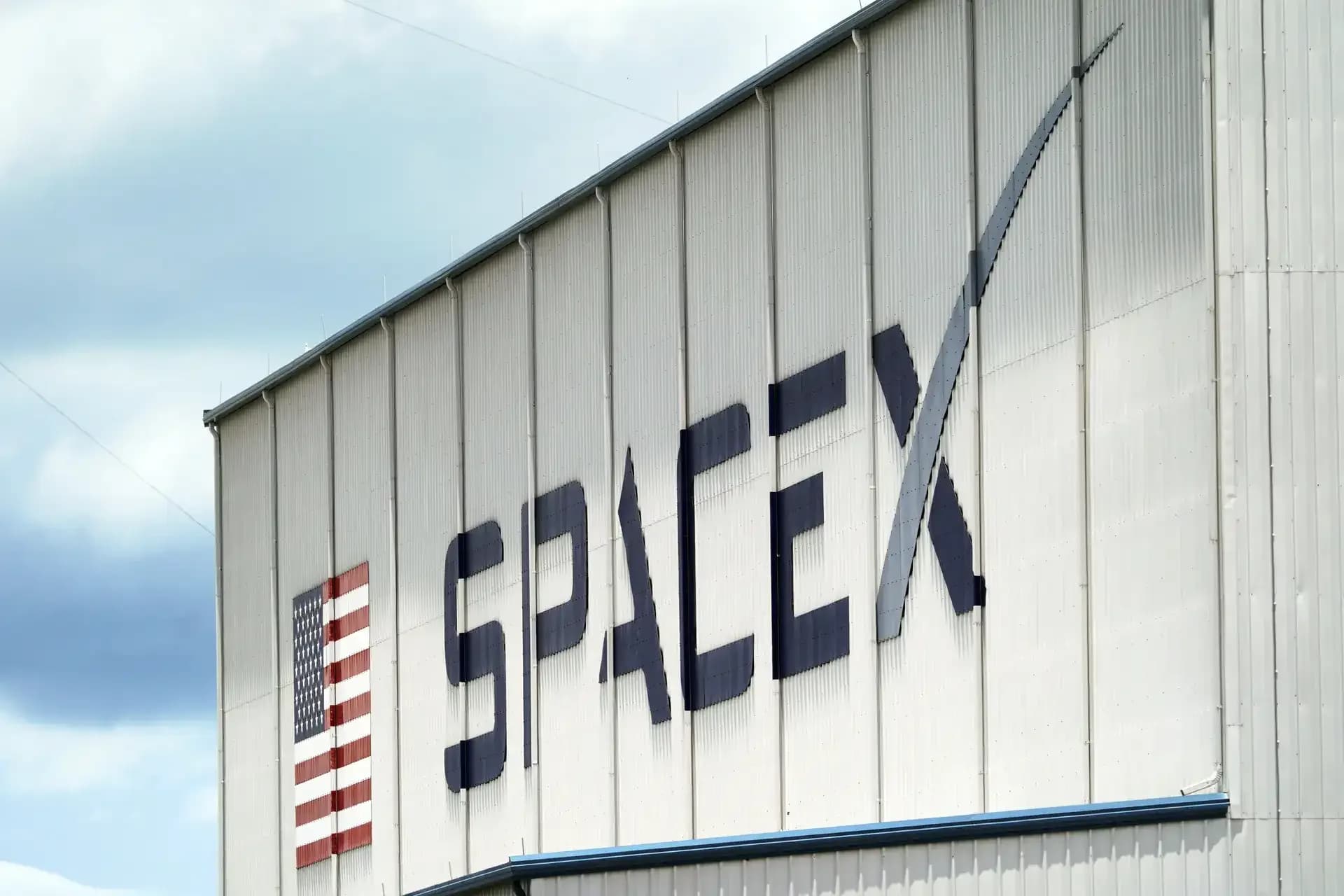
SpaceX's valuation has surged to nearly $2.5 trillion following its historic IPO debut, with shares initially pricing at $135 per share and raising approximately $75 billion. The company's market capitalization has continued climbing as investors bid shares up even further, creating what some analysts describe as a bubble scenario. According to recent reports, SpaceX made just $18.7 billion in revenue last year while losing $4.2 billion, with the company estimating its total market at $1.6 trillion for Starlink broadband and $370 billion for rocket launch business. The valuation appears significantly disconnected from traditional metrics, with price-to-sales ratio of 112.3 compared to similarly valued companies trading at 3.6-25.5 price-to-sales ratios. Only Morningstar's Moonshot scenario assigns a $154/share valuation with 7% probability, while Oppenheimer is one of the few analysts willing to assign a $190/share price target.
Spire Global (NYSE: SPIR) has surged 143% in 2026, largely driven by a European defense pivot. As reported, the company signed a deal with Germany's Diehl Defence at June's ILA Berlin Airshow targeting satellite early warning against ballistic and hypersonic missiles. Spire also opened a Munich plant capable of building up to 100 satellites annually. The company's Chaikin Money Flow (CMF) reads 0.137, the strongest pull in the group, while approximately 76% of 2026 revenue is already booked with breakeven in sight. The options market shows a put-call ratio of 0.42 on open interest, down from 1.25 in March, indicating call-heavy positioning.
Redwire (NYSE: RDW) has ripped 223% to its 2026 peak, building space-grade solar arrays that power satellites and spacecraft in orbit. According to reports, the company's CMF reads 0.133, showing positive money flow with more inflow than outflow. First-quarter revenue rose 58%, while backlog hit a record $498 million with 2026 guidance of $450-500 million. However, the stock pulled back hard after the run, yet still holds over 50% of its year-to-date gains. The options market shows a put-call ratio of 0.44 on volume and 0.48 on open interest, both call-heavy, with fresh put activity appearing as light hedging rather than bearish conviction.
Voyager Technologies (NYSE: VOYG) is up about 35% in 2026, built around the Starlab space station project. As reported, Starlab's payload capacity is already 130% booked before launch, with customers reserving more space than the station will hold. The company raised 2026 guidance toward $255 million, won a $16.5 million defense contract, and is acquiring lunar firm Astrobotic. Voyager's CMF holds positive at 0.056, showing net inflow despite being the weakest of the three. The options market shows a put-call ratio of 0.55 by daily volume, though it drops to 0.33 among contracts held longer, favoring calls. However, the catch remains that Starlab earns nothing yet, requiring patience for revenue realization.

Blue Origin and Impulse Space are positioning themselves as the next generation of space innovators following SpaceX's historic public debut. Blue Origin, founded by Amazon's Jeff Bezos, has secured a $3.4 billion NASA contract for lunar exploration under the Artemis II program and launched its satellite communications network TeraWave with over 5,000 optically connected orbital satellites. Impulse Space, founded by former SpaceX propulsion leader Tom Mueller, recently raised a $500 million Series D round and is developing in-space transportation systems with flight products including "Mira" and "Helios." The company's post-money valuation reached $4.26 billion after the funding round, with millions of dollars in corporate contracts already secured. These emerging companies represent different opportunities within the space economy, with Blue Origin focusing on large-scale exploration and Impulse Space targeting efficient interspace mobility solutions.