India's space sector is experiencing a transformational moment as ISRO opens its doors to private players while the government loosens foreign direct investment (FDI) rules. According to reports from Equitymaster.com, this represents a rare opportunity for investors to get in early on an industry that's quite literally shooting for the stars. The sector, once locked behind government gates, is now buzzing with companies building satellites, propulsion systems and launch technology, creating significant investment potential for those willing to take the long-term view. The momentum is further supported by Hyderabad's emergence as a key hub for the SpaceTech sector, with the city now home to Skyroot Aerospace, India's first SpaceTech unicorn, underscoring its growing importance in the country's space innovation ecosystem.
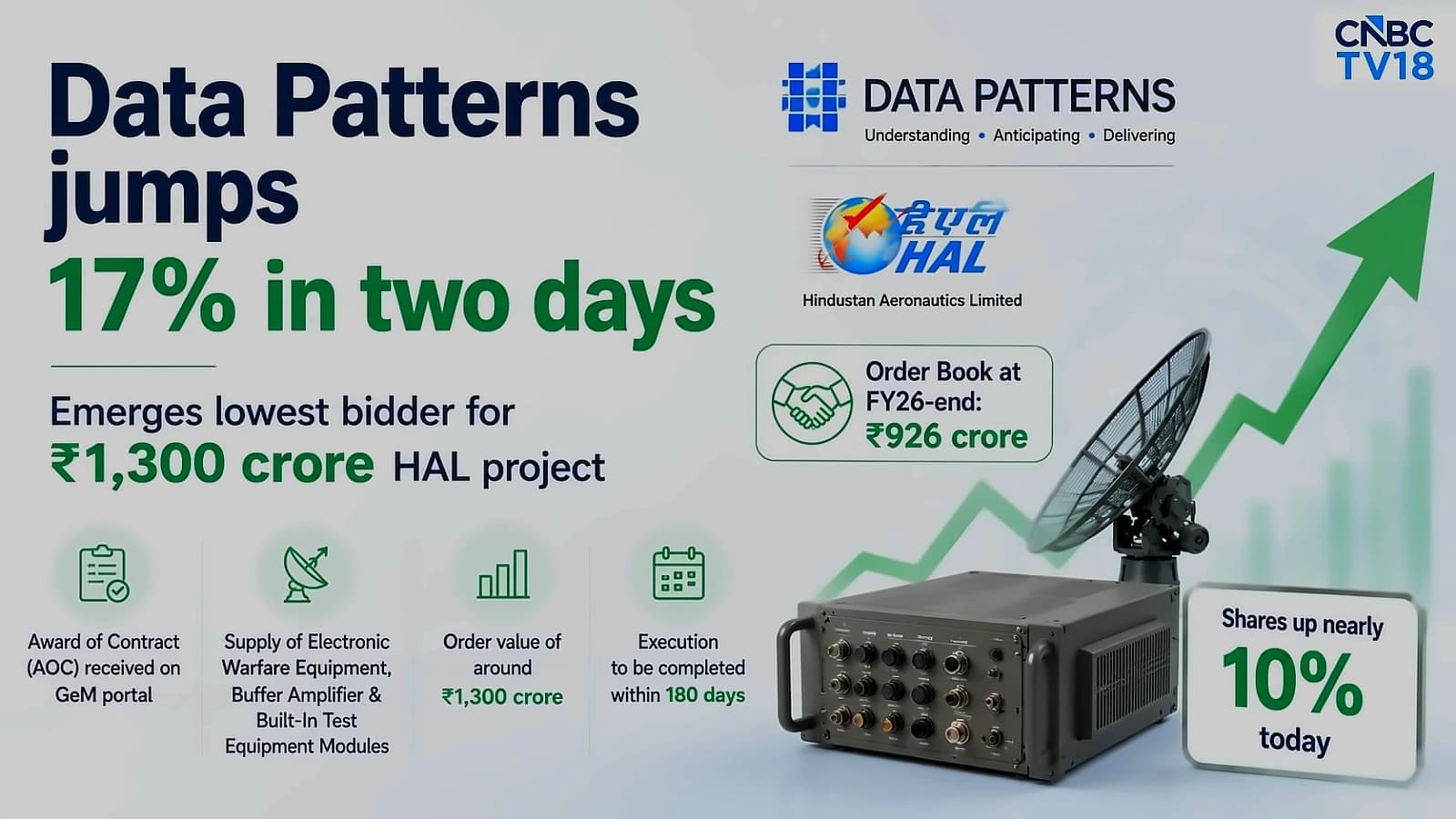
Data Patterns has quietly become a key behind-the-scenes player in India's space journey, building parts to exact ISRO standards and designing specialized nano satellite buses. As reported by Equitymaster.com, the company has supported ISRO for over two decades with automated test systems for launch vehicles and contributed to automating launch pads at the Satish Dhawan Space Centre Sriharikota Range. The company's sales and net profit have expanded at a compound annual growth rate (CAGR) of 35% and 60% respectively over the past five years, with return on equity (ROE) and return on capital (ROCE) averaging 16% and 24% respectively. According to the latest earnings, the order book reached a record high of ₹1,870 crore, covering nearly two years of revenue based on FY25 revenue of ₹700 crore.
Mishra Dhatu Nigam, majority owned by the government of India, manufactures super alloys, titanium and titanium alloys, and generates close to 40% of total revenue from the space sector. According to Equitymaster.com, the company has developed and supplied critical materials for Aditya L1 and Chandrayaan 3 missions. The company maintains an outstanding order book of ₹2,220 crore to be executed over the next 15-18 months, providing healthy revenue visibility. Sales have clocked a CAGR of 9% over the past five years while profit has fallen by 7%, with ROE and ROCE averaging 12% and 17% respectively. The company is expected to leverage its strong market position as a key manufacturer of super alloys and benefit from government focus on strategic sectors.
Astra Microwave has been involved in India's space programme for about 25 years, supplying critical RF and microwave components for satellites and launch vehicles. As reported by Equitymaster.com, the company has incorporated a wholly owned subsidiary, Astra Space Technologies (ASTPL), to design, develop, manufacture and integrate satellite equipment. The company has set up satellite assembly clean rooms at its Bengaluru facility and is pursuing opportunities to build and launch small satellites. Sales and net profit have clocked a CAGR of 18% and 28% respectively over the past five years, with ROE and ROCE averaging 10% and 17% respectively. The company maintains a healthy order book of ₹2,230 crore providing strong revenue visibility across defence, radar electronics, space and meteorological segments.
The space sector's transformation is being accelerated by a robust startup ecosystem, with T-Hub's ORBIT SpaceTech accelerator programme now supporting 36 SpaceTech startups since its inception. The latest cohort includes 13 startups working on critical technologies including propulsion systems, orbital servicing, sovereign compute, satellite intelligence, and space-based energy systems. Notable success stories include Cosmoserve securing $3.17 million in pre-seed funding, Spantrik completing test flights of its VTVL demonstrator, and Research Sat confirming a payload mission to the International Space Station scheduled for November 2026. As per T-Hub, startups from previous cohorts have collectively raised around ₹30 crore in funding and generated 18 published intellectual property assets, demonstrating the growing commercial viability of India's SpaceTech sector.