Brazil's government has blasted the new US tariffs as unfair and offensive, warning it could respond with reciprocal trade measures. According to Reuters, Brazil has described the latest US tariffs on certain Brazilian imports as unjust and politically motivated, threatening Thursday to impose reciprocal measures on US products. The country's top diplomat criticized US Secretary of State Marco Rubio for the move, with Foreign Minister Mauro Vieira accusing Rubio of making 'unacceptable, offensive to the Brazilian people and the Brazilian government' statements. Vieira told a news conference in Brasília that Rubio's dismissal of Lula's actions as 'ego' is actually 'President Lula's steadfast resolve to defend Brazil's sovereignty and the interests of our businesses and workers'.
The new 25% US tariff on a range of Brazilian goods came into effect on July 22, 2026, marking the first major country-specific Section 301 tariff measure following the invalidation of IEEPA-based tariffs in February 2026. According to the Office of the U.S. Trade Representative, the new duties apply to products including farm machinery, wood products, ethanol and apparel, though the US has exempted several major imports such as beef, coffee, aircraft and aircraft parts to reduce the impact on trade. The tariff represents the first imposed under the US President Donald Trump administration's new strategy of using the Trade Act of 1974 to investigate what it considers unfair trade practices. The White House's blanket assertion of emergency powers to levy high tariffs against most global partners was struck down by the US Supreme Court earlier this year. The order exempts some goods that are not produced in the US or that officials worry would disrupt supply chains — including coffee, beef, oranges and orange juice and aircraft components.
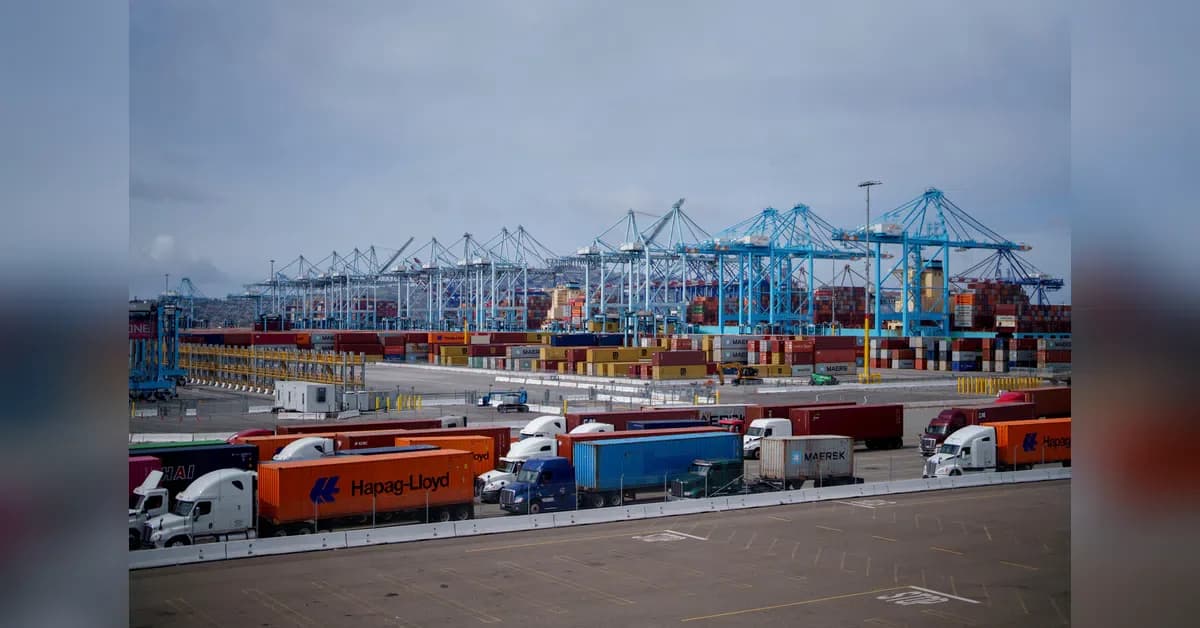
According to estimates by Brazil's government and the National Confederation of Industry (CNI), the new tariff could affect between $7 billion and $11 billion worth of Brazilian exports to the US, representing around 18% to 26% of the country's exports to the American market. As reported by Reuters, Brazilian exports to the US have already fallen by $2.6 billion, or 13%, during the first half of this year compared with the same period in 2025, mainly due to lower exports of industrial products such as iron and steel, petroleum oils and wood pulp. The Brazilian footwear industry, which counts the US as its largest export market, has already downgraded its export outlook for the year to an expected 7.1% drop, compared with its previous forecast for a 3.6% drop. The US buys one in every five shoes exported from Brazil, according to the Brazilian Footwear Industries Association (Abicalçados), with about 40% of the area's exports or 650,000 pairs a year sold to the US. According to Reuters, footwear union leader Toni Hajel warns that the tariffs, which impact key sectors, could lead to job cuts unless renegotiations occur. "There is no other market capable of replacing the U.S.," said Hajel, owner of exporter TH Shoes and head of the footwear industry union in Franca, a key hub for footwear production in Sao Paulo state.
The final measure includes a separate USTR probe into forced labor that may result in a further 12.5% tariff on some Brazilian products, potentially bringing additional duties to 37.5% on many products imported from Brazil. According to the Office of the U.S. Trade Representative, the tariffs are intended to remain in place until Brazil addresses the practices identified in the investigation. The action follows a year-long investigation into Brazilian policies covering digital trade restrictions, electronic payment services, intellectual property protection, anti-corruption enforcement, ethanol market access, and deforestation-related concerns. The final action excludes products already subject to Section 232 actions, including steel, aluminum, copper, automobiles, medium- and heavy-duty trucks, semiconductors, certain wood products, and future pharmaceutical products covered by Section 232 measures. Notably, the final action includes a broad package of product exclusions covering oranges and orange juice, beef, coffee and certain coffee products, civil aircraft, jet engines and aerospace parts, certain energy products, various pharmaceutical products and pharmaceutical ingredients, humanitarian supplies, and informational materials.
Brazilian officials have blamed the Bolsonaro family — Lula's main political opponents — for the latest round of tariffs. Sen. Flávio Bolsonaro, a presidential hopeful in October's elections and son of the former president, visited Trump, Rubio and other US officials in Washington in May. The senator reposted Rubio's statement, adding that 'Lula is no longer fit to be the president of Brazil. We are on a plane without a pilot.' He also described Lula as 'the Brazilian Biden' and said he 'is grumpy, reckless, and has become a danger to our nation.' Thomas Traumann, an independent political consultant and former Brazilian minister, said he thinks the tariffs could ultimately hurt Lula's opponent, describing two issues working against Flávio Bolsonaro. 'The first was the revelation of his involvement with the disgraced banker,' Traumann said, referring to police investigation findings showing he received millions of dollars from a disgraced banker to finance a movie about his father. 'Now he has U.S. tariffs with Bolsonaro fingerprints. Now Brazil's business understands he will be submissive to Trump.'