A federal trade court delivered a significant legal setback to President Donald Trump's tariff strategy, ruling that the administration's temporary 10% global tariffs were not legally justified under federal law. According to reports from Reuters and The Wall Street Journal, a three-judge panel of the US Court of International Trade in New York issued a 2-1 ruling declaring the tariffs 'invalid' and 'unauthorised by law'. The court found that Trump had exceeded the powers granted to the president by Congress under Section 122 of the Trade Act of 1974. The ruling came after Trump announced he would be signing an executive order imposing 10% global tariffs in February, which applied broadly across imports. The tariffs were set to expire July 24, but the court's decision directly applied only to three plaintiffs: the state of Washington, spice company Burlap & Barrel and toy manufacturer Basic Fun!.
The court rejected the administration's justification for the tariffs, which were introduced shortly after the US Supreme Court struck down earlier, more aggressive tariff actions. As reported by Reuters and The Wall Street Journal, the majority judges said the type of trade deficit cited by the administration did not meet the legal threshold required under the law. The administration had argued that the United States was facing a $1.2 trillion goods trade deficit and a current account deficit of about 4 percent of GDP. However, the court ruled that the government had overstepped the authority granted by Congress and that the tariffs could not stand under the statute used to impose them. The majority of the panel rejected the administration's stance that 'balance-of-payments deficits' — a key criterion for imposing the Section 122 tariffs — was 'a malleable phrase'. They concluded that Trump's proclamation imposing the levies failed to identify that such deficits existed within the meaning of the 1974 law, instead using 'trade and current account deficits to stand in the place'.
This latest ruling follows the US Supreme Court's February 20 decision that struck down broader tariffs imposed by the Trump administration last year on imports from nearly every country. As reported by Reuters and The Wall Street Journal, the Supreme Court ruled that the International Emergency Economic Powers Act (IEEPA) of 1977 did not authorise the president to impose such broad tariffs. India was among the countries affected by these earlier tariffs, facing a 25% duty along with an additional 25% penalty tariff linked to its continued imports of Russian crude oil, though an interim trade arrangement later reduced the effective rate to 18%. The Supreme Court's ruling last year had declared that IEEPA did not authorize the president to invoke the 1977 law to declare the nation's longstanding trade deficit a national emergency, justifying sweeping global tariffs. The decision is the latest setback for the president's effort to levy tariffs without input from Congress, with earlier duties overturned by the Supreme Court under different authority.
Despite ruling against the administration, the court stopped short of blocking the tariffs nationwide. According to NBC10 Philadelphia and The Wall Street Journal, the judgment applied only to the three plaintiffs involved in the lawsuit: the state of Washington, spice company Burlap & Barrel and toy manufacturer Basic Fun!. The panel found that other states that sued lacked standing because they aren't direct importers, instead arguing that they were harmed by having to pay higher prices for goods when businesses passed on tariff costs. It wasn't immediately clear what the ruling would mean for other importers that had been paying the contested levies. The court made clear it was not issuing a so-called universal injunction, meaning the enforcement block applies immediately only to the two companies that sued and Washington state. The Justice Department could challenge the trade court's latest ruling by taking the case to the US Court of Appeals for the Federal Circuit, which ruled against the Trump administration during the last tariff fight.
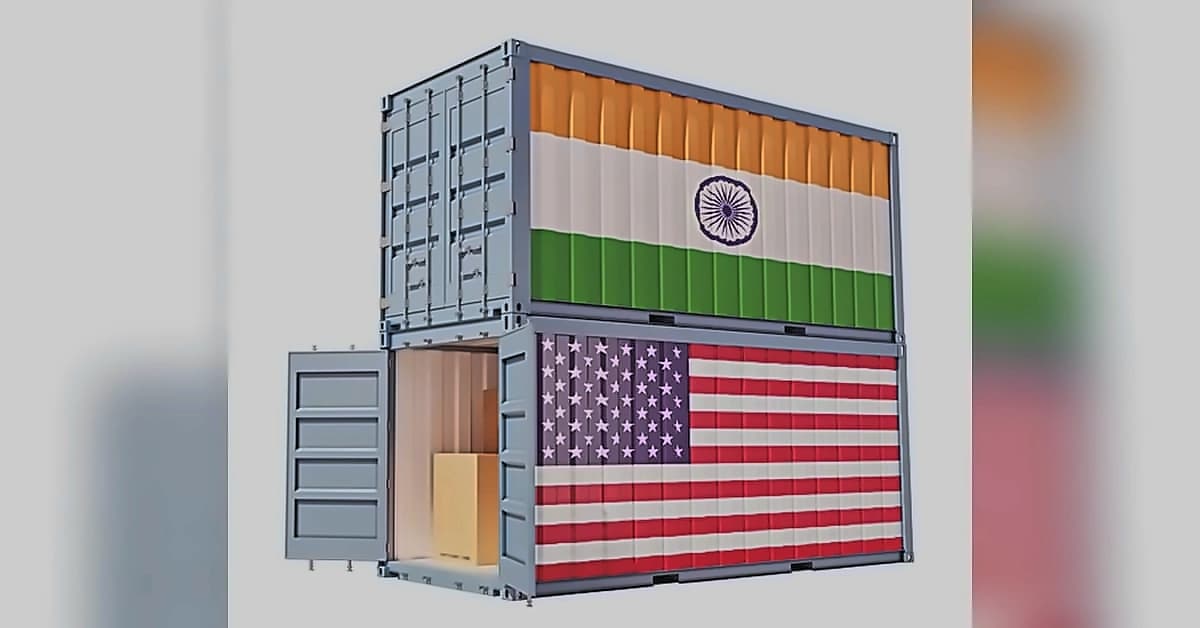
The ruling has significant implications for India's trade policy, with the Global Trade Research Initiative (GTRI) advising India to rethink its Free Trade Agreement talks with the United States. As reported by The Times of India, GTRI suggests that India should reassess its Free Trade Agreement talks with the United States, citing the repeated court strikes against tariff measures that raise doubts about US trade policy stability. The think tank stated that 'India should wait until the United States develops a more stable and legally reliable trade system before concluding the Bilateral Trade Agreement'. The continuing uncertainty around US tariff policy, with major Trump-era tariffs repeatedly struck down by courts, makes any long-term trade commitments by India difficult to justify. At present, the United States is maintaining its Most-Favoured-Nation (MFN) tariffs while expecting partners to reduce or remove their own duties, raising concerns that future trade deals could become uneven with partners giving concessions without receiving equal tariff benefits in return. The ruling comes at a sensitive stage in India-US trade talks, with both countries claiming they are close to finalising the first phase of the bilateral trade agreement.